
用于蛋白质递送的基于透明质酸的纳米颗粒:微流体制备条件的系统研究
Hyaluronic Acid-Based Nanoparticles for Protein Delivery: Systematic Examination of Microfluidic Production Conditions.
作者信息
Chiesa Enrica, Greco Antonietta, Riva Federica, Dorati Rossella, Conti Bice, Modena Tiziana, Genta Ida
机构信息
Department of Surgery, Fondazione IRCCS Policlinico San Matteo, 27100 Pavia, Italy.
Department of Drug Sciences, University of Pavia, 27100 Pavia, Italy.
出版信息
Pharmaceutics. 2021 Sep 26;13(10):1565. doi: 10.3390/pharmaceutics13101565.
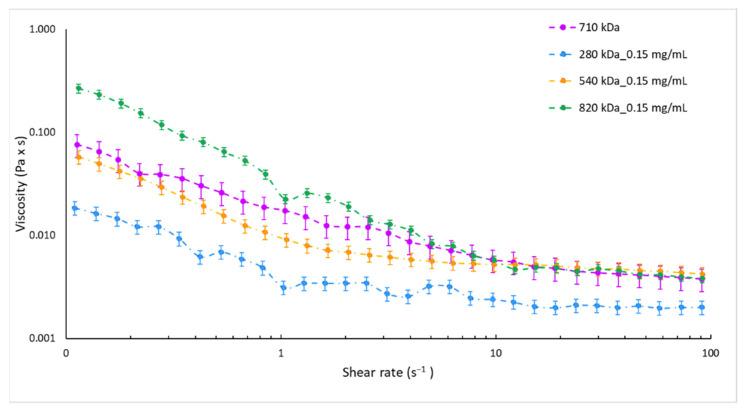
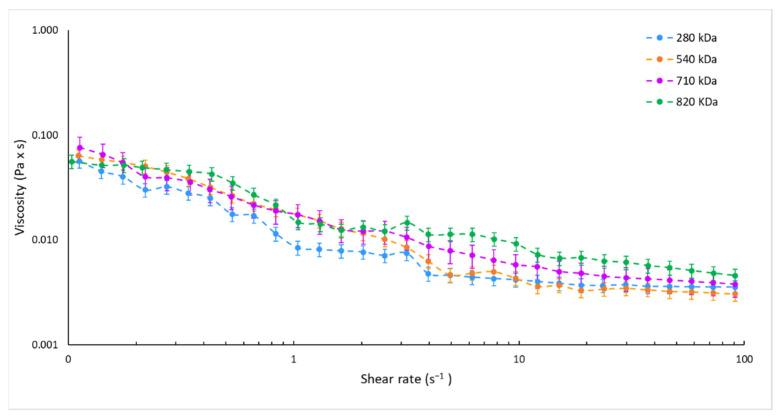
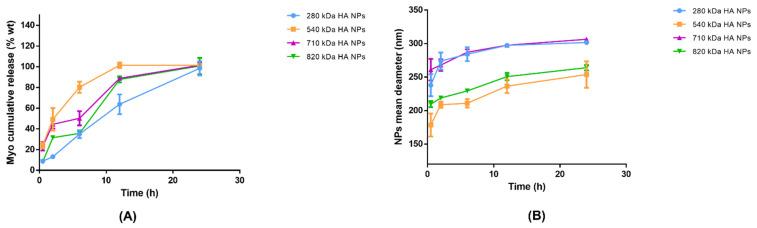
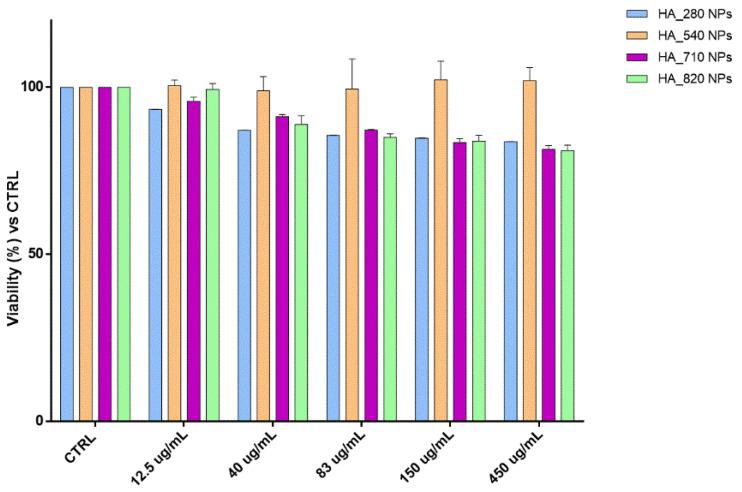
Hyaluronic acid-based nanoparticles (HA NPs) can be used to deliver a protein cargo to cells overexpressing HA receptors such as CD44 since they combine the low toxicity of the carrier and the retention of the protein integrity with the receptor-mediated internalization. HA properties play a crucial but sometimes unclear role in managing the formation and stability of the meshwork, cell interactions, and ultimately the protein entrapment efficacy. Nowadays, microfluidic is an innovative technology that allows to overcome limits linked to the NPs production, guaranteeing reproducibility and control of individual batches. Taking advantage of this technique, in this research work, the role of HA weight average molecular weight (Mw) in NPs formation inside a microfluidic device has been specifically faced. Based on the relationship between polymer Mw and solution viscosity, a methodological approach has been proposed to ensure critical quality attributes (size of 200 nm, PDI ≤ 0.3) to NPs made by HA with different Mw (280, 540, 710 and 820 kDa). The feasibility of the protein encapsulation was demonstrated by using Myoglobin, as a model neutral protein, with an encapsulation efficiency always higher than 50%. Lastly, all NPs samples were successfully internalized by CD44-expressing cells.
基于透明质酸的纳米颗粒(HA NPs)可用于将蛋白质货物递送至过表达HA受体(如CD44)的细胞,因为它们兼具载体的低毒性、蛋白质完整性的保留以及受体介导的内化作用。HA的特性在控制网络的形成与稳定性、细胞相互作用以及最终的蛋白质包封效率方面起着关键但有时并不明确的作用。如今,微流控技术是一项创新技术,它能够克服与纳米颗粒生产相关的限制,确保各批次产品的可重复性和可控性。在本研究工作中,利用了这项技术专门研究了HA重均分子量(Mw)在微流控装置内纳米颗粒形成过程中的作用。基于聚合物Mw与溶液粘度之间的关系,提出了一种方法来确保由不同Mw(280、540、710和820 kDa)的HA制成的纳米颗粒具有关键质量属性(尺寸为200 nm,PDI≤0.3)。以肌红蛋白作为模型中性蛋白,证明了蛋白质包封的可行性,其包封效率始终高于50%。最后,所有纳米颗粒样品均成功被表达CD44的细胞内化。



 Zotero 插件