
具有应用所需参数的透明质酸纳米颗粒:从合成到参数化。
Hyaluronic Acid Nanoparticles with Parameters Required for Applications: From Synthesis to Parametrization.
机构信息
Department of Biological and Biochemical Sciences, Faculty of Chemical Technology, University of Pardubice, Studentská 573, Pardubice 532 10, Czech Republic.
Institute of Macromolecular Chemistry, Czech Academy of Sciences, Heyrovského nám. 2, Praha 6 162 00, Czech Republic.
出版信息
Biomacromolecules. 2024 Aug 12;25(8):4934-4945. doi: 10.1021/acs.biomac.4c00370. Epub 2024 Jun 29.
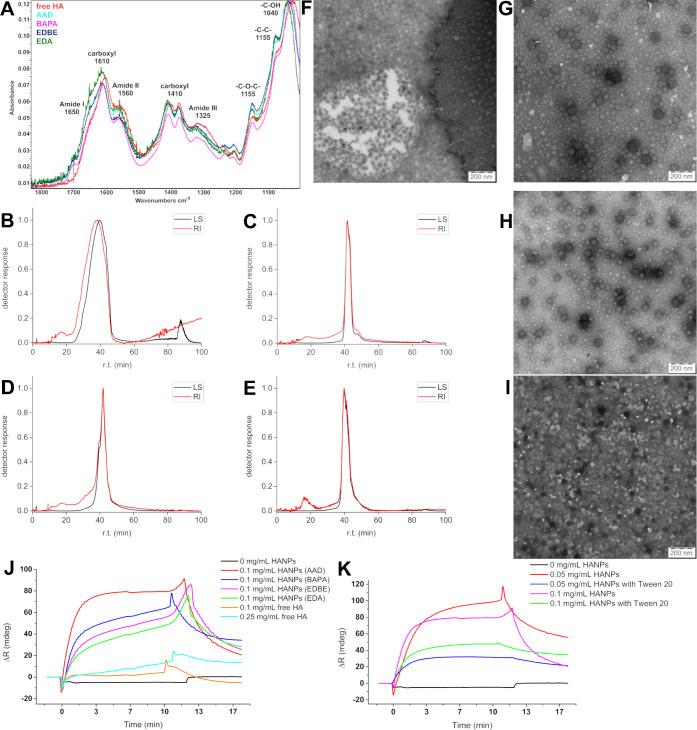
Hyaluronic acid is an excellent biocompatible material for applications. Its ability to bind CD44, a cell receptor involved in numerous biological processes, predetermines HA-based nanomaterials as unique carrier for therapeutic and theranostic applications. Although numerous methods for the synthesis of hyaluronic acid nanoparticles (HANPs) are available today, their low reproducibility and wide size distribution hinder the precise assessment of the effect on the organism. A robust and reproducible approach for producing HANPs that meet strict criteria for applications (, to lung parenchyma) remains challenging. We designed and evaluated four protocols for the preparation of HANPs with those required parameters. The HA molecule was cross-linked by novel combinations of carbodiimide, and four different amine-containing compounds resulted in monodisperse HANPs with a low polydispersity index. By a complex postsynthetic characterization, we confirmed that the prepared HANPs meet the criteria for inhaled therapeutic delivery and other applications.
透明质酸是一种应用广泛的优秀生物相容性材料。它能够与细胞受体 CD44 结合,CD44 参与多种生物过程,这决定了基于透明质酸的纳米材料是治疗和治疗应用的独特载体。尽管目前有许多合成透明质酸纳米颗粒(HANPs)的方法,但它们的低重现性和宽粒径分布阻碍了对其对生物体影响的精确评估。因此,仍然需要开发一种稳健且可重复的方法来生产满足严格应用标准(例如,向肺实质)的 HANPs。我们设计并评估了四种制备具有这些所需参数的 HANPs 的方案。通过新型碳二亚胺组合交联透明质酸分子,四种不同的含胺化合物导致形成具有低多分散指数的单分散 HANPs。通过复杂的后期合成表征,我们证实所制备的 HANPs 符合吸入治疗输送和其他应用的标准。

 Zotero 插件