
基于分类和功能特征的多视图学习的人类肠道微生物组衰老时钟。
Human gut microbiome aging clocks based on taxonomic and functional signatures through multi-view learning.
机构信息
State Key Laboratory of Food Science and Technology, Jiangnan University, Wuxi, P. R China.
School of Food Science and Technology, Jiangnan University, Wuxi, China.
出版信息
Gut Microbes. 2022 Jan-Dec;14(1):2025016. doi: 10.1080/19490976.2021.2025016.
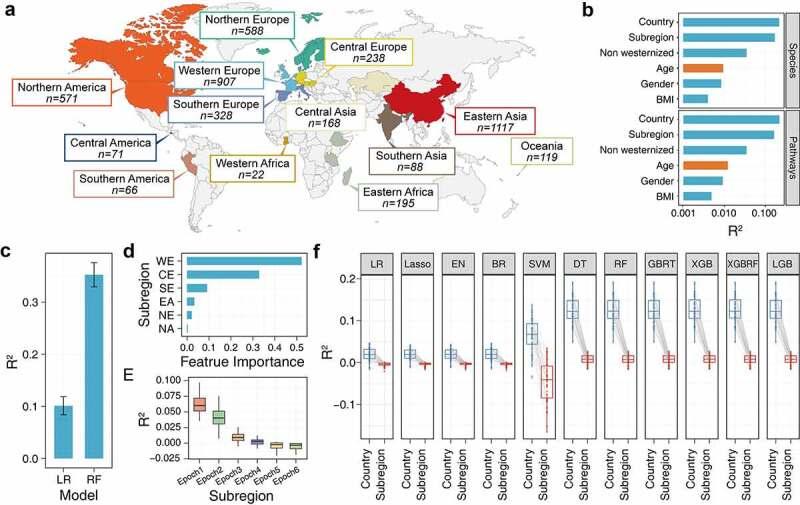
The human gut microbiome is a complex ecosystem that is closely related to the aging process. However, there is currently no reliable method to make full use of the metagenomics data of the gut microbiome to determine the age of the host. In this study, we considered the influence of geographical factors on the gut microbiome, and a total of 2604 filtered metagenomics data from the gut microbiome were used to construct an age prediction model. Then, we developed an ensemble model with multiple heterogeneous algorithms and combined species and pathway profiles for multi-view learning. By integrating gut microbiome metagenomics data and adjusting host confounding factors, the model showed high accuracy (R = 0.599, mean absolute error = 8.33 years). Besides, we further interpreted the model and identify potential biomarkers for the aging process. Among these identified biomarkers, we found that , and had increased abundance in the elderly. Moreover, the utilization of amino acids by the gut microbiome undergoes substantial changes with increasing age which have been reported as the risk factors for age-associated malnutrition and inflammation. This model will be helpful for the comprehensive utilization of multiple omics data, and will allow greater understanding of the interaction between microorganisms and age to realize the targeted intervention of aging.
人类肠道微生物组是一个复杂的生态系统,与衰老过程密切相关。然而,目前尚无可靠的方法充分利用肠道微生物组的宏基因组学数据来确定宿主的年龄。在这项研究中,我们考虑了地理因素对肠道微生物组的影响,共使用了 2604 个肠道微生物组的过滤宏基因组学数据来构建年龄预测模型。然后,我们使用多个异构算法开发了一个集成模型,并结合物种和途径特征进行多视图学习。通过整合肠道微生物组宏基因组学数据并调整宿主混杂因素,该模型表现出了较高的准确性(R=0.599,平均绝对误差=8.33 岁)。此外,我们进一步对模型进行了解释,并确定了与衰老过程相关的潜在生物标志物。在这些鉴定出的生物标志物中,我们发现 、 和 在老年人中的丰度增加。此外,随着年龄的增长,肠道微生物组对氨基酸的利用发生了显著变化,这些变化已被报道为与年龄相关的营养不良和炎症的风险因素。该模型将有助于综合利用多种组学数据,并更好地理解微生物与年龄之间的相互作用,从而实现对衰老的靶向干预。




 Zotero 插件