
疟原虫配子体的扩展显微镜观察揭示了一个二分体微管组织中心的分子结构,该中心协调有丝分裂与轴丝组装。
Expansion microscopy of Plasmodium gametocytes reveals the molecular architecture of a bipartite microtubule organisation centre coordinating mitosis with axoneme assembly.
机构信息
University of Geneva, Department of Microbiology and Molecular Medicine, Faculty of Medicine, Geneva, Switzerland.
出版信息
PLoS Pathog. 2022 Jan 25;18(1):e1010223. doi: 10.1371/journal.ppat.1010223. eCollection 2022 Jan.
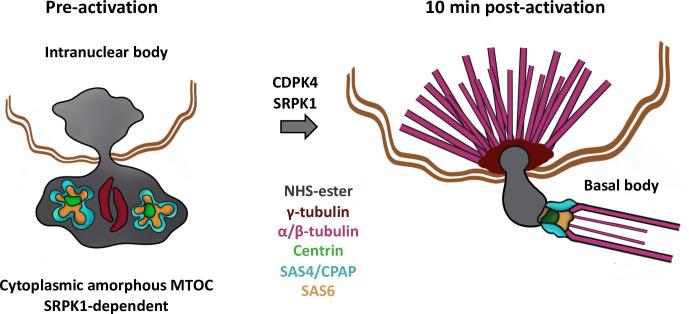
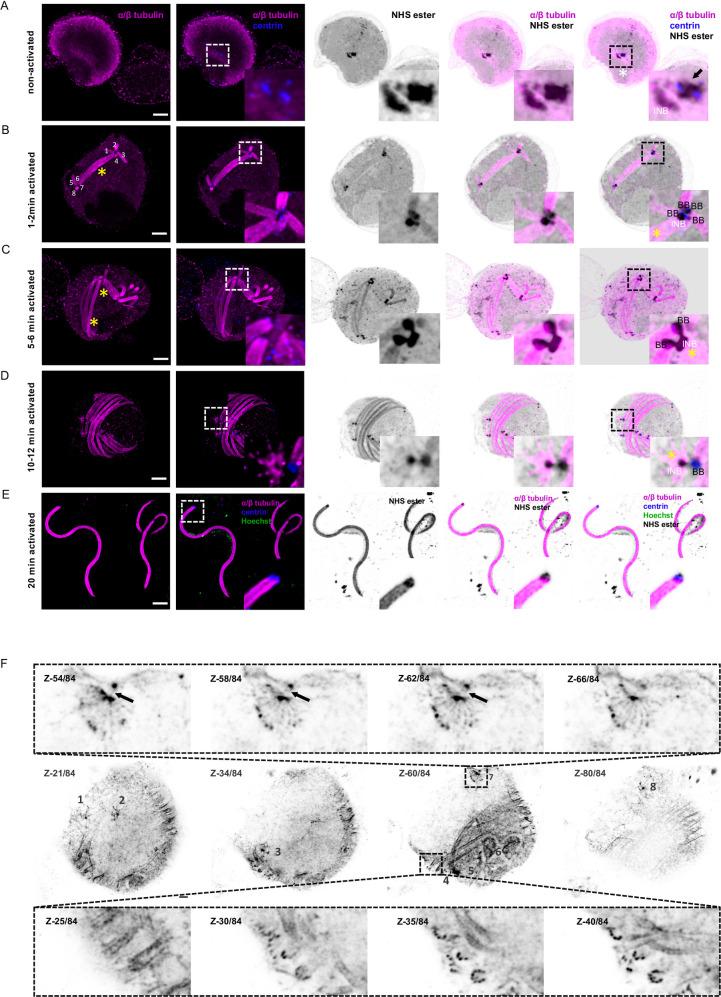
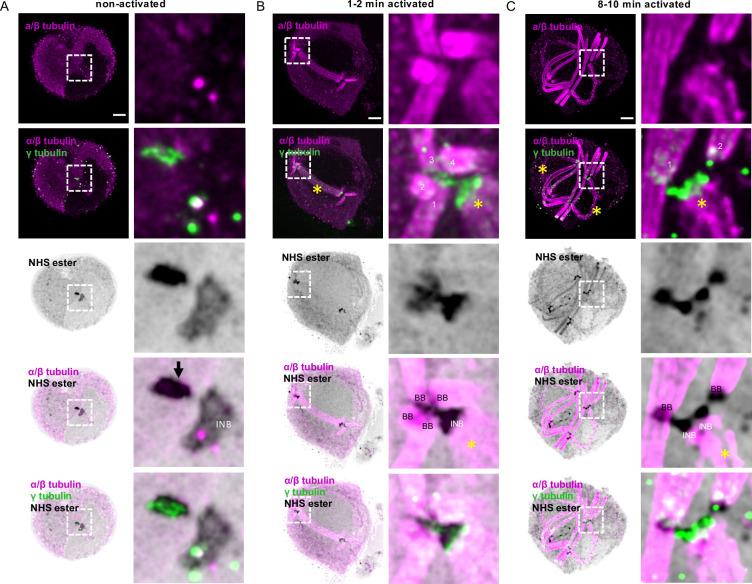
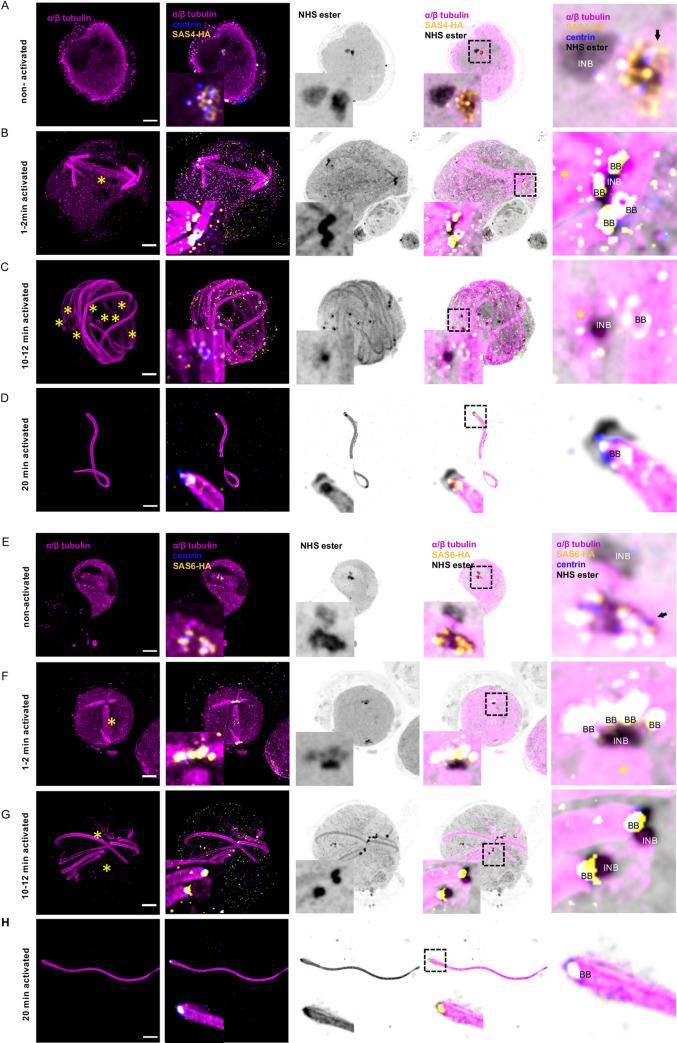
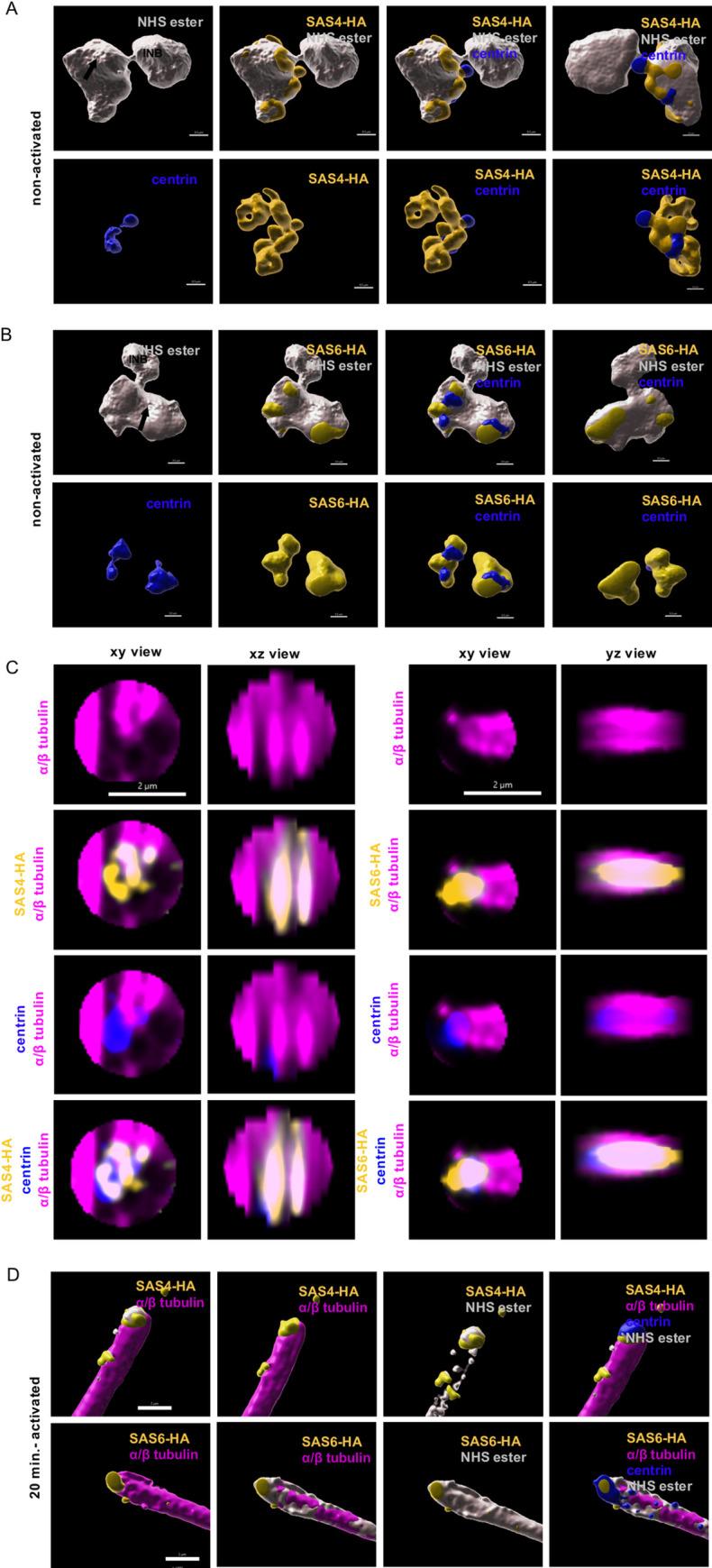
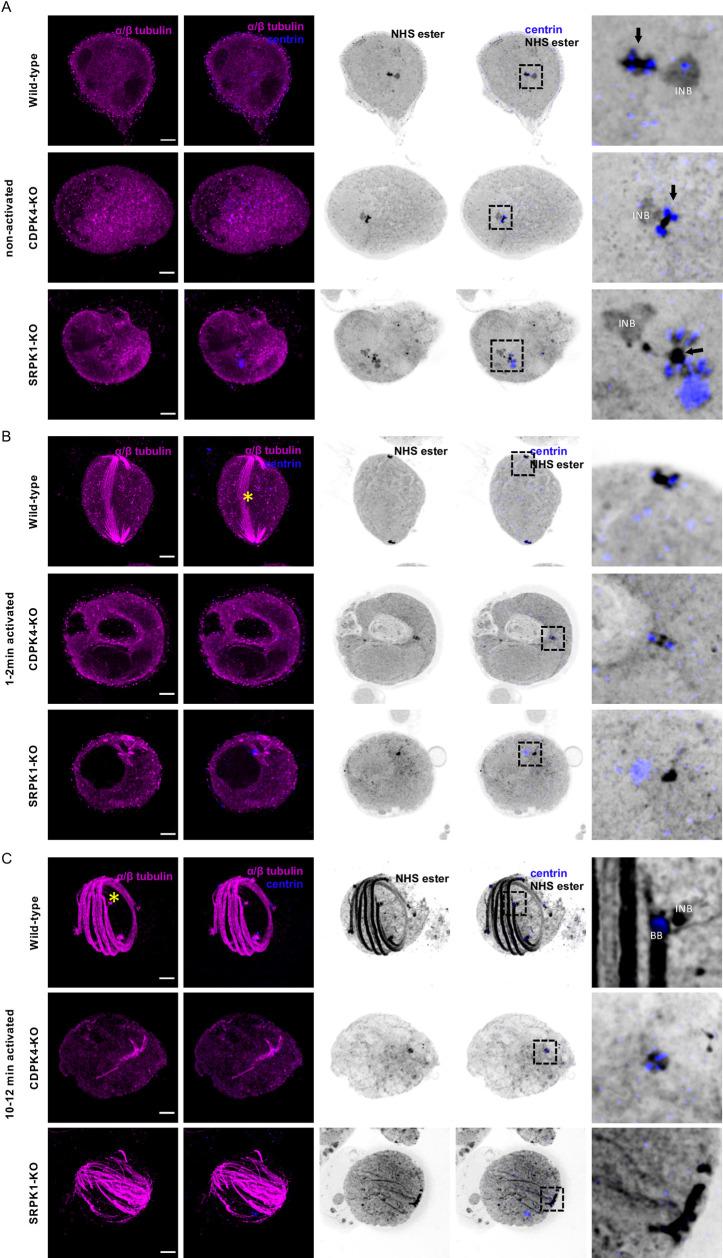
Transmission of malaria-causing parasites to mosquitoes relies on the production of gametocyte stages and their development into gametes. These stages display various microtubule cytoskeletons and the architecture of the corresponding microtubule organisation centres (MTOC) remains elusive. Combining ultrastructure expansion microscopy (U-ExM) with bulk proteome labelling, we first reconstructed in 3D the subpellicular microtubule network which confers cell rigidity to Plasmodium falciparum gametocytes. Upon activation, as the microgametocyte undergoes three rounds of endomitosis, it also assembles axonemes to form eight flagellated microgametes. U-ExM combined with Pan-ExM further revealed the molecular architecture of the bipartite MTOC coordinating mitosis with axoneme formation. This MTOC spans the nuclear membrane linking cytoplasmic basal bodies to intranuclear bodies by proteinaceous filaments. In P. berghei, the eight basal bodies are concomitantly de novo assembled in a SAS6- and SAS4-dependent manner from a deuterosome-like structure, where centrin, γ-tubulin, SAS4 and SAS6 form distinct subdomains. Basal bodies display a fusion of the proximal and central cores where centrin and SAS6 are surrounded by a SAS4-toroid in the lumen of the microtubule wall. Sequential nucleation of axonemes and mitotic spindles is associated with a dynamic movement of γ-tubulin from the basal bodies to the intranuclear bodies. This dynamic architecture relies on two non-canonical regulators, the calcium-dependent protein kinase 4 and the serine/arginine-protein kinase 1. Altogether, these results provide insights into the molecular organisation of a bipartite MTOC that may reflect a functional transition of a basal body to coordinate axoneme assembly with mitosis.
疟原虫寄生虫向蚊子的传播依赖于配子体阶段的产生及其发育为配子。这些阶段显示出各种微管细胞骨架,而相应的微管组织中心(MTOC)的结构仍然难以捉摸。结合超微结构扩展显微镜(U-ExM)和批量蛋白质组标记,我们首先在 3D 中重建了赋予疟原虫配子体细胞刚性的皮层下微管网络。在激活后,随着小配子体经历三轮有丝分裂,它还组装轴丝形成八个有鞭毛的小配子。U-ExM 与 Pan-ExM 相结合,进一步揭示了二分体 MTOC 的分子结构,该结构协调有丝分裂与轴丝形成。该 MTOC 通过蛋白质丝穿过核膜,将细胞质基底体与核内体连接起来。在 P. berghei 中,八个基底体同时以依赖 SAS6 和 SAS4 的方式从类似于二倍体的结构中从头组装,其中中心粒、γ-微管蛋白、SAS4 和 SAS6 形成不同的亚结构域。基底体显示出近端和中心核心的融合,其中中心粒和 SAS6 被微管壁腔中的 SAS4-toroid 包围。轴丝和有丝分裂纺锤体的顺序成核与 γ-微管蛋白从基底体到核内体的动态运动相关。这种动态结构依赖于两个非经典调节剂,钙依赖性蛋白激酶 4 和丝氨酸/精氨酸蛋白激酶 1。总之,这些结果提供了对二分体 MTOC 的分子组织的深入了解,这可能反映了基底体协调轴丝组装与有丝分裂的功能转变。



 Zotero 插件