
慢性束缚应激和低强度重复经颅磁刺激后啮齿动物肠道微生物群的变化。
Changes in the rodent gut microbiome following chronic restraint stress and low-intensity rTMS.
作者信息
Seewoo Bhedita J, Chua Eng Guan, Arena-Foster Yasmin, Hennessy Lauren A, Gorecki Anastazja M, Anderton Ryan, Rodger Jennifer
机构信息
School of Biological Sciences, The University of Western Australia, 35 Stirling Highway, Crawley, WA, 6009, Australia.
Perron Institute for Neurological and Translational Science, 8 Verdun St, Nedlands, WA, 6009, Australia.
出版信息
Neurobiol Stress. 2022 Jan 28;17:100430. doi: 10.1016/j.ynstr.2022.100430. eCollection 2022 Mar.
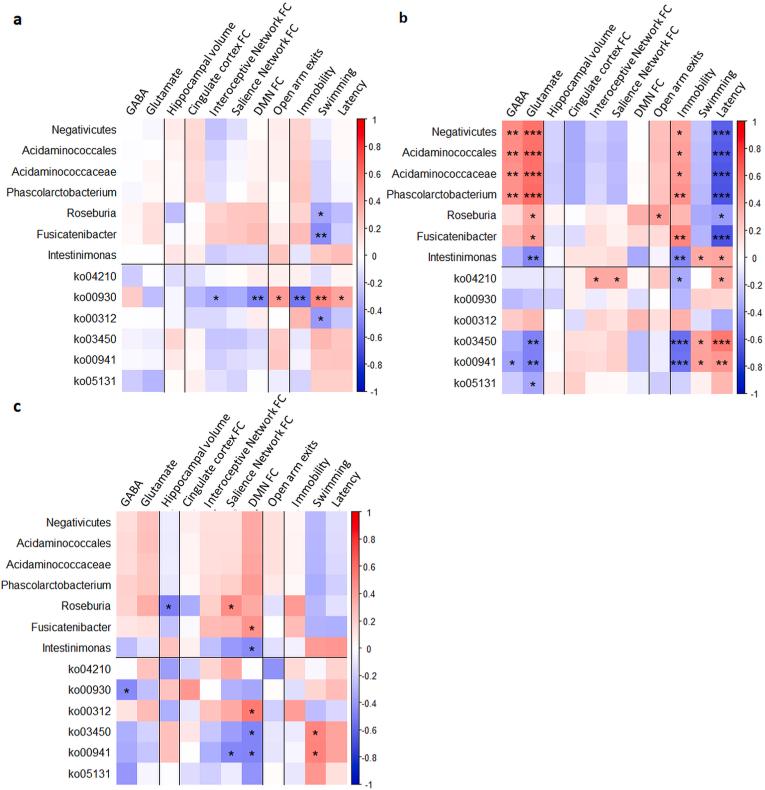
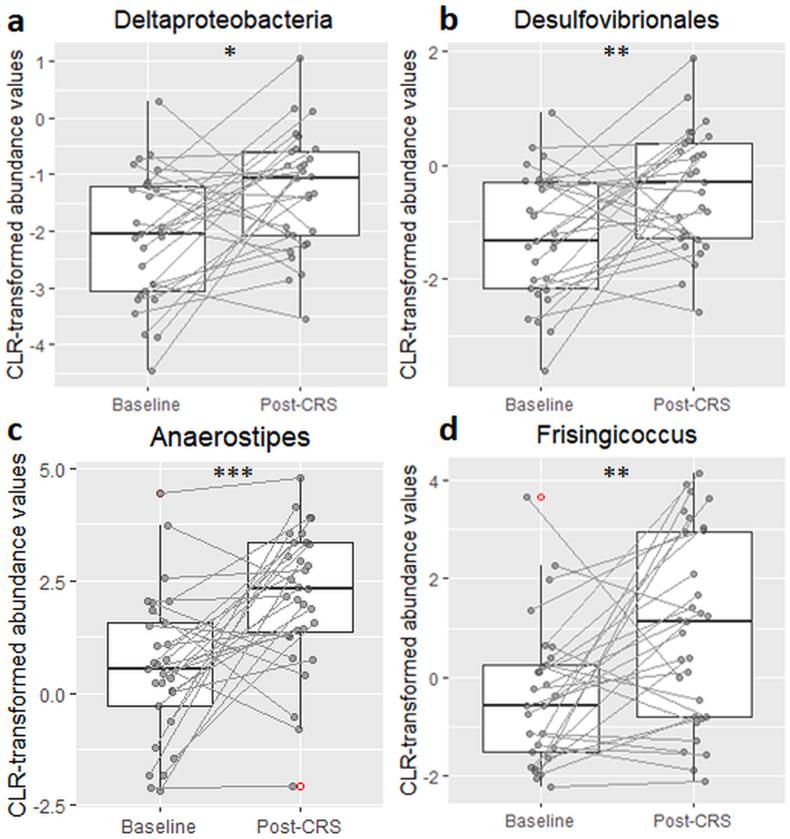
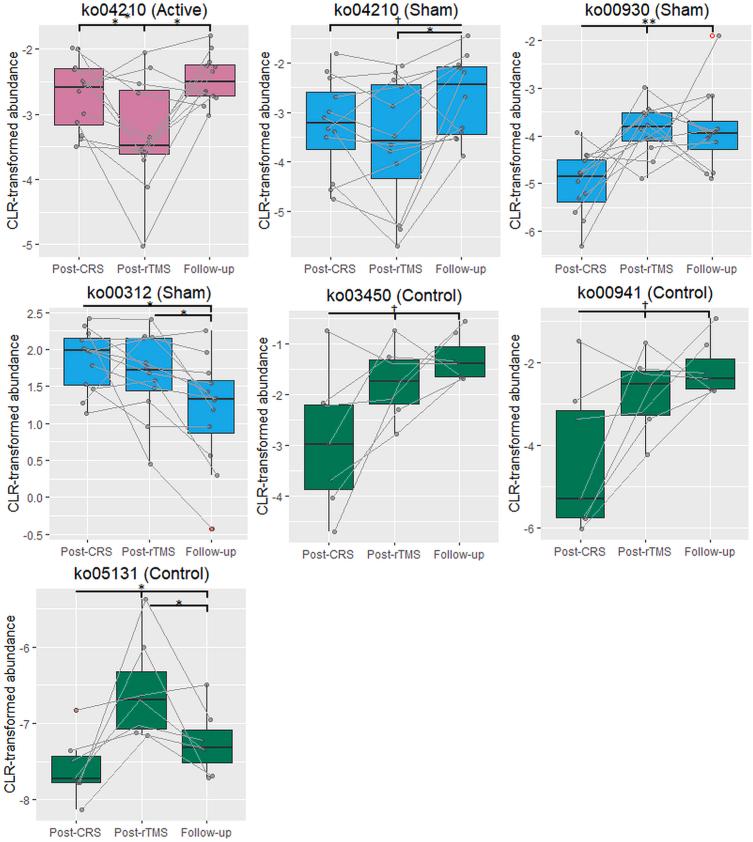
Gut microbiome composition is associated with mood-relating behaviours, including those reflecting depression-like phenotypes. Repetitive transcranial magnetic stimulation (rTMS), a non-invasive neuromodulation technique, is an effective treatment for depression, but its effects on the gut microbiome remain largely unknown. This study assessed microbial changes from rat faecal samples longitudinally following chronic restraint stress (CRS) and 10 Hz low-intensity rTMS treatment. CRS increased abundance within the Proteobacteria (Deltaproteobacteria, Desulfovibrionales) and Firmicutes () with decreases in Firmicutes family and genera (, and ) persisting for up to 4 weeks post CRS. The decrease in Firmicutes was not observed in the handling control and LI-rTMS groups, suggesting that handling alone may have sustained changes in gut microbiome associated with CRS. Nonetheless, LI-rTMS was specifically associated with an increase in genus that developed 2 weeks after treatment, and the abundance of both and genera was significantly correlated with rTMS behavioural and MRI outcomes. In addition, LI-rTMS treated rats had a reduction in apoptosis pathways and several indicators of reduced inflammatory processes. These findings provide evidence that the brain can influence the gut microbiome in a "top-down" manner, presumably via stimulation of descending pathways, and/or indirectly via behavioural modification.
肠道微生物群组成与情绪相关行为有关,包括那些反映类似抑郁表型的行为。重复经颅磁刺激(rTMS)是一种非侵入性神经调节技术,是治疗抑郁症的有效方法,但其对肠道微生物群的影响仍 largely unknown。本研究纵向评估了慢性束缚应激(CRS)和10Hz低强度rTMS治疗后大鼠粪便样本中的微生物变化。CRS增加了变形菌门(δ变形菌纲、脱硫弧菌目)和厚壁菌门内的丰度,厚壁菌门家族和属(、和)的丰度降低,在CRS后持续长达4周。在处理对照组和LI-rTMS组中未观察到厚壁菌门的减少,这表明单独处理可能会使与CRS相关的肠道微生物群持续发生变化。尽管如此,LI-rTMS与治疗后2周出现的属的增加特别相关,并且属和属的丰度均与rTMS行为和MRI结果显著相关。此外,接受LI-rTMS治疗的大鼠凋亡途径减少,炎症过程的几个指标降低。这些发现提供了证据,表明大脑可以以“自上而下”的方式影响肠道微生物群,大概是通过刺激下行通路,和/或通过行为改变间接影响。


 Zotero 插件