
CXCR4 依赖性巨噬细胞到成纤维细胞信号转导导致射血分数保留的心力衰竭中的舒张功能障碍。
CXCR4-dependent macrophage-to-fibroblast signaling contributes to cardiac diastolic dysfunction in heart failure with preserved ejection fraction.
机构信息
Department of Cardiology, Cardiovascular Key Laboratory of Zhejiang Province, Second Affiliated Hospital, Zhejiang University College of Medicine, 88 Jiefang Rd, Hangzhou, Zhejiang Province, 310009, PR China.
State Key Laboratory of Fluid Power and Mechatronic Systems, Department of Mechanics, Zhejiang University, Hangzhou 310027, China.
出版信息
Int J Biol Sci. 2022 Jan 9;18(3):1271-1287. doi: 10.7150/ijbs.65802. eCollection 2022.
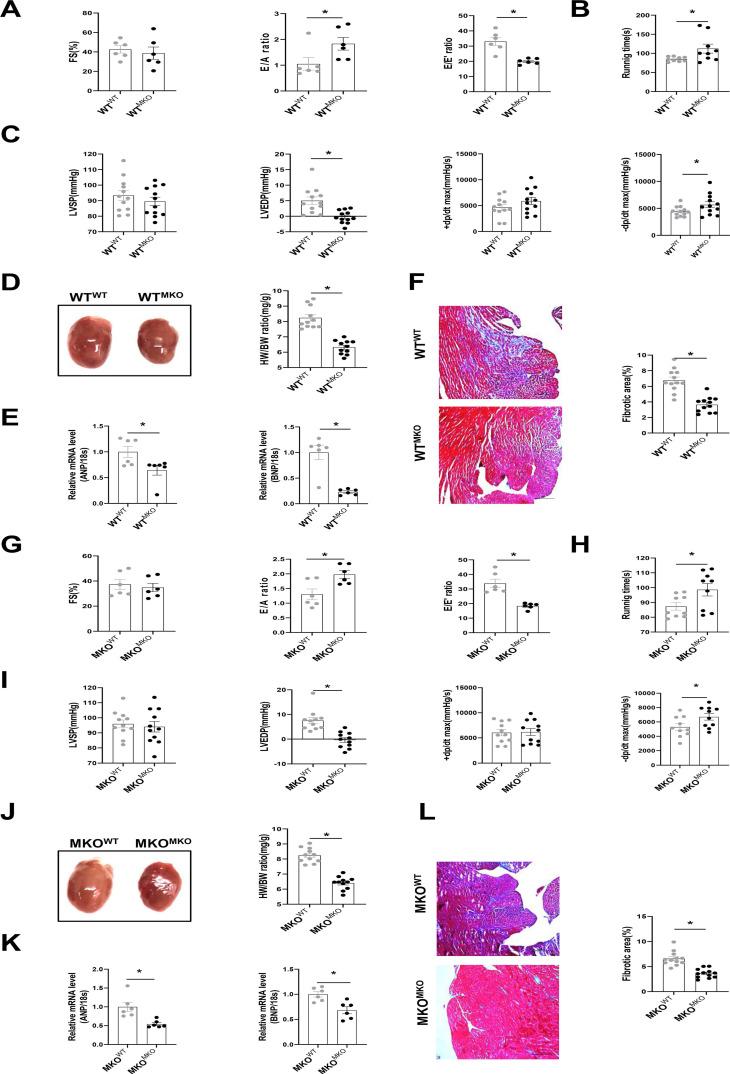
Heart failure with preserved ejection fraction (HFpEF) can arise from hypertension-induced cardiac remodeling. Monocyte/macrophage accumulation and inflammation are crucial elements in the pathogenesis of hypertension-induced cardiac remodeling. The C-X-C chemokine receptor 4 (CXCR4) is a critical regulator of the macrophage-mediated immune response. Nevertheless, the contribution of CXCR4 to macrophage phenotype and function during the progression of HFpEF remains unclear. Herein, we aimed to determine the role of macrophagic CXCR4 in heart failure with preserved ejection fraction (HFpEF). As a HFpEF model, wild type mice and myeloid-specific CXCR4 deficiency mice were subjected to pressure overload for 30 days to assess the function of macrophagic CXCR4 on cardiac function. Medium from macrophages was used to treat cardiac fibroblasts to study macrophage-to-fibroblast signaling. We found circulatory CXCR4+ immune cells, mainly monocytes, markedly increased in HFpEF patients with hypertension. In the experimental HFpEF mice model, macrophages but not neutrophils represent the main infiltrating inflammatory cells in the heart, abundantly expressing CXCR4. Myeloid-specific CXCR4 deficient impeded macrophage infiltration and inflammatory response in the heart of HFpEF mice, thus ameliorating cardiac fibrosis and improving cardiac diastolic function. Furthermore, transcriptomic profiling data revealed that CXCR4 loss in macrophages exhibited a decreased transcriptional signature associated with the regulation of inflammatory response. Notably, CXCR4 significantly augmented chemokine (C‑X‑C) motif ligand (CXCL3) expression, which at least partly contributed to fibrosis by promoting myofibroblast differentiation. Mechanistically, the increased production of pro-inflammatory cytokines in CXCR4 expressed macrophages could be attributed to the suppression of the peroxisome proliferator-activated receptor γ (PPARγ) activity. Collectively, our data supported that the infiltration of CXCR4+ macrophages in the heart exacerbates hypertension-induced diastolic function by promoting pro-inflammatory cytokines production and thus may serve as a potential therapeutic target for hypertension-induced HFpEF.
射血分数保留型心力衰竭(HFpEF)可由高血压引起的心脏重构引起。单核细胞/巨噬细胞积累和炎症是高血压引起的心脏重构发病机制中的关键因素。C-X-C 趋化因子受体 4(CXCR4)是巨噬细胞介导的免疫反应的关键调节剂。然而,CXCR4 在 HFpEF 进展过程中对巨噬细胞表型和功能的贡献尚不清楚。在此,我们旨在确定巨噬细胞 CXCR4 在射血分数保留型心力衰竭(HFpEF)中的作用。作为 HFpEF 模型,野生型小鼠和髓样特异性 CXCR4 缺陷型小鼠接受 30 天的压力超负荷以评估巨噬细胞 CXCR4 对心脏功能的作用。用巨噬细胞培养基处理心脏成纤维细胞以研究巨噬细胞-成纤维细胞信号。我们发现高血压 HFpEF 患者循环 CXCR4+免疫细胞(主要是单核细胞)明显增加。在实验性 HFpEF 小鼠模型中,巨噬细胞而不是中性粒细胞是心脏中主要浸润的炎症细胞,大量表达 CXCR4。髓样特异性 CXCR4 缺陷阻碍了 HFpEF 小鼠心脏中的巨噬细胞浸润和炎症反应,从而改善了心脏纤维化并改善了心脏舒张功能。此外,转录组谱数据显示,巨噬细胞中 CXCR4 的缺失表现出与炎症反应调节相关的转录特征降低。值得注意的是,CXCR4 显著增加趋化因子(C-X-C)基序配体(CXCL3)的表达,这至少部分通过促进肌成纤维细胞分化促进纤维化。机制上,CXCR4 表达的巨噬细胞中促炎细胞因子的产生增加可归因于过氧化物酶体增殖物激活受体 γ(PPARγ)活性的抑制。总之,我们的数据支持心脏中 CXCR4+巨噬细胞的浸润通过促进促炎细胞因子的产生加剧高血压引起的舒张功能障碍,因此可能成为高血压引起的 HFpEF 的潜在治疗靶点。




 Zotero 插件