
一种用于转移性癌症检测的新型混合深度学习模型。
A Novel Hybrid Deep Learning Model for Metastatic Cancer Detection.
机构信息
School of Management Science and Engineering, Chongqing University of Post and Telecommunication, Chongqing 400065, China.
Department of Electronics and Information Engineering, Xian Jiaotong University, Xian, China.
出版信息
Comput Intell Neurosci. 2022 Jun 24;2022:8141530. doi: 10.1155/2022/8141530. eCollection 2022.
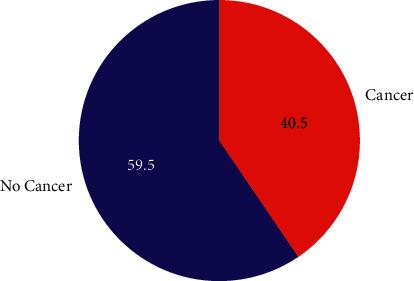
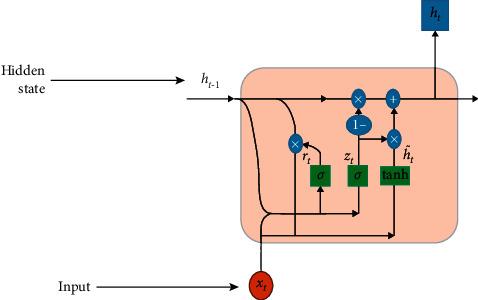
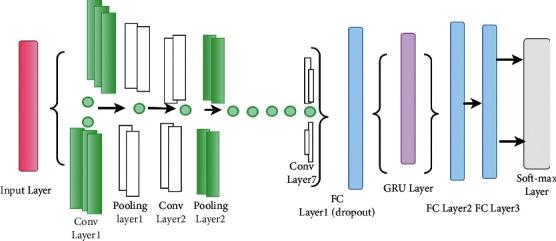
Cancer has been found as a heterogeneous disease with various subtypes and aims to destroy the body's normal cells abruptly. As a result, it is essential to detect and prognosis the distinct type of cancer since they may help cancer survivors with treatment in the early stage. It must also divide cancer patients into high- and low-risk groups. While realizing efficient detection of cancer is frequently a time-taking and exhausting task with the high possibility of pathologist errors and previous studies employed data mining and machine learning (ML) techniques to identify cancer, these strategies rely on handcrafted feature extraction techniques that result in incorrect classification. On the contrary, deep learning (DL) is robust in feature extraction and has recently been widely used for classification and detection purposes. This research implemented a novel hybrid AlexNet-gated recurrent unit (AlexNet-GRU) model for the lymph node (LN) breast cancer detection and classification. We have used a well-known Kaggle (PCam) data set to classify LN cancer samples. This study is tested and compared among three models: convolutional neural network GRU (CNN-GRU), CNN long short-term memory (CNN-LSTM), and the proposed AlexNet-GRU. The experimental results indicated that the performance metrics accuracy, precision, sensitivity, and specificity (99.50%, 98.10%, 98.90%, and 97.50) of the proposed model can reduce the pathologist errors that occur during the diagnosis process of incorrect classification and significantly better performance than CNN-GRU and CNN-LSTM models. The proposed model is compared with other recent ML/DL algorithms to analyze the model's efficiency, which reveals that the proposed AlexNet-GRU model is computationally efficient. Also, the proposed model presents its superiority over state-of-the-art methods for LN breast cancer detection and classification.
癌症已被发现为一种具有多种亚型的异质疾病,其目的是突然破坏身体的正常细胞。因此,检测和预测不同类型的癌症至关重要,因为它们可能有助于癌症幸存者在早期进行治疗。这也必须将癌症患者分为高风险和低风险组。虽然实现癌症的高效检测通常是一项耗时且费力的任务,并且存在病理学家错误的高可能性,但以前的研究采用了数据挖掘和机器学习 (ML) 技术来识别癌症,这些策略依赖于手工制作的特征提取技术,导致分类错误。相反,深度学习 (DL) 在特征提取方面非常强大,最近已广泛用于分类和检测目的。本研究针对淋巴结 (LN) 乳腺癌检测和分类实施了一种新的混合 AlexNet-门控循环单元 (AlexNet-GRU) 模型。我们使用了一个著名的 Kaggle (PCam) 数据集来对 LN 癌症样本进行分类。本研究在三个模型中进行了测试和比较:卷积神经网络 GRU (CNN-GRU)、卷积神经网络长短期记忆 (CNN-LSTM) 和提出的 AlexNet-GRU。实验结果表明,所提出模型的性能指标准确率、精度、灵敏度和特异性 (99.50%、98.10%、98.90% 和 97.50%) 可以减少病理学家在错误分类诊断过程中出现的错误,并显著优于 CNN-GRU 和 CNN-LSTM 模型。将所提出的模型与其他最近的 ML/DL 算法进行比较,以分析模型的效率,这表明所提出的 AlexNet-GRU 模型在计算上是高效的。此外,所提出的模型在 LN 乳腺癌检测和分类方面表现出优于最新方法的优越性。








 Zotero 插件