
使用深度卷积神经网络(CNN)对乳腺癌异常进行多类别分类。
Multi- class classification of breast cancer abnormalities using Deep Convolutional Neural Network (CNN).
机构信息
Department of Software and Information Systems, University of Mauritius, Reduit, Mauritius.
Department of Computer Science, Middlesex University, London, England, United Kingdom.
出版信息
PLoS One. 2021 Aug 26;16(8):e0256500. doi: 10.1371/journal.pone.0256500. eCollection 2021.
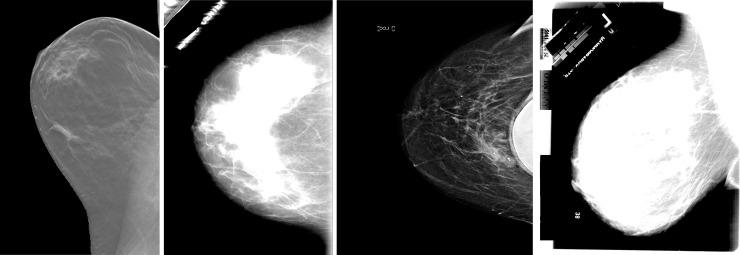
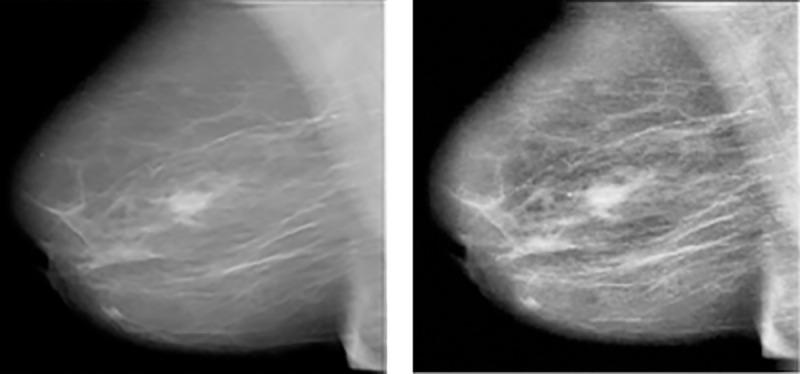
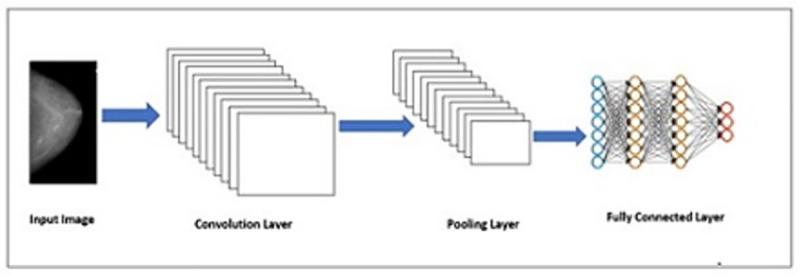
The real cause of breast cancer is very challenging to determine and therefore early detection of the disease is necessary for reducing the death rate due to risks of breast cancer. Early detection of cancer boosts increasing the survival chance up to 8%. Primarily, breast images emanating from mammograms, X-Rays or MRI are analyzed by radiologists to detect abnormalities. However, even experienced radiologists face problems in identifying features like micro-calcifications, lumps and masses, leading to high false positive and high false negative. Recent advancement in image processing and deep learning create some hopes in devising more enhanced applications that can be used for the early detection of breast cancer. In this work, we have developed a Deep Convolutional Neural Network (CNN) to segment and classify the various types of breast abnormalities, such as calcifications, masses, asymmetry and carcinomas, unlike existing research work, which mainly classified the cancer into benign and malignant, leading to improved disease management. Firstly, a transfer learning was carried out on our dataset using the pre-trained model ResNet50. Along similar lines, we have developed an enhanced deep learning model, in which learning rate is considered as one of the most important attributes while training the neural network. The learning rate is set adaptively in our proposed model based on changes in error curves during the learning process involved. The proposed deep learning model has achieved a performance of 88% in the classification of these four types of breast cancer abnormalities such as, masses, calcifications, carcinomas and asymmetry mammograms.
乳腺癌的确切病因很难确定,因此早期发现疾病对于降低乳腺癌死亡率至关重要。癌症的早期发现可以提高 8%的生存率。放射科医生主要通过分析乳房 X 光片、X 光或 MRI 产生的乳房图像来检测异常。然而,即使是经验丰富的放射科医生在识别微钙化、肿块和肿块等特征时也会遇到问题,导致高假阳性和高假阴性。图像处理和深度学习的最新进展为设计更多增强型应用程序带来了一些希望,这些应用程序可用于早期发现乳腺癌。在这项工作中,我们开发了一种深度卷积神经网络(CNN),用于分割和分类各种类型的乳房异常,如钙化、肿块、不对称和癌,与现有的主要将癌症分为良性和恶性的研究工作不同,这可以改善疾病管理。首先,我们在自己的数据集上使用预训练模型 ResNet50 进行了迁移学习。类似地,我们开发了一种增强型深度学习模型,其中学习率被认为是训练神经网络时最重要的属性之一。在我们提出的模型中,根据学习过程中误差曲线的变化自适应地设置学习率。所提出的深度学习模型在对肿块、钙化、癌和不对称乳房 X 光等四种乳腺癌异常类型的分类中取得了 88%的性能。


 Zotero 插件