
基于预后基因表达的透明细胞肾细胞癌特征
Prognostic Gene Expression-Based Signature in Clear-Cell Renal Cell Carcinoma.
作者信息
Roldán Fiorella L, Izquierdo Laura, Ingelmo-Torres Mercedes, Lozano Juan José, Carrasco Raquel, Cuñado Alexandra, Reig Oscar, Mengual Lourdes, Alcaraz Antonio
机构信息
Laboratori i Servei d'Urologia, Hospital Clínic de Barcelona, 08036 Barcelona, Spain.
Genètica i Tumors Urològics, Institut d'Investigacions Biomèdiques August Pi i Sunyer (IDIBAPS), 08036 Barcelona, Spain.
出版信息
Cancers (Basel). 2022 Aug 1;14(15):3754. doi: 10.3390/cancers14153754.
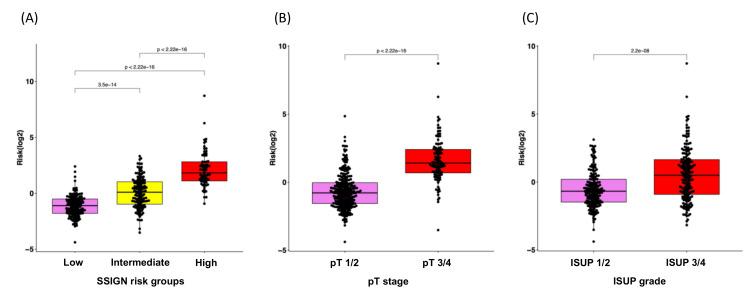
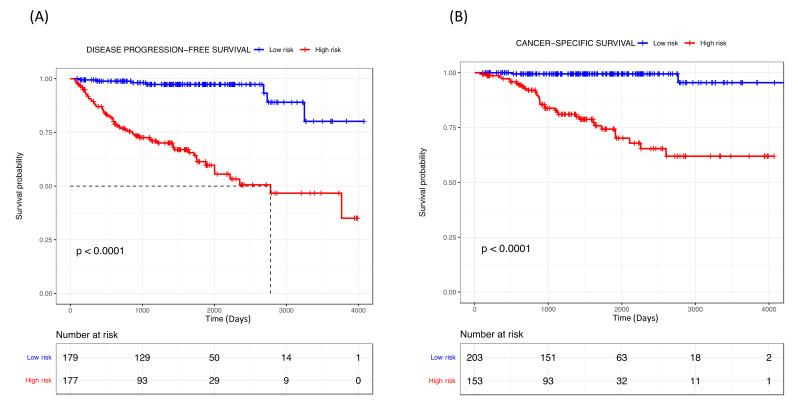
The inaccuracy of the current prognostic algorithms and the potential changes in the therapeutic management of localized ccRCC demands the development of an improved prognostic model for these patients. To this end, we analyzed whole-transcriptome profiling of 26 tissue samples from progressive and non-progressive ccRCCs using Illumina Hi-seq 4000. Differentially expressed genes (DEG) were intersected with the RNA-sequencing data from the TCGA. The overlapping genes were used for further analysis. A total of 132 genes were found to be prognosis-related genes. LASSO regression enabled the development of the best prognostic six-gene panel. Cox regression analyses were performed to identify independent clinical prognostic parameters to construct a combined nomogram which includes the expression of CERCAM, MIA2, HS6ST2, ONECUT2, SOX12, TMEM132A, pT stage, tumor size and ISUP grade. A risk score generated using this model effectively stratified patients at higher risk of disease progression (HR 10.79; p < 0.001) and cancer-specific death (HR 19.27; p < 0.001). It correlated with the clinicopathological variables, enabling us to discriminate a subset of patients at higher risk of progression within the Stage, Size, Grade and Necrosis score (SSIGN) risk groups, pT and ISUP grade. In summary, a gene expression-based prognostic signature was successfully developed providing a more precise assessment of the individual risk of progression.
当前预后算法的不准确性以及局限性ccRCC治疗管理中可能的变化,要求为这些患者开发一种改进的预后模型。为此,我们使用Illumina Hi-seq 4000分析了26个进展性和非进展性ccRCC组织样本的全转录组谱。将差异表达基因(DEG)与来自TCGA的RNA测序数据进行交叉分析。对重叠基因进行进一步分析。共发现132个基因是预后相关基因。LASSO回归使得能够开发出最佳的预后六基因组合。进行Cox回归分析以确定独立的临床预后参数,从而构建一个综合列线图,该列线图包括CERCAM、MIA2、HS6ST2、ONECUT2、SOX12、TMEM132A的表达、pT分期、肿瘤大小和ISUP分级。使用该模型生成的风险评分有效地将疾病进展风险较高(HR 10.79;p < 0.001)和癌症特异性死亡风险较高(HR 19.27;p < 0.001)的患者进行了分层。它与临床病理变量相关,使我们能够在分期、大小、分级和坏死评分(SSIGN)风险组、pT和ISUP分级中区分出进展风险较高的患者亚组。总之,成功开发了一种基于基因表达的预后特征,可对个体进展风险进行更精确的评估。


 Zotero 插件