
新冠病毒相关垃圾污染在希腊海滩和近岸浅水区域。
COVID-19-related litter pollution on Greek beaches and nearshore shallow water environments.
机构信息
Laboratory of Marine Geology and Physical Oceanography, Department of Geology, University of Patras, 26504 Patras, Greece.
Laboratory of Marine Geology and Physical Oceanography, Department of Geology, University of Patras, 26504 Patras, Greece.
出版信息
Mar Pollut Bull. 2022 Dec;185(Pt A):114250. doi: 10.1016/j.marpolbul.2022.114250. Epub 2022 Oct 14.
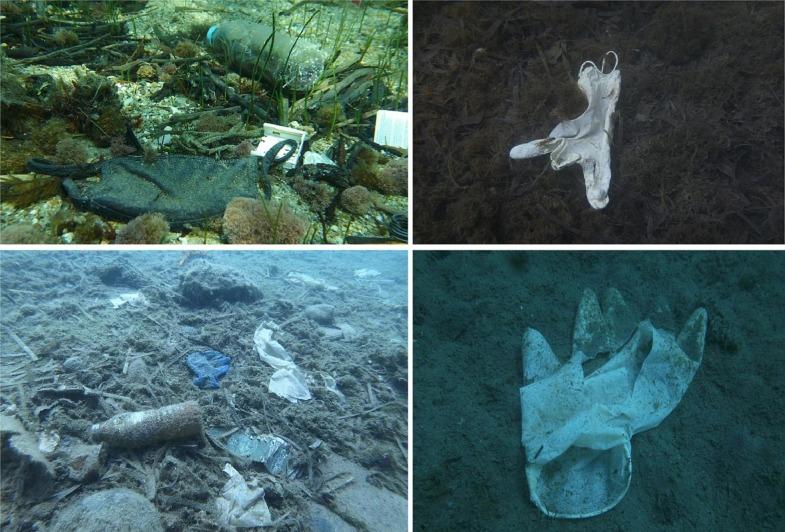
COVID-19 pandemic has led to an increase in certain types of litter, many of which are expected to end up in the marine environment. The present study aimed to monitor the pandemic-related litter pollution along the Greek coastal environment. Overall, 59 beach and 83 underwater clean-ups were conducted. Litter was categorized as: PPE (face masks and gloves), COVID-19-related, single-use plastic (SUP) and takeaway items. PPE, dominated by face masks (86.21 %), accounted for 0.29 % of all litter. The average PPE density was 3.1 × 10 items m and 2.59 items/ 100 m. COVID-19-related items represented 1.04 % of the total. Wet wipes showed higher densities (0.67 % of all litter) than in the pre-COVID era, while no increase in SUP and takeaway items was observed. Benthic PPE, dominated by gloves (83.95 %), represented 0.26 % of the total. The mean PPE density was 2.5 × 10 items m.
COVID-19 大流行导致某些类型的垃圾增加,其中许多预计将最终进入海洋环境。本研究旨在监测希腊沿海环境中与大流行相关的垃圾污染。总共进行了 59 次海滩和 83 次水下清理。垃圾分为:个人防护装备(口罩和手套)、与 COVID-19 相关的垃圾、一次性塑料和外卖物品。个人防护装备(主要是口罩,占 86.21%)占所有垃圾的 0.29%。个人防护装备的平均密度为 3.1×10 个/米,每 100 米有 2.59 个。与 COVID-19 相关的物品占总数的 1.04%。湿巾的密度(占所有垃圾的 0.67%)高于 COVID-19 前时期,而一次性塑料和外卖物品的数量没有增加。底栖个人防护装备(主要是手套,占 83.95%)占总数的 0.26%。个人防护装备的平均密度为 2.5×10 个/米。


 Zotero 插件