
来源于地锦草的scabertopin通过在体外诱导膀胱癌产生活性氧来介导坏死性凋亡。
Scabertopin Derived from L. Mediates Necroptosis by Inducing Reactive Oxygen Species Production in Bladder Cancer In Vitro.
作者信息
Gao Yuanhui, Nie Zhenyu, Cao Hui, Huang Denggao, Chen Mei, Xiang Yang, Yu Xiaolong, Zhang Shufang
机构信息
Central Laboratory, Affiliated Haikou Hospital of Xiangya Medical College, Central South University, Haikou 570208, China.
School of Materials Science and Engineering, Hainan University, Haikou 570228, China.
出版信息
Cancers (Basel). 2022 Dec 2;14(23):5976. doi: 10.3390/cancers14235976.
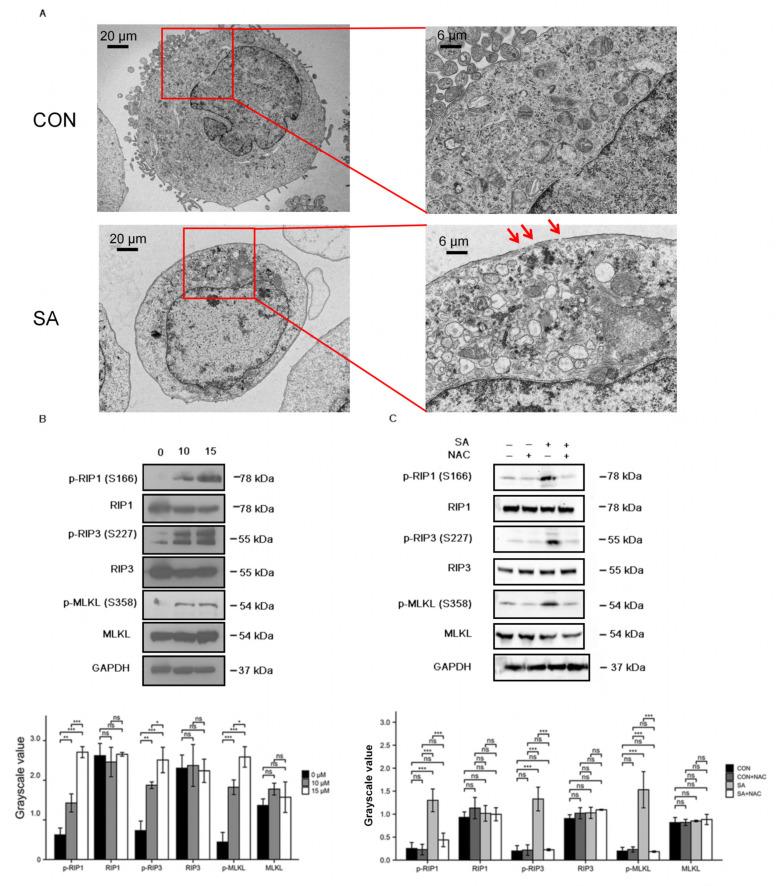
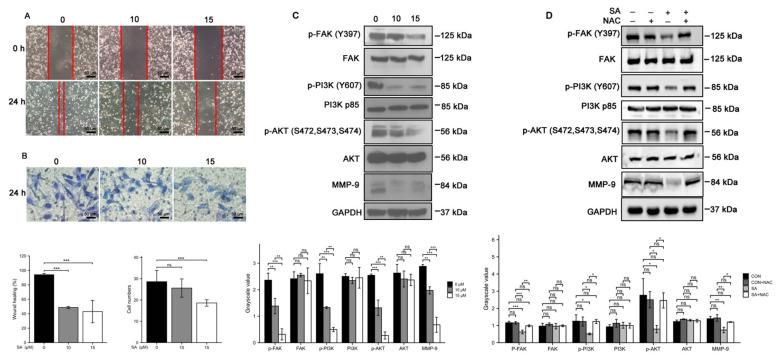
Bladder cancer remains one of the most common malignant tumors that threatens human health worldwide. It imposes a heavy burden on patients and society due to the high medical costs associated with its easy metastasis and recurrence. Although several treatment options for bladder cancer are available, their clinical efficacy remains unsatisfactory. Therefore, actively exploring new drugs and their mechanisms of action for the clinical treatment of bladder cancer is very important. Scabertopin is one of the major sesquiterpene lactones found in L. Sesquiterpene lactones are thought to have fairly strong anti-cancer efficacy. However, the anticancer effect of sesquiterpenoid scabertopin on bladder cancer and its mechanism are still unclear. The aim of this study is to evaluate the antitumor activity of scabertopin in bladder cancer and its potential molecular mechanism in vitro. Our results suggest that scabertopin can induce RIP1/RIP3-dependent necroptosis in bladder cancer cells by promoting the production of mitochondrial reactive oxygen species (ROS), inhibit the expression of MMP-9 by inhibiting the FAK/PI3K/Akt signaling pathway, and ultimately inhibit the migration and invasion ability of bladder cancer cells. At the same time, we also demonstrated that the half-inhibition concentration (IC50) of scabertopin on various bladder cancer cell lines (J82, T24, RT4 and 5637) is much lower than that on human ureteral epithelial immortalized cells (SV-HUC-1). The above observations indicate that scabertopin is a potential therapeutic agent for bladder cancer that acts by inducing necroptosis and inhibiting metastasis.
膀胱癌仍然是全球范围内威胁人类健康的最常见恶性肿瘤之一。由于其易于转移和复发,相关医疗费用高昂,给患者和社会带来了沉重负担。尽管有几种膀胱癌的治疗方案,但它们的临床疗效仍不尽人意。因此,积极探索用于膀胱癌临床治疗的新药及其作用机制非常重要。斯卡伯托平是地锦草中发现的主要倍半萜内酯之一。倍半萜内酯被认为具有相当强的抗癌功效。然而,倍半萜斯卡伯托平对膀胱癌的抗癌作用及其机制仍不清楚。本研究的目的是在体外评估斯卡伯托平对膀胱癌的抗肿瘤活性及其潜在分子机制。我们的结果表明,斯卡伯托平可通过促进线粒体活性氧(ROS)的产生,诱导膀胱癌 细胞中 RIP1/RIP3 依赖性坏死性凋亡,通过抑制 FAK/PI3K/Akt 信号通路抑制 MMP-9 的表达,并最终抑制膀胱癌细胞的迁移和侵袭能力。同时,我们还证明了斯卡伯托平对各种膀胱癌细胞系(J82、T24、RT4 和 5637)的半抑制浓度(IC50)远低于对人输尿管上皮永生化细胞(SV-HUC-1)的半抑制浓度。上述观察结果表明,斯卡伯托平是一种潜在的膀胱癌治疗药物,其作用机制是诱导坏死性凋亡和抑制转移。


 Zotero 插件