
欧洲人类生殖与胚胎学会指南:病毒感染/疾病患者的医学辅助生殖
ESHRE guideline: medically assisted reproduction in patients with a viral infection/disease.
作者信息
Mocanu Edgar, Drakeley Andrew, Kupka Markus S, Lara-Molina Evelin E, Le Clef Nathalie, Ombelet Willem, Patrat Catherine, Pennings Guido, Semprini Augusto Enrico, Tilleman Kelly, Tognon Mauro, Tonch Nino, Woodward Bryan
机构信息
Department of Reproductive Medicine, Rotunda Hospital, Royal College of Surgeons in Ireland, Dublin, Ireland.
Department of Reproductive Medicine, Liverpool Women's Hospital, Liverpool, UK.
出版信息
Hum Reprod Open. 2021 Oct 25;2021(4):hoab037. doi: 10.1093/hropen/hoab037. eCollection 2021.
STUDY QUESTION
What is the recommended management for medically assisted reproduction (MAR) in patients with a viral infection or disease, based on the best available evidence in the literature?
SUMMARY ANSWER
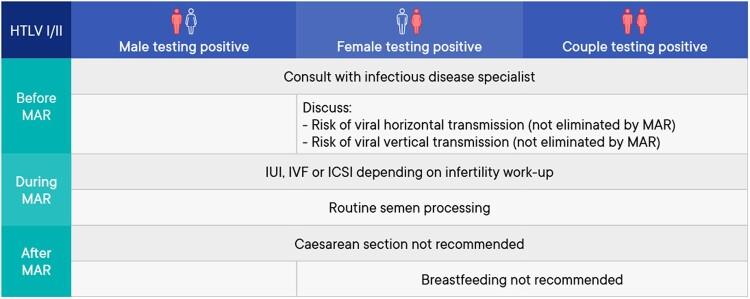
The ESHRE guideline on MAR in patients with a viral infection/disease makes 78 recommendations on prevention of horizontal and vertical transmission before, during and after MAR, and the impact on its outcomes, and these also include recommendations regarding laboratory safety on the processing and storage of gametes and embryos testing positive for viral infections.
WHAT IS KNOWN ALREADY
The development of new and improved anti-viral medications has resulted in improved life expectancy and quality of life for patients with viral infections/diseases. Patients of reproductive age are increasingly exploring their options for family creation.
STUDY DESIGN SIZE DURATION
The guideline was developed according to the structured methodology for the development of ESHRE guidelines. After the formulation of nine key questions for six viruses (hepatitis B virus, hepatitis C virus, human immunodeficiency virus, human papilloma virus, human T-lymphotropic virus I/II and Zika virus) by a group of experts, literature searches and assessments were performed. Papers published up to 2 November 2020 and written in English were included in the review. Evidence was analyzed by female, male or couple testing positive for the virus.
PARTICIPANTS/MATERIALS SETTING METHODS: Based on the collected evidence, recommendations were formulated and discussed until consensus was reached within the guideline group. There were 61 key questions to be answered by the guideline development group (GDG), of which 12 were answered as narrative questions and 49 as PICO (Patient, Intervention, Comparison, Outcome) questions. A stakeholder review was organized after the finalization of the draft. The final version was approved by the GDG and the ESHRE Executive Committee.
MAIN RESULTS AND THE ROLE OF CHANCE
This guideline aims to help providers meet a growing demand for guidance on the management of patients with a viral infection/disease presenting in the fertility clinic.The guideline makes 78 recommendations on prevention of viral transmission before and during MAR, and interventions to reduce/avoid vertical transmission to the newborn. Preferred MAR treatments and interventions are described together with the effect of viral infections on outcomes. The GDG formulated 44 evidence-based recommendations-of which 37 were formulated as strong recommendations and 7 as weak-33 good practice points (GPP) and one research only recommendation. Of the evidence-based recommendations, none were supported by high-quality evidence, two by moderate-quality evidence, 15 by low-quality evidence and 27 by very low-quality evidence. To support future research in the field of MAR in patients with a viral infection/disease, a list of research recommendations is provided.
LIMITATIONS REASONS FOR CAUTION
Most interventions included are not well-studied in patients with a viral infection/disease. For a large proportion of interventions, evidence was very limited and of very low quality. More evidence is required for these interventions, especially in the field of human papilloma virus (HPV). Such future studies may require the current recommendations to be revised.
WIDER IMPLICATIONS OF THE FINDINGS
The guideline provides clinicians with clear advice on best practice in MAR for patients with a viral infection/disease, based on the best evidence currently available. In addition, a list of research recommendations is provided to stimulate further studies in the field.
STUDY FUNDING/COMPETING INTERESTS: The guideline was developed and funded by ESHRE, covering expenses associated with the guideline meetings, with the literature searches and with the dissemination of the guideline. The guideline group members did not receive any financial incentives, all work was provided voluntarily. A.D. reports research fees from Ferring and Merck, consulting fees from Ferring, outside the submitted work. C.P. reports speakers fees from Merck and MSD outside the submitted work. K.T. reports speakers fees from Cooper Surgical and Ferring and consultancy fees as member of the advisory board BioTeam of Ferring, outside the submitted work. The other authors have no conflicts of interest to declare.
DISCLAIMER
. . www.eshre.eu/guidelines..
研究问题
根据文献中现有最佳证据,对于病毒感染或患病患者的医学辅助生殖(MAR),推荐的管理措施是什么?
简要回答
欧洲人类生殖与胚胎学会(ESHRE)关于病毒感染/患病患者MAR的指南就MAR之前、期间及之后预防水平和垂直传播以及对其结局的影响提出了78条建议,其中还包括有关对病毒感染检测呈阳性的配子和胚胎进行处理及储存时的实验室安全的建议。
已知信息
新型和改良抗病毒药物的研发提高了病毒感染/患病患者的预期寿命和生活质量。育龄患者越来越多地探索组建家庭的选择。
研究设计、规模、持续时间:该指南是根据ESHRE指南制定的结构化方法制定的。在一组专家针对六种病毒(乙型肝炎病毒、丙型肝炎病毒、人类免疫缺陷病毒、人乳头瘤病毒、人类嗜T淋巴细胞病毒I/II和寨卡病毒)提出九个关键问题后,进行了文献检索和评估。纳入综述的文献为截至2020年11月2日发表且为英文撰写的论文。证据按病毒检测呈阳性的女性、男性或夫妇进行分析。
参与者/材料、环境、方法:基于收集到的证据制定建议并进行讨论,直至在指南小组内达成共识。指南制定小组(GDG)有61个关键问题需要回答,其中12个作为叙述性问题回答,49个作为PICO(患者、干预措施、对照、结局)问题回答。在草案最终确定后组织了利益相关者评审。最终版本由GDG和ESHRE执行委员会批准。
主要结果及机遇的作用
本指南旨在帮助医疗服务提供者满足对生育诊所中病毒感染/患病患者管理指导日益增长的需求。该指南就MAR之前和期间预防病毒传播以及减少/避免垂直传播给新生儿的干预措施提出了78条建议;描述了首选的MAR治疗方法和干预措施以及病毒感染对结局的影响。GDG制定了44条基于证据的建议,其中37条为强烈建议,7条为弱建议,33条良好实践要点(GPP)和1条仅用于研究的建议。在基于证据的建议中,没有一条得到高质量证据支持,两条得到中等质量证据支持,15条得到低质量证据支持,27条得到极低质量证据支持。为支持未来在病毒感染/患病患者MAR领域的研究,提供了一份研究建议清单。
局限性、谨慎理由:大多数纳入的干预措施在病毒感染/患病患者中未得到充分研究。对于很大一部分干预措施,证据非常有限且质量极低。这些干预措施需要更多证据,尤其是在人乳头瘤病毒(HPV)领域。此类未来研究可能需要修订当前建议。
研究结果的更广泛影响
该指南基于当前可得的最佳证据,为临床医生提供了关于病毒感染/患病患者MAR最佳实践的明确建议。此外,还提供了一份研究建议清单以促进该领域的进一步研究。
研究资金/利益冲突:本指南由ESHRE制定并资助,涵盖与指南会议、文献检索及指南传播相关的费用。指南小组成员未获得任何经济激励,所有工作均为自愿提供。A.D.报告在已提交工作之外从辉凌和默克获得研究费用,从辉凌获得咨询费用。C.P.报告在已提交工作之外从默克和默沙东获得演讲费用。K.T.报告在已提交工作之外从库珀外科公司和辉凌获得演讲费用,并作为辉凌咨询委员会BioTeam成员获得咨询费用。其他作者声明无利益冲突。
免责声明
......www.eshre.eu/guidelines..



 Zotero 插件