
卵母细胞衰老:一种独特细胞中的多因素现象。
Oocyte Aging: A Multifactorial Phenomenon in A Unique Cell.
机构信息
Department of Preclinical and Basic Sciences, Faculty of Biological and Veterinary Sciences, Nicolaus Copernicus University, Torun, Poland.
Department of Human Genetics, David Geffen School of Medicine, University of California Los Angeles, Los Angeles, CA, USA.
出版信息
Aging Dis. 2024 Feb 1;15(1):5-21. doi: 10.14336/AD.2023.0527.
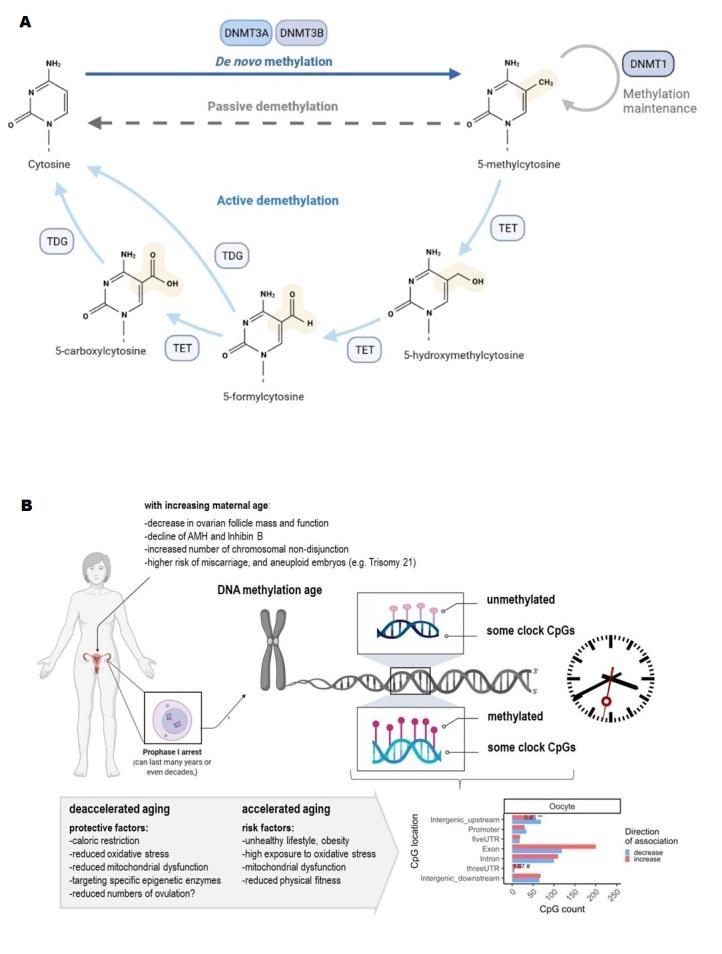
The oocyte is considered to be the largest cell in mammalian species. Women hoping to become pregnant face a ticking biological clock. This is becoming increasingly challenging as an increase in life expectancy is accompanied by the tendency to conceive at older ages. With advancing maternal age, the fertilized egg will exhibit lower quality and developmental competence, which contributes to increased chances of miscarriage due to several causes such as aneuploidy, oxidative stress, epigenetics, or metabolic disorders. In particular, heterochromatin in oocytes and with it, the DNA methylation landscape undergoes changes. Further, obesity is a well-known and ever-increasing global problem as it is associated with several metabolic disorders. More importantly, both obesity and aging negatively affect female reproduction. However, among women, there is immense variability in age-related decline of oocytes' quantity, developmental competence, or quality. Herein, the relevance of obesity and DNA-methylation will be discussed as these aspects have a tremendous effect on female fertility, and it is a topic of continuous and widespread interest that has yet to be fully addressed for the mammalian oocyte.
卵母细胞被认为是哺乳动物中最大的细胞。希望怀孕的女性面临着一个滴答作响的生物钟。随着预期寿命的延长,越来越多的人倾向于在年龄较大时怀孕,这使得情况变得更加具有挑战性。随着母亲年龄的增长,受精卵的质量和发育能力会下降,这会增加由于非整倍体、氧化应激、表观遗传学或代谢紊乱等多种原因导致的流产几率。特别是,卵母细胞中的异染色质及其 DNA 甲基化景观会发生变化。此外,肥胖是一个众所周知且日益严重的全球性问题,因为它与多种代谢紊乱有关。更重要的是,肥胖和衰老都会对女性生殖产生负面影响。然而,在女性中,卵母细胞数量、发育能力或质量随年龄下降的程度存在巨大差异。在此,将讨论肥胖和 DNA 甲基化的相关性,因为这些方面对女性生育能力有巨大影响,这是一个持续且广泛关注的话题,但对于哺乳动物卵母细胞来说,这个话题尚未得到充分解决。

 Zotero 插件