
小眼畸形隐性基因视觉色素在穴居种群中的线粒体系统地理学和分子进化。(德菲利皮,1853)。
Mitochondrial phylogeography and molecular evolution of the rhodopsin visual pigment in troglobitic populations of (De Filippi, 1853).
机构信息
Colección Nacional de Peces, Departamento de Zoología, Instituto de Biología, Universidad Nacional Autónoma de México, Ciudad de México, C.P. 04510, México.
Posgrado en Ciencias Biológicas, Colección Nacional de Peces, Departamento de Zoología, Instituto de Biología, Universidad Nacional Autónoma de México, Ciudad de México, C.P. 04510, México.
出版信息
Zool Res. 2023 Jul 18;44(4):761-775. doi: 10.24272/j.issn.2095-8137.2022.437.
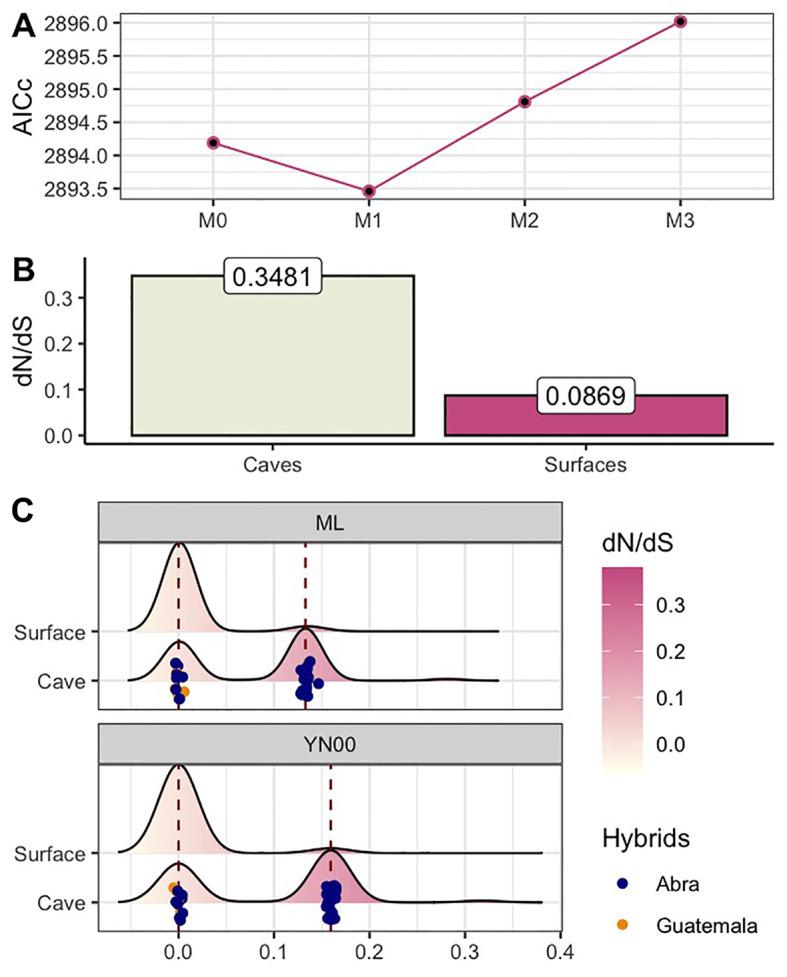
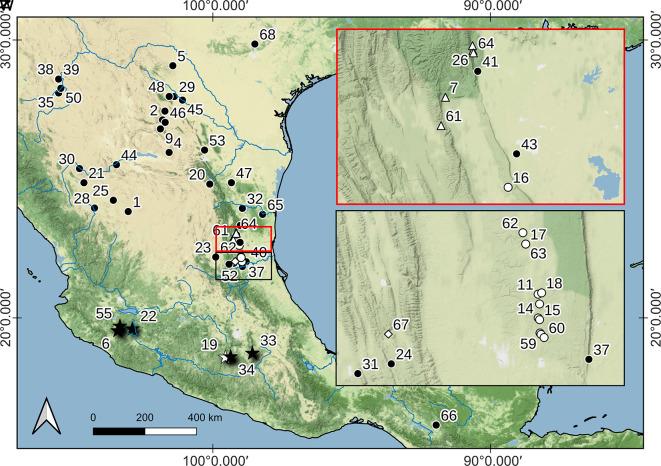
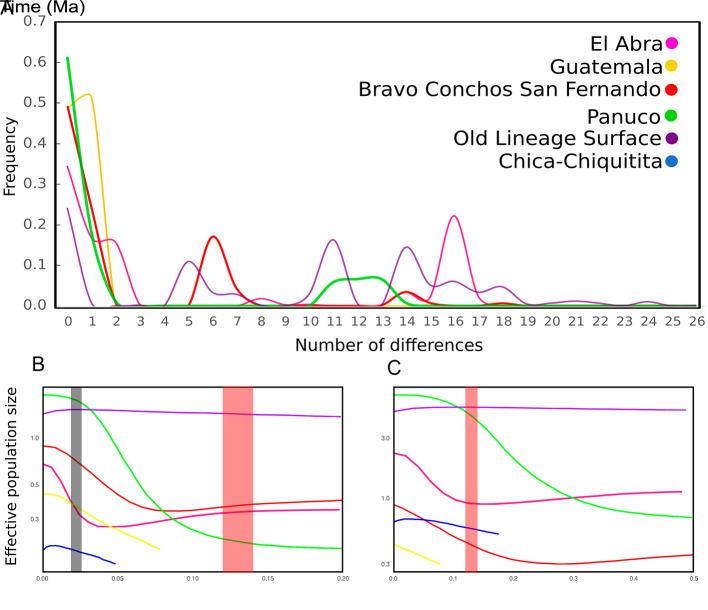
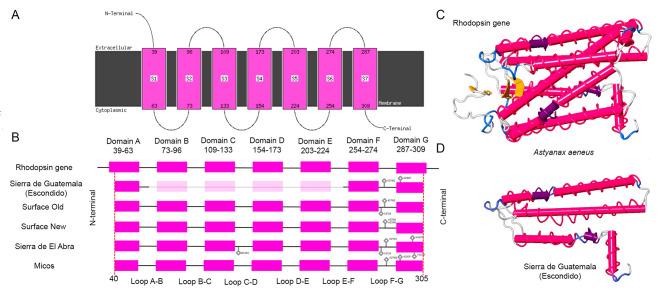
Cave-adapted animals provide a unique opportunity to study the evolutionary mechanisms underlying phenotypic, metabolic, behavioral, and genetic evolution in response to cave environments. The Mexican tetra ( ) is considered a unique model system as it shows both surface and cave-dwelling morphs. To date, at least 33 different cave populations have been identified, with phylogenetic studies suggesting an origin from at least two independent surface lineages, thereby providing a unique opportunity to study parallel evolution. In the present study, we carried out the most exhaustive phylogeographic study of to date, including cave and surface localities, using two mitochondrial markers (cytochrome (cyt ) and cytochrome c oxidase subunit I ( )) and nuclear rhodopsin visual pigment ( ). Additionally, we inferred the molecular evolution of within the two contrasting environments (cave and surface) and across three geographic regions (Sierra de El Abra, Sierra de Guatemala, and Micos). In total, 267 individuals were sequenced for the two mitochondrial fragments and 268 individuals were sequenced for the visual pigment from 22 cave and 46 surface populations. Phylogeographic results based on the mitochondrial data supported the two-lineage hypothesis, except for the Pachón and Chica caves, whose introgression has been largely documented. The Sierra de El Abra region depicted the largest genetic diversity, followed by the Sierra de Guatemala region. Regarding the phylogeographic patterns of , we recovered exclusive haplogroups for the Sierra de El Abra (Haplogroup I) and Sierra de Guatemala regions (Haplogroup IV). Moreover, a 544 bp deletion in the gene was observed in the Escondido cave population from Sierra de Guatemala, reducing the protein from seven to three intramembrane domains. This change may produce a loss-of-function (LOF) but requires further investigation. Regarding nonsynonymous ( N) and synonymous ( S) substitution rates (omega values ω), our results revealed the prevailing influence of purifying selection upon the pigment for both cave and surface populations (ω<1), but relaxation at the El Abra region. Notably, in contrast to the other two regions, we observed an increase in the number of N mutations for Sierra de El Abra. However, given that a LOF was exclusively identified in the Sierra de Guatemala region, we cannot dismiss the possibility of a pleiotropic effect on the Rho protein.
洞穴适应动物为研究表型、代谢、行为和遗传进化的进化机制提供了一个独特的机会,以适应洞穴环境。墨西哥四齿鲀(Astyanax mexicanus)被认为是一个独特的模式系统,因为它表现出了地表和洞穴两种形态。迄今为止,已经确定了至少 33 个不同的洞穴种群,系统发育研究表明,这些种群至少起源于两个独立的地表谱系,从而为平行进化提供了一个独特的研究机会。在本研究中,我们对墨西哥四齿鲀进行了迄今为止最详尽的系统地理学研究,包括洞穴和地表的地点,使用了两个线粒体标记(细胞色素 b(cyt b)和细胞色素 c 氧化酶亚基 I(COI))和核视蛋白(rhodopsin)视觉色素()。此外,我们推断了 在两个截然不同的环境(洞穴和地表)和三个地理区域(埃尔阿布拉山脉、危地马拉山脉和米科斯)内的分子进化。总共对来自 22 个洞穴和 46 个地表种群的 267 个个体进行了两个线粒体片段的测序,对 268 个个体进行了 的视觉色素测序。基于线粒体数据的系统地理学结果支持两谱系假说,但 Pachón 和 Chica 洞穴除外,这些洞穴的基因渗入已被广泛记录。埃尔阿布拉山脉地区显示出最大的遗传多样性,其次是危地马拉山脉地区。关于 的系统地理学模式,我们为埃尔阿布拉山脉(单倍群 I)和危地马拉山脉地区(单倍群 IV)恢复了独特的单倍群。此外,在来自危地马拉山脉的 Escondido 洞穴种群中观察到 基因中的 544 bp 缺失,导致蛋白质从七个跨膜结构域减少到三个。这种变化可能导致功能丧失(LOF),但需要进一步研究。关于非同义(N)和同义(S)替换率(ω 值),我们的结果表明,在洞穴和地表种群中, 色素主要受到纯化选择的影响(ω<1),但在埃尔阿布拉地区有所放松。值得注意的是,与其他两个地区相比,我们观察到埃尔阿布拉地区的 N 突变数量增加。然而,鉴于仅在危地马拉山脉地区鉴定出一个 LOF,我们不能排除对 Rho 蛋白产生多效性影响的可能性。


 Zotero 插件