
急性暴露于微塑料会导致年轻和年老小鼠行为和炎症的变化。
Acute Exposure to Microplastics Induced Changes in Behavior and Inflammation in Young and Old Mice.
机构信息
George and Anne Ryan Institute for Neuroscience, University of Rhode Island, Kingston, RI 02881, USA.
Department of Biomedical and Pharmaceutical Sciences, College of Pharmacy, University of Rhode Island, Kingston, RI 02881, USA.
出版信息
Int J Mol Sci. 2023 Aug 1;24(15):12308. doi: 10.3390/ijms241512308.
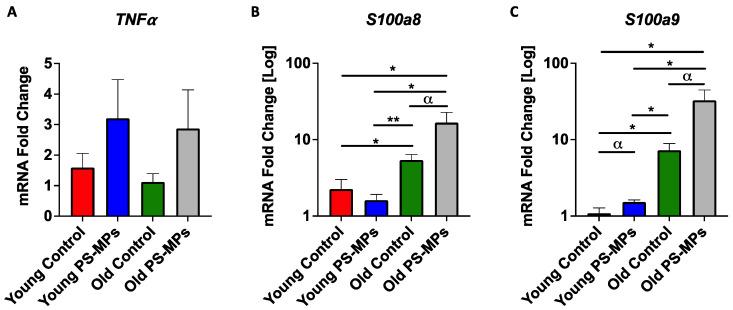
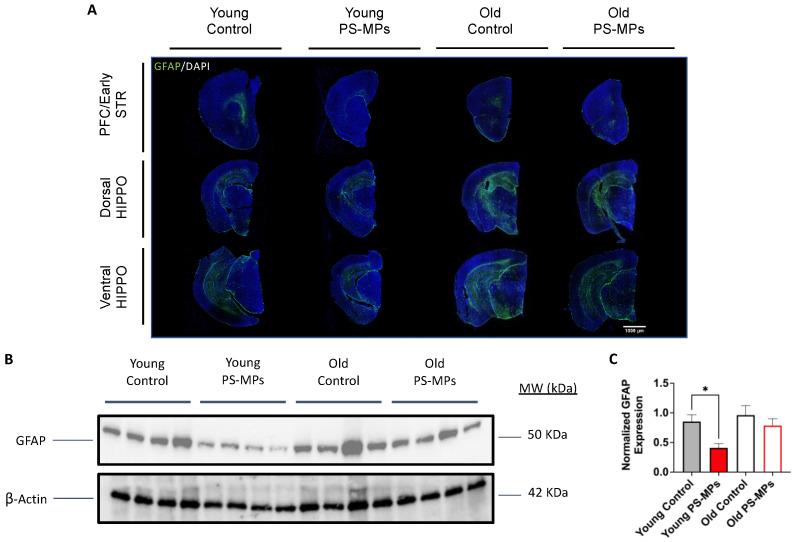
Environmental pollutants have become quite ubiquitous over the past two centuries; of those, plastics, and in particular, microplastics (<5 mm), are among the most pervasive pollutants. Microplastics (MPs) have found their way into the air, water system, and food chain and are either purposely produced or are derived from the breakdown of larger plastic materials. Despite the societal advancements that plastics have allowed, the mismanagement of plastic waste has become a pressing global issue. Pioneering studies on MPs toxicity have shown that exposure to MPs induces oxidative stress, inflammation, and decreased cell viability in marine organisms. Current research suggests that these MPs are transported throughout the environment and can accumulate in human tissues; however, research on the health effects of MPs, especially in mammals, is still very limited. This has led our group to explore the biological and cognitive consequences of exposure to MPs in a rodent model. Following a three-week exposure to water treated with fluorescently-labeled pristine polystyrene MPs, young and old C57BL/6J mice were assessed using behavioral assays, such as open-field and light-dark preference, followed by tissue analyses using fluorescent immunohistochemistry, Western blot, and qPCR. Data from these assays suggest that short-term exposure to MPs induces both behavioral changes as well as alterations in immune markers in liver and brain tissues. Additionally, we noted that these changes differed depending on age, indicating a possible age-dependent effect. These findings suggest the need for further research to better understand the mechanisms by which microplastics may induce physiological and cognitive changes.
在过去的两个世纪中,环境污染物变得非常普遍;其中,塑料尤其是微塑料(<5 毫米)是最普遍的污染物之一。微塑料(MPs)已经进入空气、水系统和食物链,它们要么是故意生产的,要么是由较大塑料材料的分解产生的。尽管塑料带来了社会进步,但塑料废物的管理不善已成为一个紧迫的全球问题。对 MPs 毒性的开创性研究表明,暴露于 MPs 会诱导海洋生物中的氧化应激、炎症和细胞活力下降。目前的研究表明,这些 MPs 会在整个环境中运输,并可能在人体组织中积累;然而,关于 MPs 的健康影响的研究,特别是在哺乳动物中的研究仍然非常有限。这促使我们的研究小组在啮齿动物模型中探索暴露于 MPs 的生物学和认知后果。在经过三周的用荧光标记的原始聚苯乙烯 MPs 处理的水暴露后,年轻和年老的 C57BL/6J 小鼠使用行为测定法(如开阔场和明暗偏好)进行评估,然后使用荧光免疫组织化学、Western blot 和 qPCR 进行组织分析。这些测定法的数据表明,短期暴露于 MPs 会引起行为变化以及肝脏和脑组织中免疫标志物的改变。此外,我们注意到这些变化因年龄而异,表明可能存在年龄依赖性效应。这些发现表明需要进一步研究以更好地理解微塑料可能引起生理和认知变化的机制。


 Zotero 插件