
急性血液生物标志物谱可预测 COVID-19 住院后 6 个月和 12 个月的认知障碍。
Acute blood biomarker profiles predict cognitive deficits 6 and 12 months after COVID-19 hospitalization.
机构信息
Department of Psychiatry, University of Oxford, Oxford, UK.
Oxford Health NHS Foundation Trust, Oxford, UK.
出版信息
Nat Med. 2023 Oct;29(10):2498-2508. doi: 10.1038/s41591-023-02525-y. Epub 2023 Aug 31.
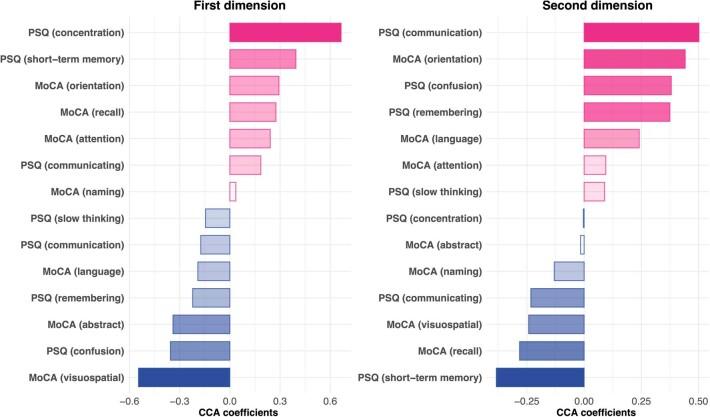
Post-COVID cognitive deficits, including 'brain fog', are clinically complex, with both objective and subjective components. They are common and debilitating, and can affect the ability to work, yet their biological underpinnings remain unknown. In this prospective cohort study of 1,837 adults hospitalized with COVID-19, we identified two distinct biomarker profiles measured during the acute admission, which predict cognitive outcomes 6 and 12 months after COVID-19. A first profile links elevated fibrinogen relative to C-reactive protein with both objective and subjective cognitive deficits. A second profile links elevated D-dimer relative to C-reactive protein with subjective cognitive deficits and occupational impact. This second profile was mediated by fatigue and shortness of breath. Neither profile was significantly mediated by depression or anxiety. Results were robust across secondary analyses. They were replicated, and their specificity to COVID-19 tested, in a large-scale electronic health records dataset. These findings provide insights into the heterogeneous biology of post-COVID cognitive deficits.
新冠后认知缺陷,包括“脑雾”,具有临床复杂性,既有客观成分,也有主观成分。它们很常见且使人虚弱,并可能影响工作能力,但它们的生物学基础仍不清楚。在这项针对 1837 名因 COVID-19 住院的成年人的前瞻性队列研究中,我们在急性入院期间确定了两个不同的生物标志物谱,这两个标志物谱可预测 COVID-19 后 6 个月和 12 个月的认知结果。第一个谱将纤维蛋白原与 C 反应蛋白的比值升高与客观和主观认知缺陷联系起来。第二个谱将 D-二聚体与 C 反应蛋白的比值升高与主观认知缺陷和职业影响联系起来。第二个谱是由疲劳和呼吸急促介导的。这两个谱都没有被抑郁或焦虑显著介导。次要分析结果稳健。在大规模电子健康记录数据集中复制了这些结果,并测试了它们对 COVID-19 的特异性。这些发现为新冠后认知缺陷的异质生物学提供了见解。




 Zotero 插件