
嵌合抗原受体T细胞疗法治疗急性髓系白血病:障碍与克服方法
CAR-T in the Treatment of Acute Myeloid Leukemia: Barriers and How to Overcome Them.
作者信息
Vanhooren Jolien, Dobbelaere Rani, Derpoorter Charlotte, Deneweth Larissa, Van Camp Laurens, Uyttebroeck Anne, De Moerloose Barbara, Lammens Tim
机构信息
Department of Internal Medicine and Pediatrics, Ghent University, Belgium.
Department of Pediatric Hematology-Oncology and Stem Cell Transplantation, Ghent University Hospital, Belgium.
出版信息
Hemasphere. 2023 Aug 18;7(9):e937. doi: 10.1097/HS9.0000000000000937. eCollection 2023 Sep.
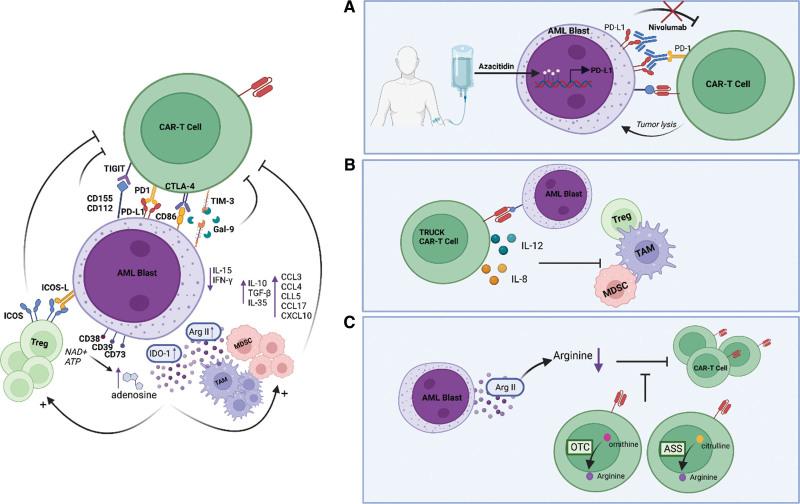
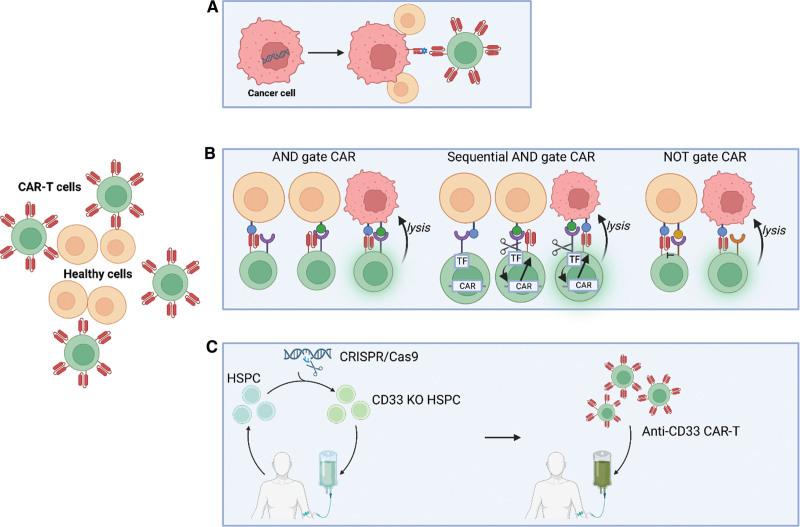
Conventional therapies for acute myeloid leukemia (AML) are characterized by high rates of relapse, severe toxicities, and poor overall survival rates. Thus, the development of new therapeutic strategies is crucial for improving the survival and quality of life of AML patients. CD19-directed chimeric antigen receptor (CAR) T-cell immunotherapy has been extremely successful in the treatment of B-cell acute lymphoid leukemia and several mature B-cell lymphomas. However, the use of CAR T-cell therapy for AML is currently prevented due to the lack of a myeloid equivalent to CD19, as currently known cell surface targets on leukemic blasts are also expressed on healthy hematopoietic stem and progenitor cells as well as their progeny. In addition, the immunosuppressive tumor microenvironment has a dampening effect on the antitumor activity of CAR-T cells. Here, we review the therapeutic challenges limiting the use of CAR T-cell therapy for AML and discuss promising novel strategies to overcome them.
急性髓系白血病(AML)的传统疗法具有高复发率、严重毒性和低总生存率的特点。因此,开发新的治疗策略对于提高AML患者的生存率和生活质量至关重要。靶向CD19的嵌合抗原受体(CAR)T细胞免疫疗法在治疗B细胞急性淋巴细胞白血病和几种成熟B细胞淋巴瘤方面极其成功。然而,由于缺乏与CD19等效的髓系靶点,目前CAR T细胞疗法在AML治疗中的应用受到限制,因为目前已知白血病母细胞上的细胞表面靶点也在健康造血干细胞、祖细胞及其后代中表达。此外,免疫抑制性肿瘤微环境对CAR-T细胞的抗肿瘤活性有抑制作用。在此,我们综述了限制CAR T细胞疗法用于AML治疗的治疗挑战,并讨论了克服这些挑战的有前景的新策略。


 Zotero 插件