
临床前动物模型中 DNA 和 mRNA COVID-19 疫苗诱导的免疫反应的描绘。
Delineation of DNA and mRNA COVID-19 vaccine-induced immune responses in preclinical animal models.
机构信息
Preclinical R&D, Inovio Pharmaceuticals Inc, San Diego, CA, USA.
Vaccine and Immunotherapy Center, The Wistar Institute, Philadelphia, PA, USA.
出版信息
Hum Vaccin Immunother. 2023 Dec 15;19(3):2281733. doi: 10.1080/21645515.2023.2281733. Epub 2023 Nov 27.
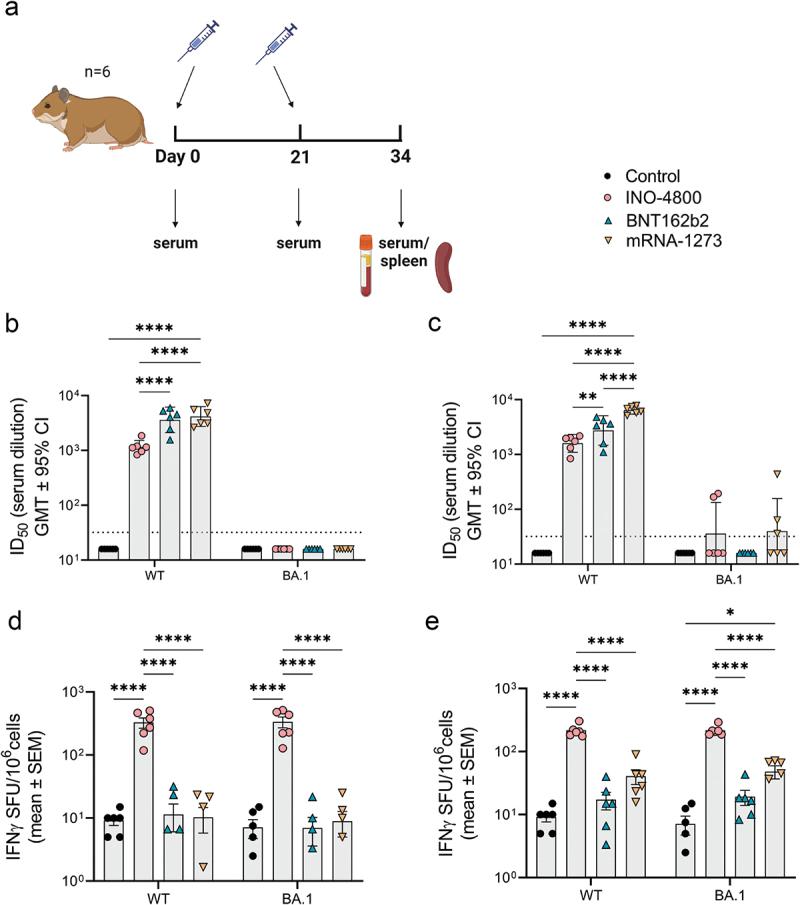
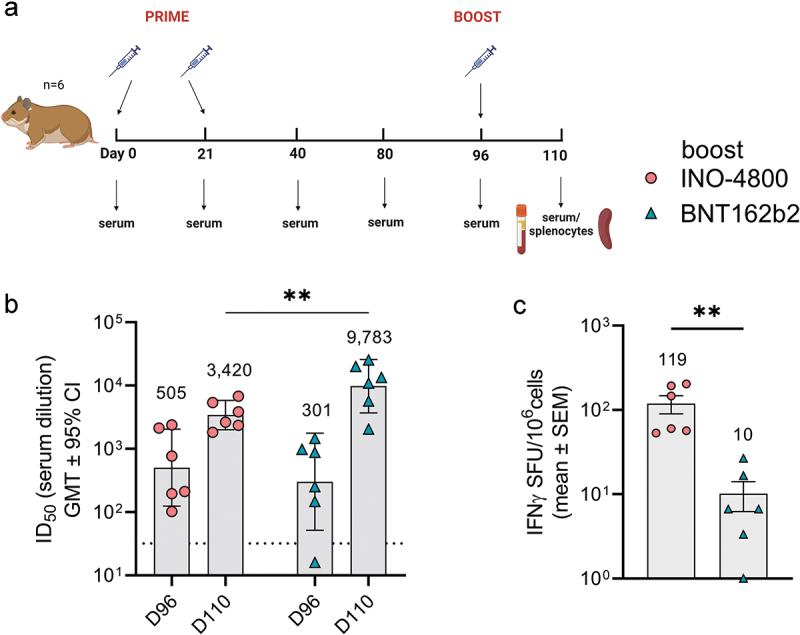
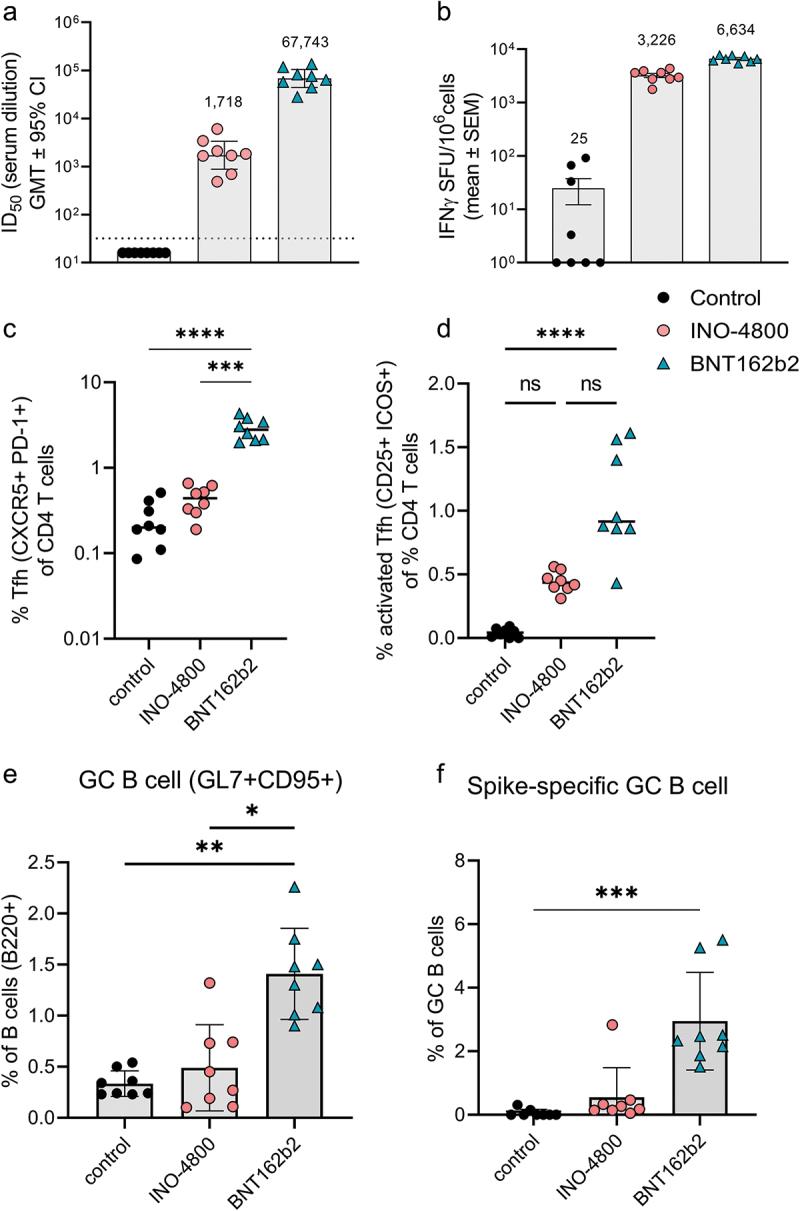
Nucleic acid vaccines are designed based on genetic sequences (DNA or mRNA) of a target antigen to be expressed to drive a host immune response. In response to the COVID-19 pandemic, mRNA and DNA vaccines based on the SARS-CoV-2 Spike antigen were developed. Surprisingly, head-to-head characterizations of the immune responses elicited by each vaccine type has not been performed to date. Here, we have employed a range of preclinical animal models including the hamster, guinea pig, rabbit, and mouse to compare and delineate the immune response raised by DNA, administered intradermally (ID) with electroporation (EP) and mRNA vaccines (BNT162b2 or mRNA-1273), administered intramuscularly (IM), expressing the SARS-CoV-2 WT spike antigen. The results revealed clear differences in the quality and magnitude of the immune response between the two vaccine platforms. The DNA vaccine immune response was characterized by strong T cell responses, while the mRNA vaccine elicited robust humoral responses. The results may assist in guiding the disease target each vaccine type may be best matched against and suggest mechanisms to further enhance the breadth of each platform's immune response.
核酸疫苗是基于目标抗原的遗传序列(DNA 或 mRNA)设计的,旨在驱动宿主免疫反应。针对 COVID-19 大流行,开发了基于 SARS-CoV-2 刺突抗原的 mRNA 和 DNA 疫苗。令人惊讶的是,迄今为止,尚未对每种疫苗类型引起的免疫反应进行直接比较。在这里,我们使用了一系列临床前动物模型,包括仓鼠、豚鼠、兔和小鼠,以比较和描绘由 DNA、皮内(ID)给予电穿孔(EP)和 mRNA 疫苗(BNT162b2 或 mRNA-1273)引起的免疫反应,肌肉内(IM)给药,表达 SARS-CoV-2 WT 刺突抗原。结果表明,两种疫苗平台之间的免疫反应质量和幅度存在明显差异。DNA 疫苗免疫反应的特征是强烈的 T 细胞反应,而 mRNA 疫苗则引起强烈的体液反应。这些结果可能有助于指导每种疫苗类型针对疾病的最佳靶点,并提出进一步增强每种平台免疫反应广度的机制。


 Zotero 插件