
利用细菌提取物优化银纳米颗粒的生物合成及其抗菌潜力。
Optimization of the biosynthesis of silver nanoparticles using bacterial extracts and their antimicrobial potential.
作者信息
Solís-Sandí Iván, Cordero-Fuentes Sara, Pereira-Reyes Reinaldo, Vega-Baudrit José Roberto, Batista-Menezes Diego, Montes de Oca-Vásquez Gabriela
机构信息
School of Biology, Tecnológico de Costa Rica, Campus Central, 159-7050 Cartago, Costa Rica.
School of Chemistry, Universidad Nacional, Campus Omar Dengo, 86-3000 Heredia, Costa Rica.
出版信息
Biotechnol Rep (Amst). 2023 Oct 29;40:e00816. doi: 10.1016/j.btre.2023.e00816. eCollection 2023 Dec.
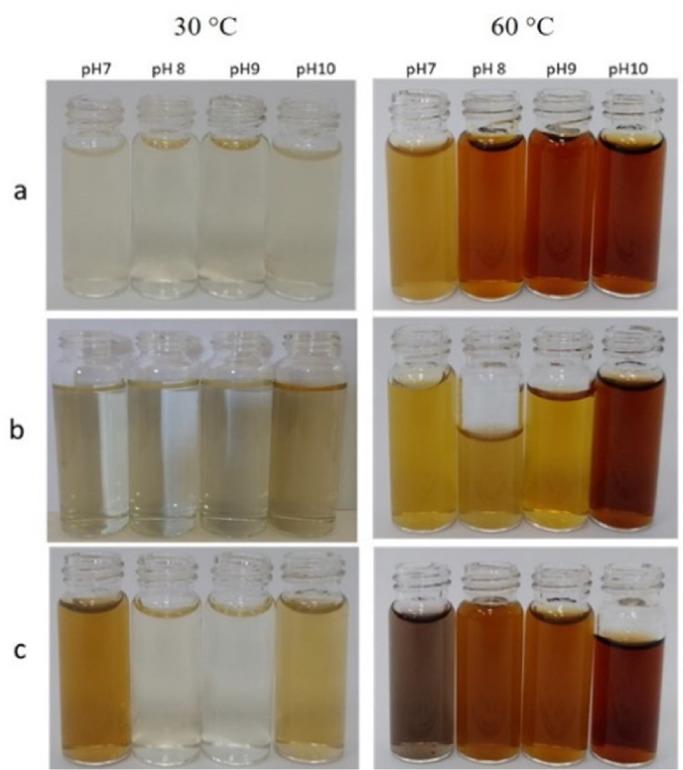
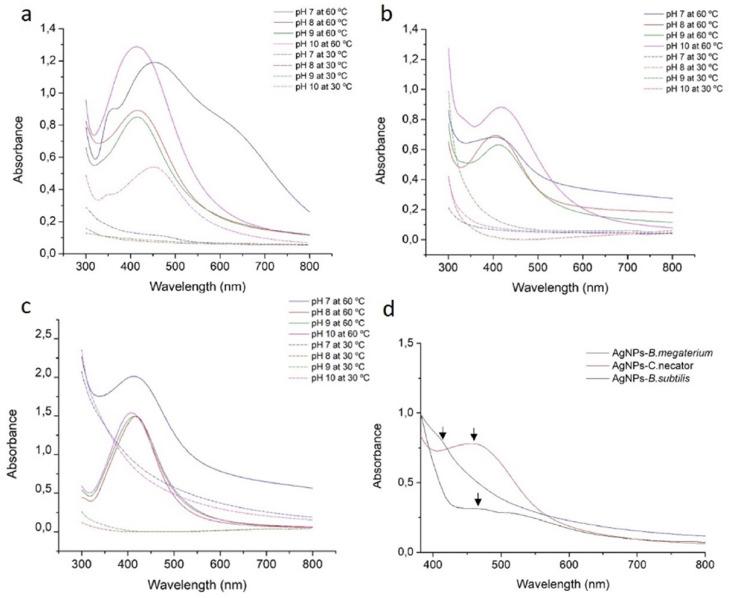
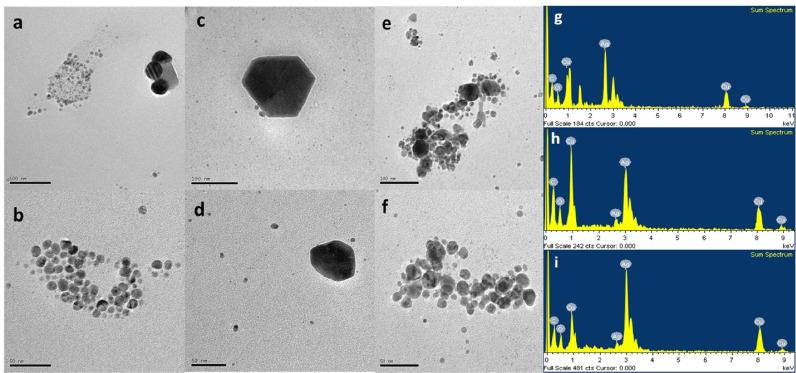
In the present study, silver nanoparticles (AgNPs) were biosynthesized using the supernatant and the intracellular extract of , and . The characterization of the AgNPs was carried out using UV-Vis spectroscopy, FTIR, DLS and TEM. Resazurin microtiter-plate assay was used to determine the antimicrobial action of AgNPs against UV-Visible spectra showed peaks between 414 and 460 nm. TEM analysis revealed that the synthesized AgNPs showed mostly spherical shapes. DLS results determined sizes from 20.8 to 118.4 nm. The highest antimicrobial activity was obtained with the AgNPs synthesized with supernatant rather than those using the intracellular extract. Therefore, it was determined that the bacterial species, temperature, pH, and type of extract (supernatant or intracellular) influence the biosynthesis. This synthesis thus offers a simple, environmentally friendly, and low-cost method for the production of AgNPs, which can be used as antibacterial agents.
在本研究中,使用[具体菌种1]、[具体菌种2]的上清液和细胞内提取物生物合成了银纳米颗粒(AgNPs)。采用紫外可见光谱、傅里叶变换红外光谱(FTIR)、动态光散射(DLS)和透射电子显微镜(TEM)对AgNPs进行表征。采用刃天青微量滴定板法测定AgNPs对[具体菌种]的抗菌作用。紫外可见光谱显示在414至460nm之间有峰值。TEM分析表明,合成的AgNPs大多呈球形。DLS结果确定尺寸在20.8至118.4nm之间。用上清液合成的AgNPs比用细胞内提取物合成的AgNPs具有更高的抗菌活性。因此,确定细菌种类、温度、pH值和提取物类型(上清液或细胞内)会影响生物合成。因此,这种合成方法为生产可作为抗菌剂的AgNPs提供了一种简单、环保且低成本的方法。





 Zotero 插件