
多中心下一代测序的肠道微生物组分析评估揭示了部分长度代谢组条形码方法的主要偏差。
Multicenter evaluation of gut microbiome profiling by next-generation sequencing reveals major biases in partial-length metabarcoding approach.
机构信息
Université Paris-Saclay, INRAE, MetaGenoPolis, 78350, Jouy-en-Josas, France.
Discovery & Front End Innovation, Lesaffre Institute of Science & Technology, Lesaffre International, 101 rue de Menin, 59700, Marcq-en-Barœul, France.
出版信息
Sci Rep. 2023 Dec 18;13(1):22593. doi: 10.1038/s41598-023-46062-7.
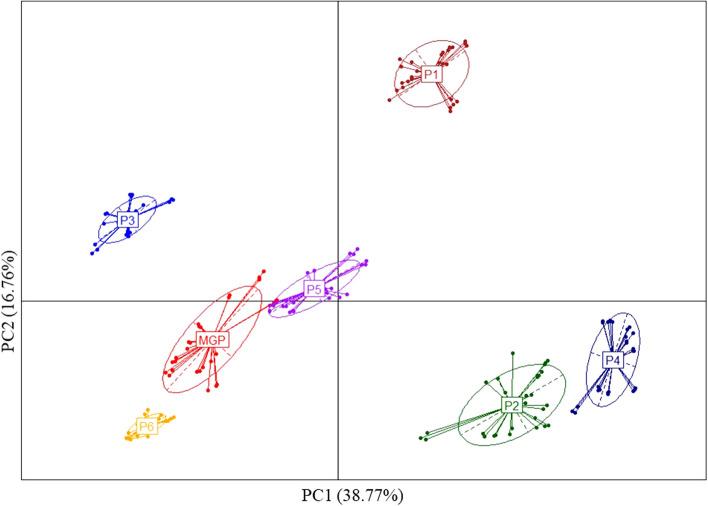
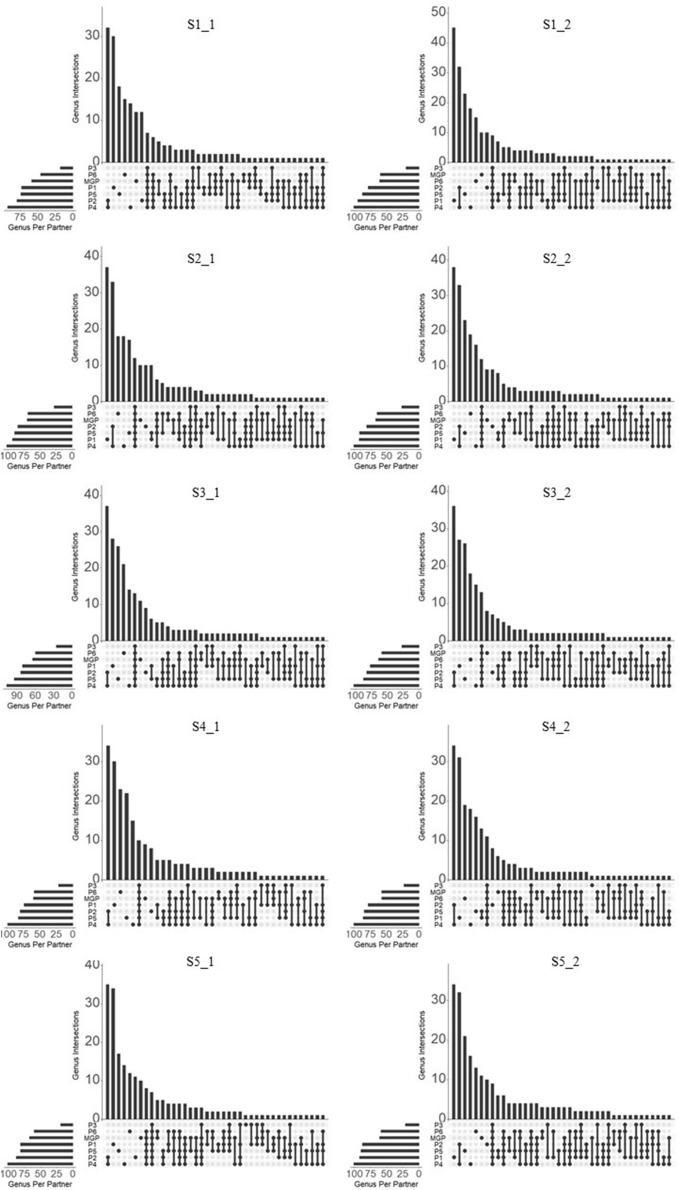
Next-generation sequencing workflows, using either metabarcoding or metagenomic approaches, have massively contributed to expanding knowledge of the human gut microbiota, but methodological bias compromises reproducibility across studies. Where these biases have been quantified within several comparative analyses on their own, none have measured inter-laboratory reproducibility using similar DNA material. Here, we designed a multicenter study involving seven participating laboratories dedicated to partial- (P1 to P5), full-length (P6) metabarcoding, or metagenomic profiling (MGP) using DNA from a mock microbial community or extracted from 10 fecal samples collected at two time points from five donors. Fecal material was collected, and the DNA was extracted according to the IHMS protocols. The mock and isolated DNA were then provided to the participating laboratories for sequencing. Following sequencing analysis according to the laboratories' routine pipelines, relative taxonomic-count tables defined at the genus level were provided and analyzed. Large variations in alpha-diversity between laboratories, uncorrelated with sequencing depth, were detected among the profiles. Half of the genera identified by P1 were unique to this partner and two-thirds of the genera identified by MGP were not detected by P3. Analysis of beta-diversity revealed lower inter-individual variance than inter-laboratory variances. The taxonomic profiles of P5 and P6 were more similar to those of MGP than those obtained by P1, P2, P3, and P4. Reanalysis of the raw sequences obtained by partial-length metabarcoding profiling, using a single bioinformatic pipeline, harmonized the description of the bacterial profiles, which were more similar to each other, except for P3, and closer to the profiles obtained by MGP. This study highlights the major impact of the bioinformatics pipeline, and primarily the database used for taxonomic annotation. Laboratories need to benchmark and optimize their bioinformatic pipelines using standards to monitor their effectiveness in accurately detecting taxa present in gut microbiota.
下一代测序工作流程,无论是使用代谢条形码还是宏基因组学方法,都极大地扩展了人类肠道微生物组的知识,但方法学偏差影响了研究之间的可重复性。虽然在几项单独的比较分析中已经量化了这些偏差,但没有一项使用类似的 DNA 材料来衡量实验室间的可重复性。在这里,我们设计了一项多中心研究,涉及七个参与实验室,专门从事部分(P1 至 P5)、全长(P6)代谢条形码或宏基因组分析(MGP),使用来自模拟微生物群落的 DNA 或从五个供体在两个时间点收集的 10 个粪便样本中提取的 DNA。采集粪便样本并按照 IHMS 方案提取 DNA。然后将模拟和分离的 DNA 提供给参与实验室进行测序。根据实验室的常规流程进行测序分析后,提供并分析了在属水平定义的相对分类计数表。在这些图谱中,检测到实验室之间的 alpha 多样性存在很大差异,与测序深度无关。P1 鉴定的一半属是该合作伙伴特有的,而 MGP 鉴定的三分之二属未被 P3 检测到。β多样性分析显示个体间变异低于实验室间变异。P5 和 P6 的分类谱与 MGP 的分类谱比 P1、P2、P3 和 P4 的分类谱更相似。使用单一生物信息学管道对部分长度代谢条形码分析获得的原始序列进行重新分析,使细菌图谱的描述更加一致,除了 P3 之外,它们彼此之间的差异更小,并且更接近 MGP 获得的图谱。这项研究强调了生物信息学管道的主要影响,尤其是用于分类注释的数据库。实验室需要使用标准来基准测试和优化其生物信息学管道,以监测其在准确检测肠道微生物群中存在的分类群方面的有效性。


 Zotero 插件