
COVID-19 对睾丸功能的影响:系统评价和荟萃分析。
Impact of COVID-19 on testicular function: a systematic review and meta-analysis.
机构信息
Department of Clinical and Experimental Medicine, University of Catania, Catania, Italy.
Glickman Urological & Kidney Institute, Cleveland Clinic Foundation, Cleveland, OH, USA.
出版信息
Endocrine. 2024 Jul;85(1):44-66. doi: 10.1007/s12020-024-03705-7. Epub 2024 Feb 12.
INTRODUCTION
Studies investigating the effects of SARS-CoV-2 on male reproductive function are few and heterogeneous, and results are often conflicting. This systematic review and meta-analysis was carried out on studies conducted in men with active or anamnestic SARS-CoV-2 infection to evaluate its consequences on the male sex hormone profile and semen parameters.
MATERIALS AND METHOD
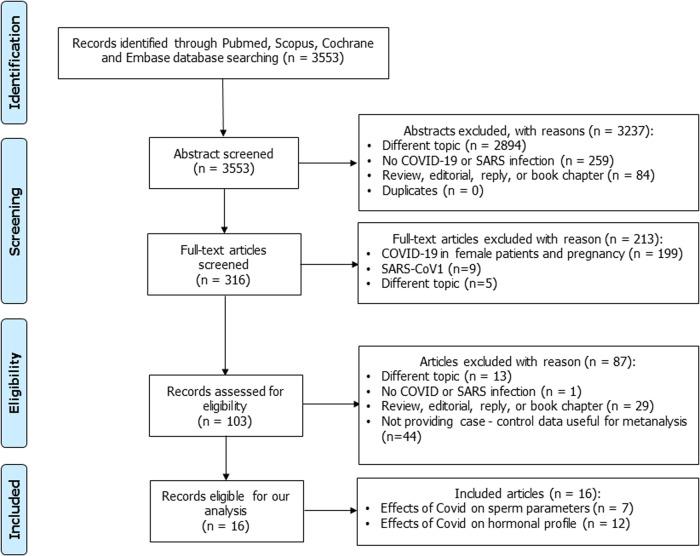
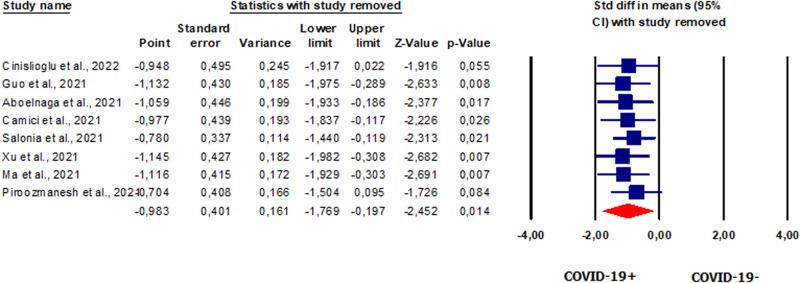
This meta-analysis follows the Preferred Reporting Items for Systematic Review and Meta-Analysis (PRISMA) protocols. PubMed, Scopus, Cochrane, and Embase databases were searched to identify relevant studies. We originally selected 3553 articles. After the eligibility phase, 16 articles met our inclusion criteria encompassing 11 case-control studies and 5 cohort studies (2 prospective and 3 retrospective studies). We performed the quantitative analysis with Comprehensive Meta-Analysis Software. Cochran-Q and heterogeneity (I) indexes were used to assess statistical heterogeneity. Sensitivity analysis and publication bias tests were also performed.
RESULTS
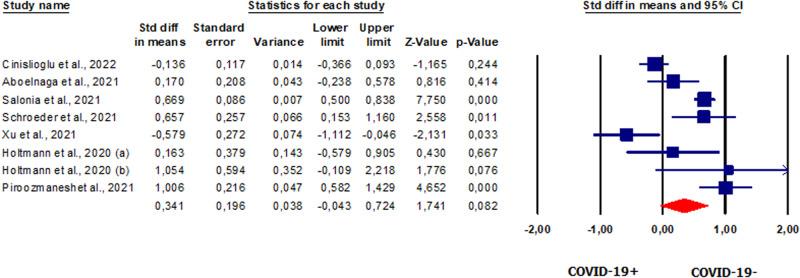
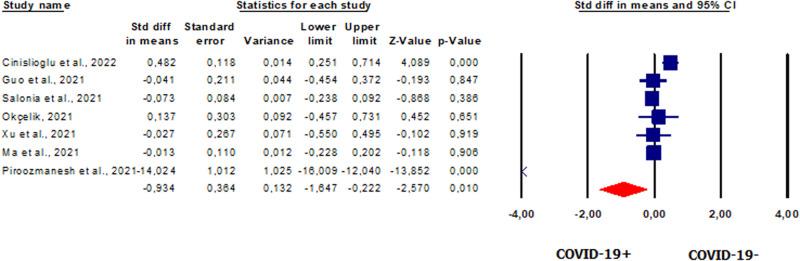
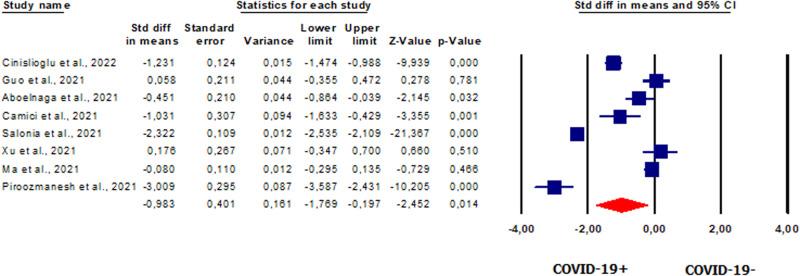
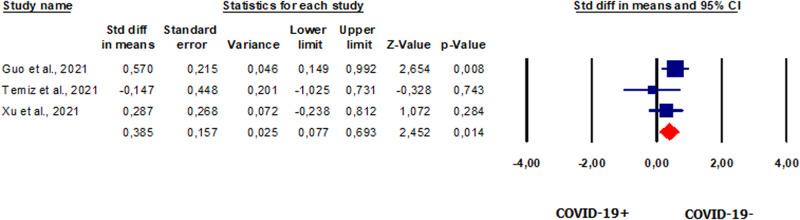
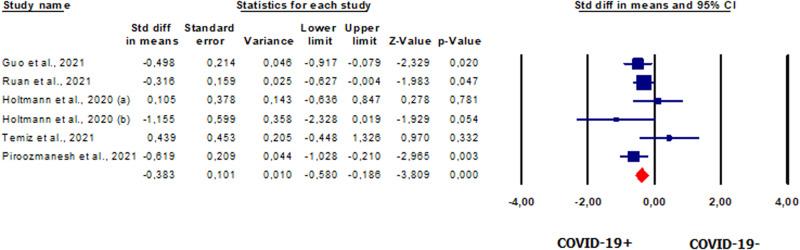
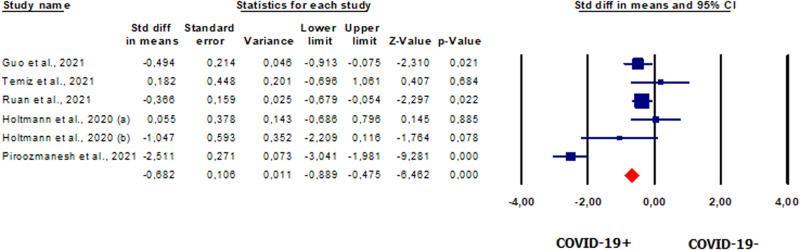
Overall, 1250 patients with active or recent (up to 80 days before) COVID-19 infection and 1232 matched healthy controls were included. Sperm concentration, total sperm count, and total motility were significantly lower in patients compared with controls. Patients also showed lower levels of total testosterone and follicle-stimulating hormone, and higher levels of luteinizing hormone, 17β-estradiol, and prolactin compared with healthy controls. None of the included studies found the presence of SARS-CoV-2 mRNA in the semen of infected patients.
CONCLUSION
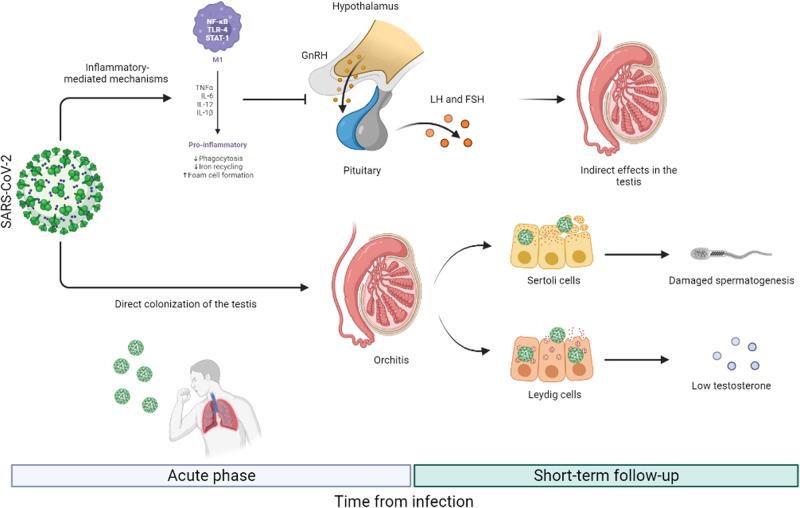
The present systematic review and meta-analysis suggests the presence of an association between SARS-CoV-2 infection and primary testicular damage manifested with a picture of altered steroidogenesis and worsening spermatogenesis. The absence of the virus in the seminal fluid indicates a low possibility of sexual transmission of the infection to partners and offspring. However, our findings mostly show short-term follow-up, while few studies have considered the long-term consequences of the viral infection, thus further studies are needed to evaluate the long-term consequences on male reproductive health.
简介
研究 SARS-CoV-2 对男性生殖功能影响的研究较少且存在异质性,结果往往相互矛盾。本系统评价和荟萃分析对患有活动性或既往(至多 80 天前)SARS-CoV-2 感染的男性进行的研究进行了评估,以评估其对男性性激素谱和精液参数的影响。
材料和方法
本荟萃分析遵循系统评价和荟萃分析(PRISMA)的首选报告项目。在 PubMed、Scopus、Cochrane 和 Embase 数据库中搜索了相关研究。我们最初选择了 3553 篇文章。在资格阶段后,有 16 篇文章符合我们的纳入标准,包括 11 项病例对照研究和 5 项队列研究(2 项前瞻性研究和 3 项回顾性研究)。我们使用 Comprehensive Meta-Analysis Software 进行了定量分析。Cochran-Q 和异质性(I)指数用于评估统计异质性。还进行了敏感性分析和发表偏倚检验。
结果
总体而言,纳入了 1250 名患有活动性或近期(至多 80 天前)COVID-19 感染的患者和 1232 名匹配的健康对照者。与对照组相比,患者的精子浓度、总精子数和总活力明显较低。与健康对照组相比,患者的总睾酮和促卵泡激素水平较低,而黄体生成素、17β-雌二醇和催乳素水平较高。纳入的研究均未发现感染患者精液中存在 SARS-CoV-2 mRNA。
结论
本系统评价和荟萃分析表明,SARS-CoV-2 感染与原发性睾丸损伤之间存在关联,表现为类固醇生成改变和精子发生恶化。精液中不存在病毒表明感染向伴侣和后代传播的可能性较低。然而,我们的发现主要显示短期随访,而很少有研究考虑病毒感染的长期后果,因此需要进一步研究来评估对男性生殖健康的长期影响。



 Zotero 插件