
免疫功能低下患者体内 SARS-CoV-2 的长时间感染过程中的进化。
SARS-CoV-2 evolution during prolonged infection in immunocompromised patients.
机构信息
Perelman School of Medicine, University of Pennsylvania, Philadelphia, Pennsylvania, USA.
Division of Pulmonary, Allergy, and Critical Care, Philadelphia, Pennsylvania, USA.
出版信息
mBio. 2024 Mar 13;15(3):e0011024. doi: 10.1128/mbio.00110-24. Epub 2024 Feb 16.
UNLABELLED
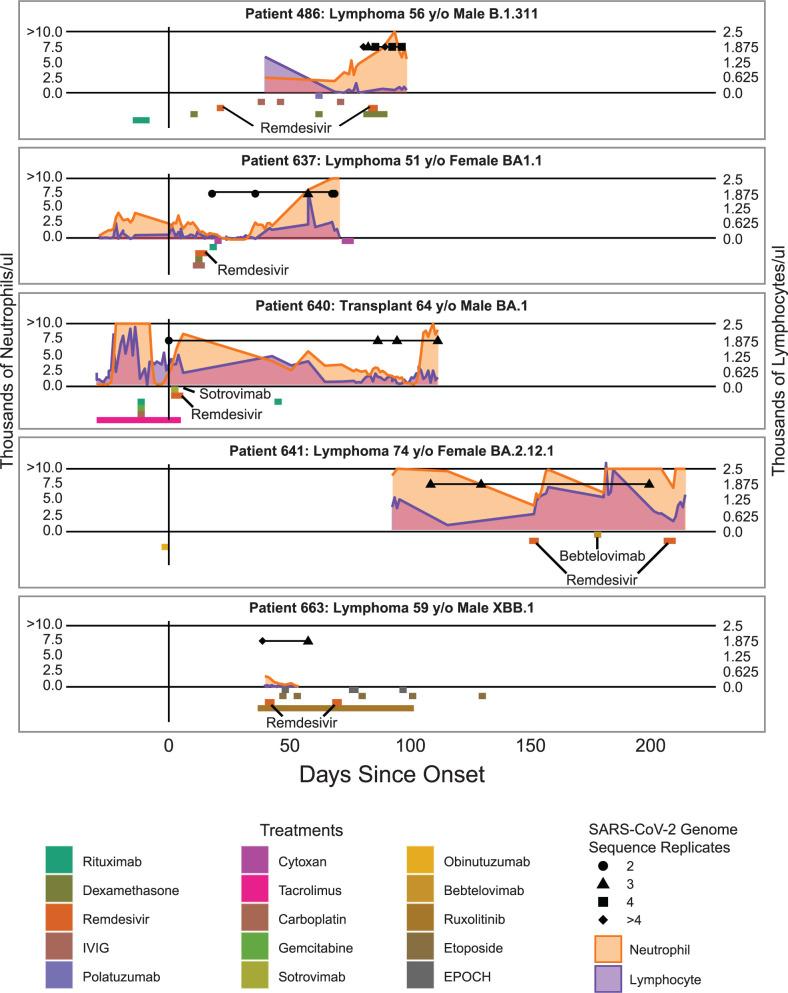
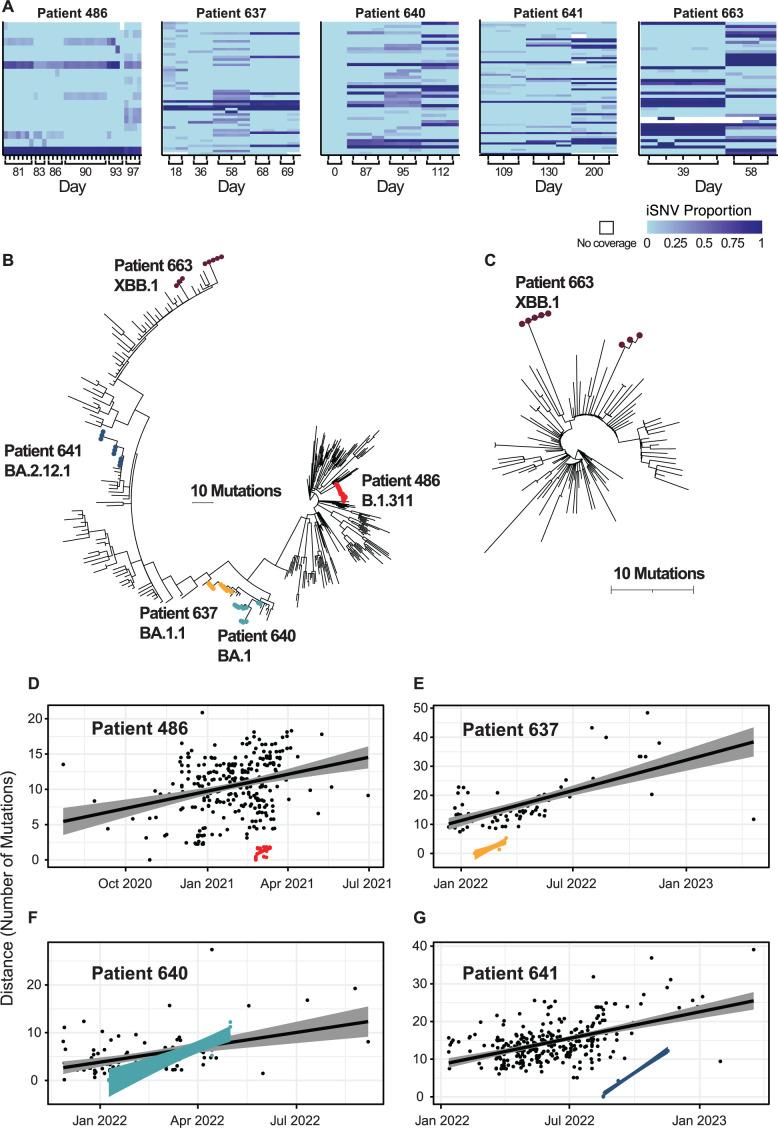
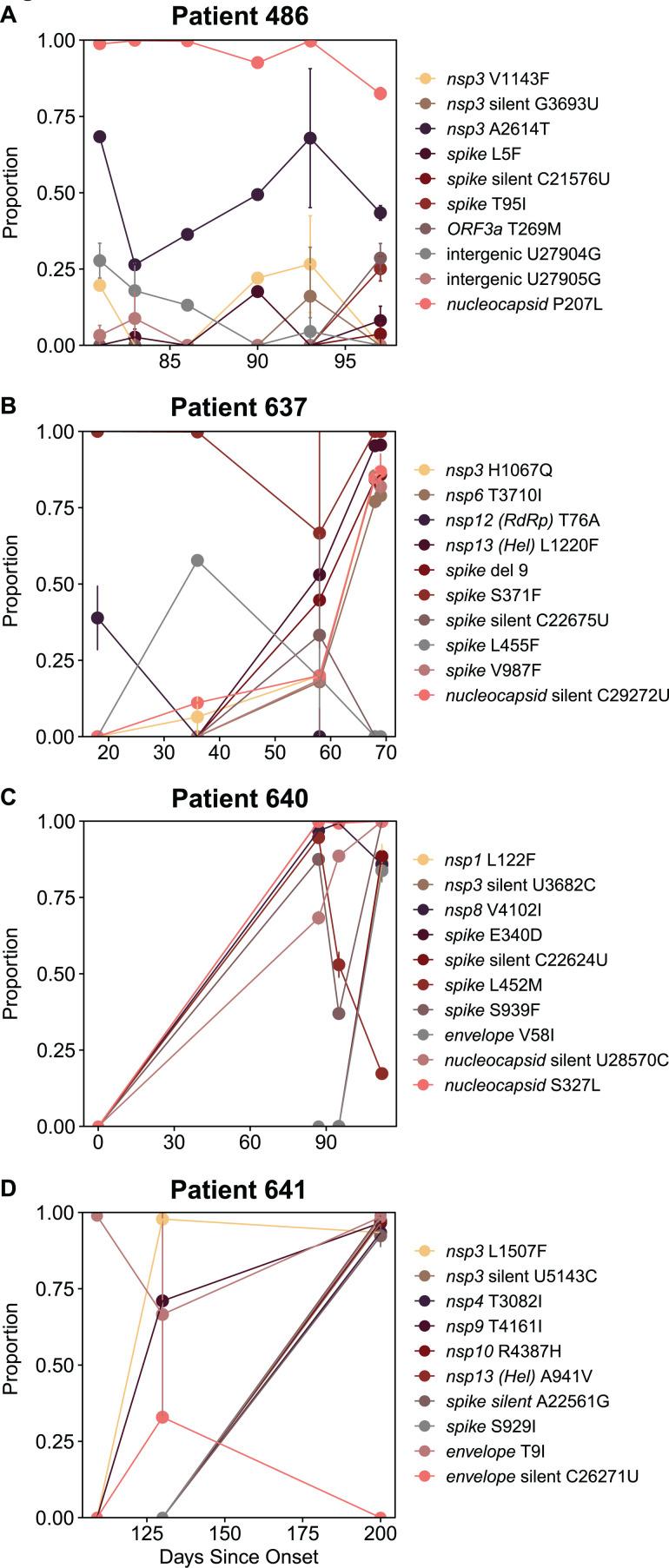
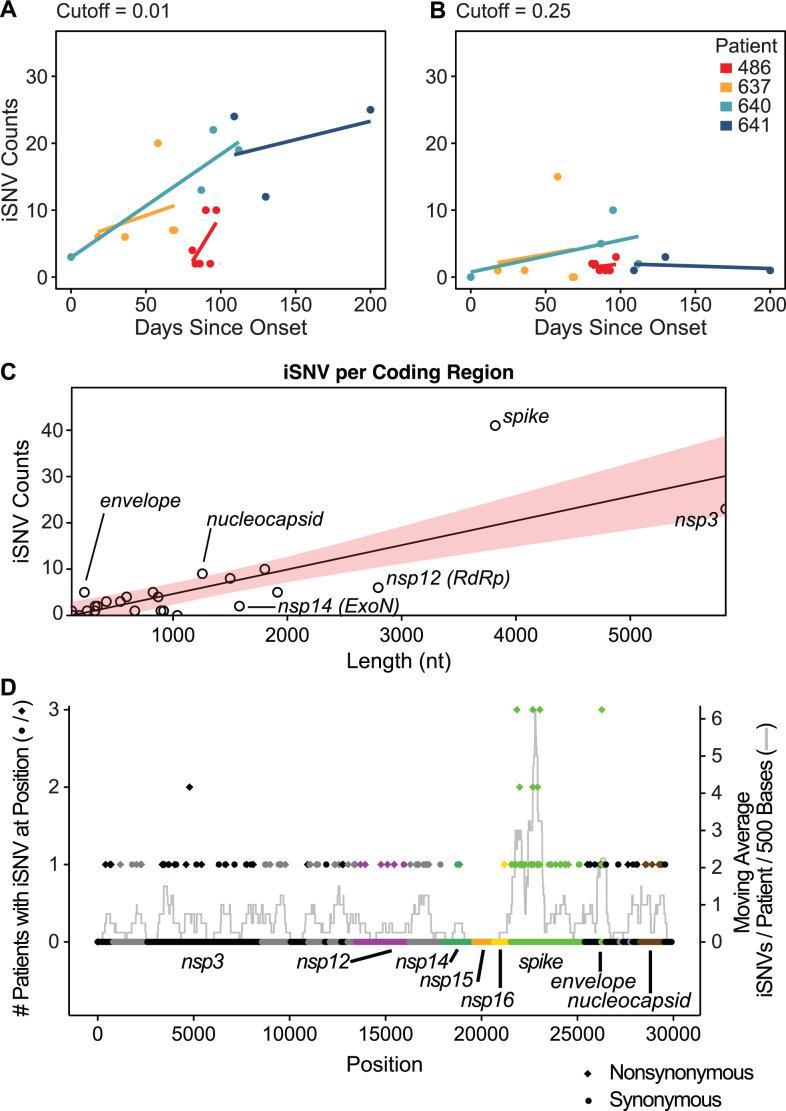
Prolonged infection with severe acute respiratory syndrome coronavirus 2 (SARS-CoV-2) in immunocompromised patients provides an opportunity for viral evolution, potentially leading to the generation of new pathogenic variants. To investigate the pathways of viral evolution, we carried out a study on five patients experiencing prolonged SARS-CoV-2 infection (quantitative polymerase chain reaction-positive for 79-203 days) who were immunocompromised due to treatment for lymphoma or solid organ transplantation. For each timepoint analyzed, we generated at least two independent viral genome sequences to assess the heterogeneity and control for sequencing error. Four of the five patients likely had prolonged infection; the fifth apparently experienced a reinfection. The rates of accumulation of substitutions in the viral genome per day were higher in hospitalized patients with prolonged infection than those estimated for the community background. The coding region accumulated a significantly greater number of unique mutations than other viral coding regions, and the mutation density was higher. Two patients were treated with monoclonal antibodies (bebtelovimab and sotrovimab); by the next sampled timepoint, each virus population showed substitutions associated with monoclonal antibody resistance as the dominant forms ( K444N and E340D). All patients received remdesivir, but remdesivir-resistant substitutions were not detected. These data thus help elucidate the trends of emergence, evolution, and selection of mutational variants within long-term infected immunocompromised individuals.
IMPORTANCE
SARS-CoV-2 is responsible for a global pandemic, driven in part by the emergence of new viral variants. Where do these new variants come from? One model is that long-term viral persistence in infected individuals allows for viral evolution in response to host pressures, resulting in viruses more likely to replicate efficiently in humans. In this study, we characterize replication in several hospitalized and long-term infected individuals, documenting efficient pathways of viral evolution.
未加标签
严重急性呼吸综合征冠状病毒 2(SARS-CoV-2)在免疫功能低下患者中的持续感染为病毒进化提供了机会,可能导致新的致病性变异体的产生。为了研究病毒进化的途径,我们对 5 名因淋巴瘤或实体器官移植治疗而免疫功能低下、经历 SARS-CoV-2 持续感染(定量聚合酶链反应阳性 79-203 天)的患者进行了研究。对于分析的每个时间点,我们至少生成了两个独立的病毒基因组序列,以评估异质性并控制测序错误。5 名患者中的 4 名可能存在持续感染;第 5 名患者显然经历了再感染。与社区背景相比,住院时间延长的感染患者的病毒基因组中每天替代物的积累速度更高。编码区比其他病毒编码区积累了更多的独特突变,突变密度更高。2 名患者接受了单克隆抗体(贝替洛维单抗和索特罗维单抗)治疗;在下一个采样时间点,每种病毒群体中都出现了与单克隆抗体耐药相关的替代物,成为主要形式(K444N 和 E340D)。所有患者均接受了瑞德西韦治疗,但未检测到瑞德西韦耐药性替代物。这些数据有助于阐明长期感染免疫功能低下个体中突变变体出现、进化和选择的趋势。
重要性
SARS-CoV-2 是导致全球大流行的原因,部分原因是新的病毒变异体的出现。这些新的变异体从何而来?一种模型是,感染个体中病毒的长期持续存在允许病毒在宿主压力下进化,从而产生更有可能在人类中有效复制的病毒。在这项研究中,我们描述了几个住院和长期感染个体中的复制情况,记录了病毒有效进化的途径。

 Zotero 插件