
长新冠的已知与未知:从发病机制到治疗方法。
The knowns and unknowns of long COVID-19: from mechanisms to therapeutical approaches.
机构信息
Victor Babes University of Medicine and Pharmacy, Timisoara, Romania.
Department of Biomedical Sciences, College of Medicine and Biological Science, University of Suceava, Suceava, Romania.
出版信息
Front Immunol. 2024 Mar 4;15:1344086. doi: 10.3389/fimmu.2024.1344086. eCollection 2024.
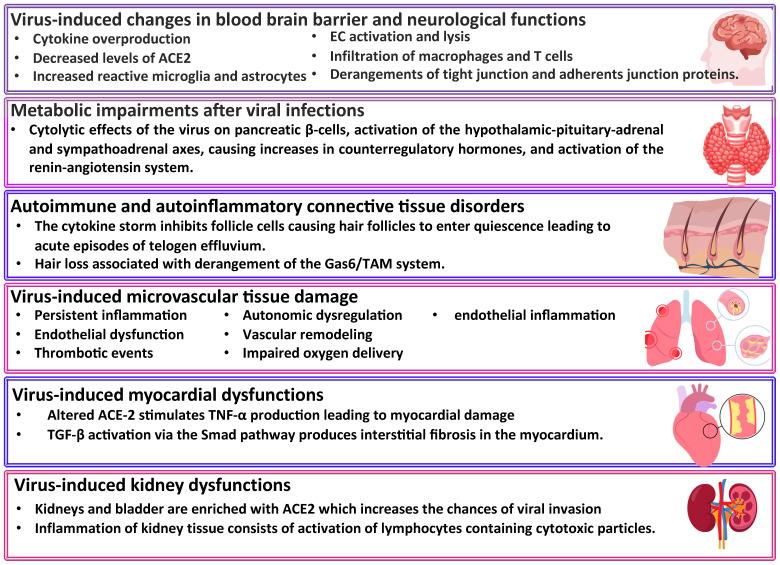
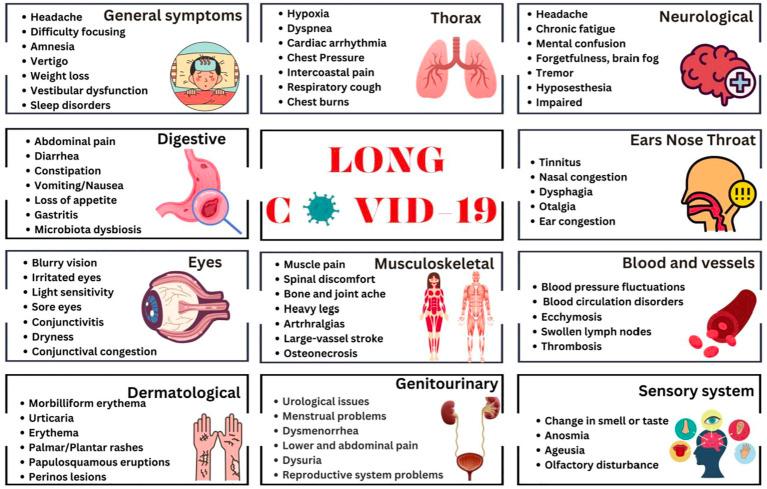
The coronavirus disease 2019 (COVID-19) pandemic caused by SARS-CoV-2 has been defined as the greatest global health and socioeconomic crisis of modern times. While most people recover after being infected with the virus, a significant proportion of them continue to experience health issues weeks, months and even years after acute infection with SARS-CoV-2. This persistence of clinical symptoms in infected individuals for at least three months after the onset of the disease or the emergence of new symptoms lasting more than two months, without any other explanation and alternative diagnosis have been named long COVID, long-haul COVID, post-COVID-19 conditions, chronic COVID, or post-acute sequelae of SARS-CoV-2 (PASC). Long COVID has been characterized as a constellation of symptoms and disorders that vary widely in their manifestations. Further, the mechanisms underlying long COVID are not fully understood, which hamper efficient treatment options. This review describes predictors and the most common symptoms related to long COVID's effects on the central and peripheral nervous system and other organs and tissues. Furthermore, the transcriptional markers, molecular signaling pathways and risk factors for long COVID, such as sex, age, pre-existing condition, hospitalization during acute phase of COVID-19, vaccination, and lifestyle are presented. Finally, recommendations for patient rehabilitation and disease management, as well as alternative therapeutical approaches to long COVID sequelae are discussed. Understanding the complexity of this disease, its symptoms across multiple organ systems and overlapping pathologies and its possible mechanisms are paramount in developing diagnostic tools and treatments.
由严重急性呼吸综合征冠状病毒 2 型(SARS-CoV-2)引起的 2019 年冠状病毒病(COVID-19)大流行被定义为现代最大的全球健康和社会经济危机。虽然大多数人在感染该病毒后会康复,但相当一部分人在急性感染 SARS-CoV-2 后数周、数月甚至数年仍会出现健康问题。在疾病发作后至少三个月或出现持续两个月以上的新症状,而没有任何其他解释和替代诊断的情况下,感染个体中持续存在的临床症状被命名为长 COVID、长程 COVID、COVID-19 后状况、慢性 COVID 或 SARS-CoV-2 的急性后后遗症(PASC)。长 COVID 被描述为一组症状和疾病,其表现差异很大。此外,长 COVID 的发病机制尚未完全阐明,这阻碍了有效的治疗方案。本综述描述了与长 COVID 对中枢和周围神经系统以及其他器官和组织的影响相关的预测因素和最常见症状。此外,还介绍了长 COVID 的转录标志物、分子信号通路和危险因素,如性别、年龄、基础疾病、COVID-19 急性期住院、接种疫苗和生活方式。最后,讨论了针对长 COVID 后遗症的患者康复和疾病管理以及替代治疗方法的建议。了解这种疾病的复杂性、其在多个器官系统中的症状和重叠的病理以及其可能的机制对于开发诊断工具和治疗方法至关重要。
 Zotero 插件