
血清β2-微球蛋白可作为评估胶质瘤患者严重程度和预后的生物标志物:一项初步临床研究。
Serum beta2-microglobulin acts as a biomarker for severity and prognosis in glioma patients: a preliminary clinical study.
机构信息
Brain Glioma Center, Department of Neurosurgery, Zhongnan Hospital of Wuhan University, Wuhan, Hubei, China.
Department of Clinical Laboratory, Nanjing Jiangning Hospital, Nanjing, Jiangsu, China.
出版信息
BMC Cancer. 2024 Jun 6;24(1):692. doi: 10.1186/s12885-024-12441-0.
BACKGROUND
Gliomas are the deadliest malignant tumors of the adult central nervous system. We previously discovered that beta2-microglobulin (B2M) is abnormally upregulated in glioma tissues and that it exerts a range of oncogenic effects. Besides its tissue presence, serum B2M levels serve as biomarkers for various diseases. This study aimed to explore whether serum B2M levels can be used in the diagnosis and prognosis of gliomas.
METHODS
Medical records from 246 glioma patients were retrospectively analyzed. The relationship between preoperative serum B2M levels and clinicopathological features was examined. Kaplan-Meier analysis, alongside uni- and multivariate Cox regression, assessed the association between B2M levels, systemic inflammatory markers, and glioma patient prognosis. Receiver operating characteristic (ROC) curve analysis evaluated the diagnostic significance of these biomarkers specifically for glioblastoma (GBM).
RESULTS
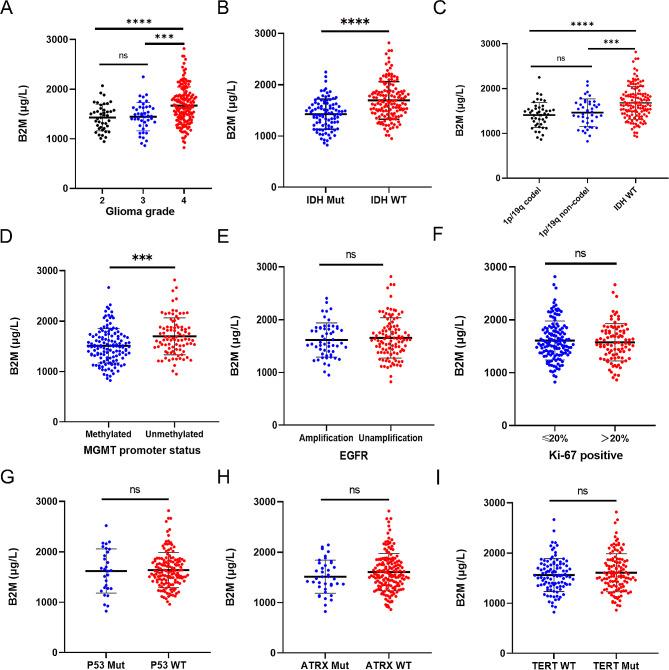
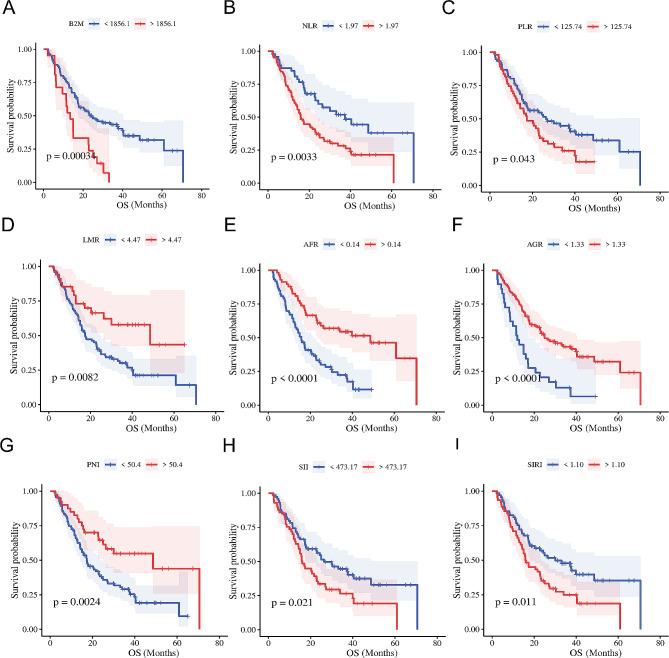
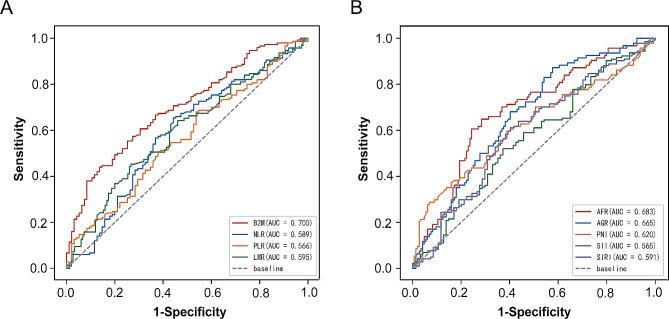
Patients with malignant gliomas exhibited elevated preoperative serum B2M levels. Glioma patients with high serum B2M levels experienced shorter survival times. Multivariate Cox analysis determined the relationship between B2M levels (hazard ratio = 1.92, 95% confidence interval: 1.05-3.50, P = 0.034) and the overall survival of glioma patients. B2M demonstrated superior discriminatory power in distinguishing between GBM and non-GBM compared to inflammation indicators. Moreover, postoperative serum B2M levels were lower than preoperative levels in the majority of glioma patients.
CONCLUSIONS
High preoperative serum B2M levels correlated with malignant glioma and a poor prognosis. Serum B2M shows promise as a novel biomarker for predicting patient prognosis and reflecting the therapeutic response.
背景
神经胶质瘤是成人中枢神经系统最致命的恶性肿瘤。我们之前发现β2-微球蛋白(B2M)在神经胶质瘤组织中异常上调,并具有一系列致癌作用。除了组织存在外,血清 B2M 水平还可作为各种疾病的生物标志物。本研究旨在探讨血清 B2M 水平是否可用于诊断和预测神经胶质瘤。
方法
回顾性分析 246 例神经胶质瘤患者的病历。研究了术前血清 B2M 水平与临床病理特征之间的关系。Kaplan-Meier 分析、单因素和多因素 Cox 回归分析评估了 B2M 水平、全身炎症标志物与神经胶质瘤患者预后之间的关系。受试者工作特征(ROC)曲线分析评估了这些生物标志物对胶质母细胞瘤(GBM)的诊断意义。
结果
恶性神经胶质瘤患者术前血清 B2M 水平升高。血清 B2M 水平较高的神经胶质瘤患者生存时间较短。多因素 Cox 分析确定了 B2M 水平(危险比=1.92,95%置信区间:1.05-3.50,P=0.034)与神经胶质瘤患者总生存时间之间的关系。B2M 鉴别 GBM 和非 GBM 的能力优于炎症指标。此外,大多数神经胶质瘤患者术后血清 B2M 水平低于术前水平。
结论
术前血清 B2M 水平较高与恶性神经胶质瘤和预后不良相关。血清 B2M 有望成为预测患者预后和反映治疗反应的新型生物标志物。

 Zotero 插件