
基于生物标志物的放射治疗分子影像探针。
Biomarker-driven molecular imaging probes in radiotherapy.
机构信息
Department of Radiology, Huaxi MR Research Center (HMRRC), Frontiers Science Center for Disease-Related Molecular Network, State Key Laboratory of Biotherapy, West China Hospital, Sichuan University, No. 37 Guoxue Alley, Chengdu 610041, China.
Functional and Molecular Imaging Key Laboratory of Sichuan Province and Research Unit of Psychoradiology, Chinese Academy of Medical Sciences, Chengdu 610041, China.
出版信息
Theranostics. 2024 Jul 2;14(10):4127-4146. doi: 10.7150/thno.97768. eCollection 2024.
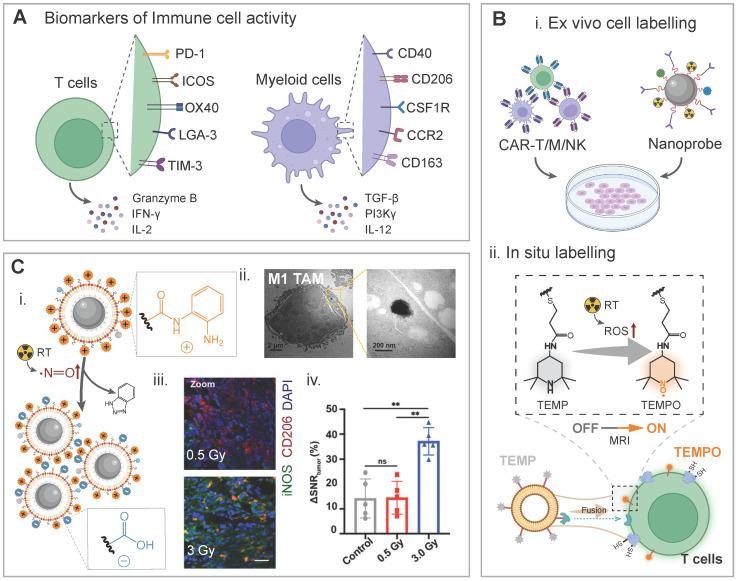
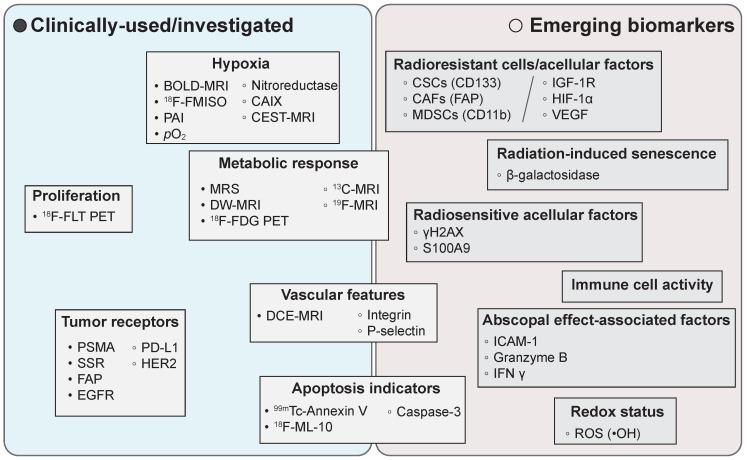
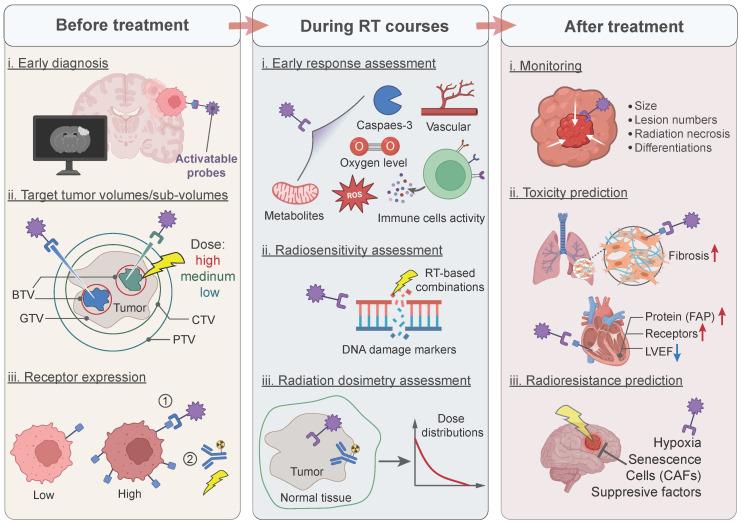
Biomarker-driven molecular imaging has emerged as an integral part of cancer precision radiotherapy. The use of molecular imaging probes, including nanoprobes, have been explored in radiotherapy imaging to precisely and noninvasively monitor spatiotemporal distribution of biomarkers, potentially revealing tumor-killing mechanisms and therapy-induced adverse effects during radiation treatment. We summarized literature reports from preclinical studies and clinical trials, which cover two main parts: 1) Clinically-investigated and emerging imaging biomarkers associated with radiotherapy, and 2) instrumental roles, functions, and activatable mechanisms of molecular imaging probes in the radiotherapy workflow. In addition, reflection and future perspectives are proposed. Numerous imaging biomarkers have been continuously explored in decades, while few of them have been successfully validated for their correlation with radiotherapeutic outcomes and/or radiation-induced toxicities. Meanwhile, activatable molecular imaging probes towards the emerging biomarkers have exhibited to be promising in animal or small-scale human studies for precision radiotherapy. Biomarker-driven molecular imaging probes are essential for precision radiotherapy. Despite very inspiring preliminary results, validation of imaging biomarkers and rational design strategies of probes await robust and extensive investigations. Especially, the correlation between imaging biomarkers and radiotherapeutic outcomes/toxicities should be established through multi-center collaboration involving a large cohort of patients.
基于生物标志物的分子影像学已成为癌症精准放疗不可或缺的一部分。在放射治疗成像中,已经探索了使用分子成像探针(包括纳米探针)来精确和非侵入性地监测生物标志物的时空分布,这可能揭示肿瘤杀伤机制和治疗诱导的不良反应在放射治疗过程中。
我们总结了来自临床前研究和临床试验的文献报告,其中涵盖两个主要部分:1)与放射治疗相关的临床研究和新兴的成像生物标志物,以及 2)分子成像探针在放射治疗工作流程中的仪器作用、功能和可激活机制。此外,还提出了反思和未来展望。
数十年来,已经不断探索了许多成像生物标志物,但其中很少有被成功验证与放射治疗结果和/或放射性毒性相关。同时,针对新兴生物标志物的可激活分子成像探针在动物或小规模人体研究中表现出在精准放疗中的应用前景。
基于生物标志物的分子成像探针对于精准放疗至关重要。尽管初步结果令人鼓舞,但仍需要对成像生物标志物进行验证和对探针的设计策略进行合理研究。特别是,应该通过涉及大量患者的多中心合作来建立成像生物标志物与放射治疗结果/毒性之间的相关性。


 Zotero 插件