
涉及工程生物材料的临床试验的全球趋势。
Global trends in clinical trials involving engineered biomaterials.
作者信息
Lele Mahima, Kapur Shaunak, Hargett Sarah, Sureshbabu Nivedhitha Malli, Gaharwar Akhilesh K
机构信息
Bridgeland High School, 10707 Mason Rd., Cypress, TX 77433, USA.
Seven Lakes High School, 9251 S Fry Rd., Katy, TX 77494, USA.
出版信息
Sci Adv. 2024 Jul 19;10(29):eabq0997. doi: 10.1126/sciadv.abq0997. Epub 2024 Jul 17.
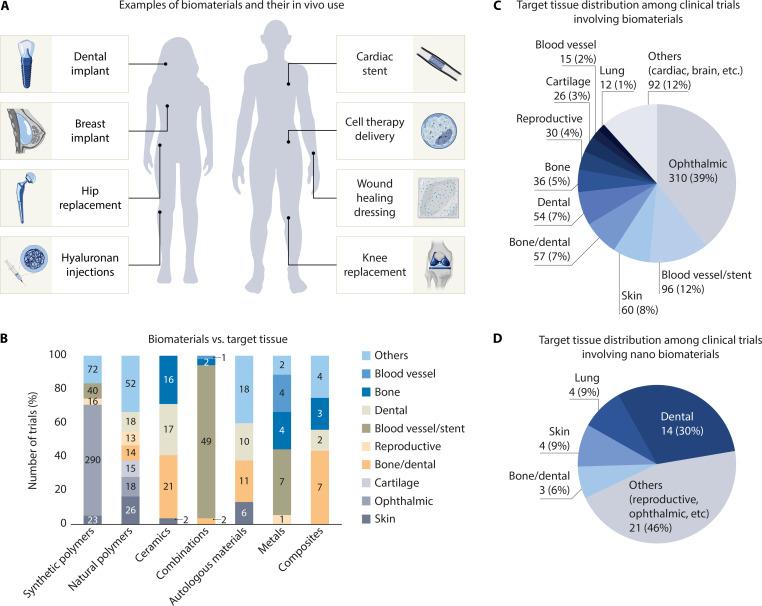
Engineered biomaterials are materials specifically designed to interact with biological systems for biomedical applications. This paper offers the comprehensive analysis of global clinical trial trends involving such materials. We surveyed 834 studies in the ClinicalTrials.gov database and explored biomaterial types, their initiation points, and durations in clinical trials. Predominantly, synthetic and natural polymers, particularly silicone and collagen, are used. Trials, focusing on ophthalmology, dentistry, and vascular medicine, are primarily conducted in the United States, Canada, and Italy. These trials encompass a broad demographic, and trials enrolled fewer than 100 participants. The study duration varied ranging from 0.5 to 4.5 years. These biomaterials are mainly bioresorbable or bioinert, with the integration of cells in biomaterials remaining an underexplored area. Our findings shed light on current practices and future potentials of engineered biomaterials in clinical research, offering insights for advancing this dynamic field globally.
工程生物材料是专门设计用于与生物系统相互作用以用于生物医学应用的材料。本文对涉及此类材料的全球临床试验趋势进行了全面分析。我们调查了ClinicalTrials.gov数据库中的834项研究,并探讨了生物材料类型、其在临床试验中的起始点和持续时间。主要使用的是合成聚合物和天然聚合物,尤其是硅酮和胶原蛋白。专注于眼科、牙科和血管医学的试验主要在美国、加拿大和意大利进行。这些试验涵盖了广泛的人群,且试验招募的参与者少于100人。研究持续时间从0.5年到4.5年不等。这些生物材料主要是可生物吸收的或生物惰性的,生物材料中细胞的整合仍是一个未充分探索的领域。我们的研究结果揭示了工程生物材料在临床研究中的当前实践和未来潜力,为在全球推进这一充满活力的领域提供了见解。




 Zotero 插件