
PepNet:一种基于预训练蛋白质语言模型的可解释神经网络,用于预测抗炎和抗菌肽。
PepNet: an interpretable neural network for anti-inflammatory and antimicrobial peptides prediction using a pre-trained protein language model.
机构信息
School of Mathematics and Statistics, Shandong University, 264209, Weihai, China.
出版信息
Commun Biol. 2024 Sep 28;7(1):1198. doi: 10.1038/s42003-024-06911-1.
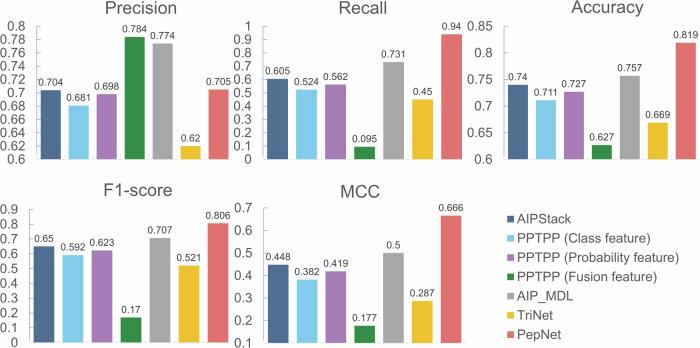
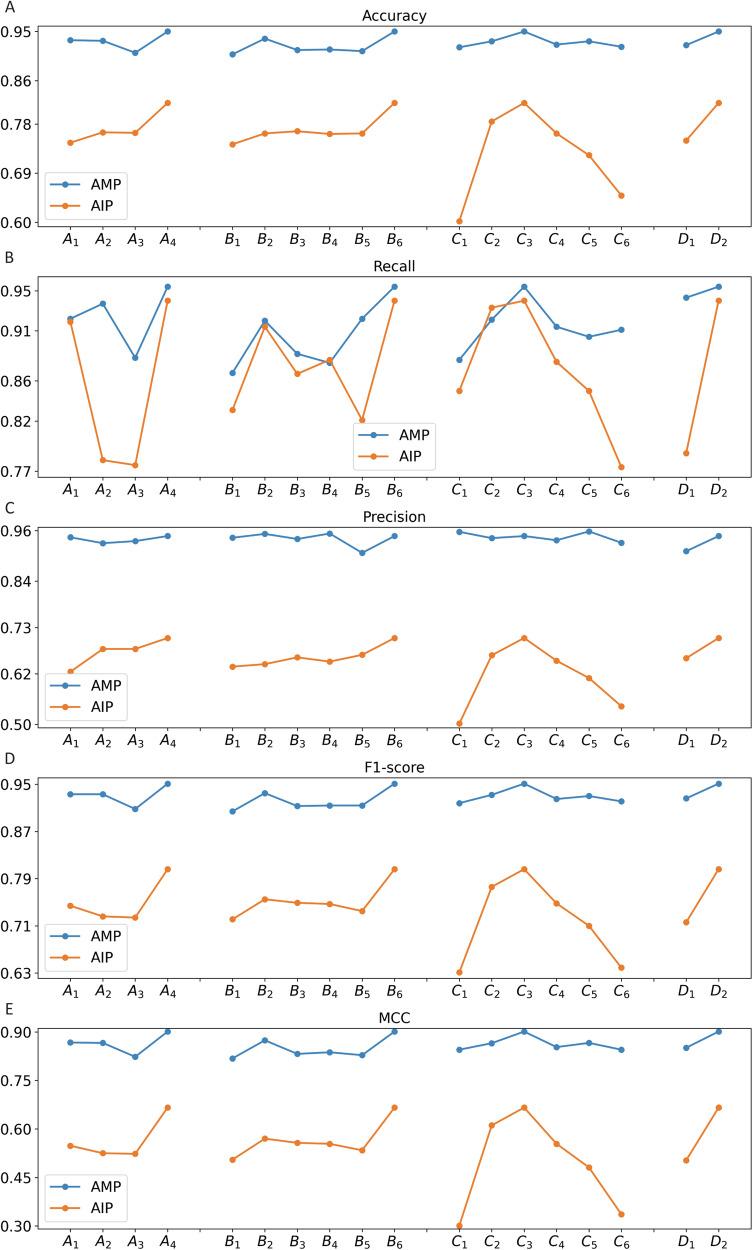
Identifying anti-inflammatory peptides (AIPs) and antimicrobial peptides (AMPs) is crucial for the discovery of innovative and effective peptide-based therapies targeting inflammation and microbial infections. However, accurate identification of AIPs and AMPs remains a computational challenge mainly due to limited utilization of peptide sequence information. Here, we propose PepNet, an interpretable neural network for predicting both AIPs and AMPs by applying a pre-trained protein language model to fully utilize the peptide sequence information. It first captures the information of residue arrangements and physicochemical properties using a residual dilated convolution block, and then seizes the function-related diverse information by introducing a residual Transformer block to characterize the residue representations generated by a pre-trained protein language model. After training and testing, PepNet demonstrates great superiority over other leading AIP and AMP predictors and shows strong interpretability of its learned peptide representations. A user-friendly web server for PepNet is freely available at http://liulab.top/PepNet/server .
鉴定抗炎肽(AIPs)和抗菌肽(AMPs)对于发现针对炎症和微生物感染的创新和有效的基于肽的治疗方法至关重要。然而,由于肽序列信息的利用有限,准确鉴定 AIPs 和 AMPs 仍然是一个计算挑战。在这里,我们提出了 PepNet,这是一种可解释的神经网络,通过应用预先训练的蛋白质语言模型来预测 AIPs 和 AMPs,从而充分利用肽序列信息。它首先使用残差扩张卷积块捕获残基排列和物理化学性质的信息,然后通过引入残差 Transformer 块来捕获与功能相关的多样化信息,以表征由预先训练的蛋白质语言模型生成的残基表示。经过训练和测试,PepNet 优于其他领先的 AIP 和 AMP 预测器,并且其学习的肽表示具有很强的可解释性。PepNet 的用户友好型网络服务器可在 http://liulab.top/PepNet/server 免费获得。




 Zotero 插件