
深度 AMP 网络:一种新颖的抗菌肽预测器,采用 AlphaFold2 预测结构和双向长短期记忆蛋白质语言模型。
deepAMPNet: a novel antimicrobial peptide predictor employing AlphaFold2 predicted structures and a bi-directional long short-term memory protein language model.
机构信息
Microbiology and Metabolic Engineering Laboratory of Sichuan Province, College of Life Science, Sichuan University, Chengdu, Sichuan, China.
出版信息
PeerJ. 2024 Jul 19;12:e17729. doi: 10.7717/peerj.17729. eCollection 2024.
BACKGROUND
Global public health is seriously threatened by the escalating issue of antimicrobial resistance (AMR). Antimicrobial peptides (AMPs), pivotal components of the innate immune system, have emerged as a potent solution to AMR due to their therapeutic potential. Employing computational methodologies for the prompt recognition of these antimicrobial peptides indeed unlocks fresh perspectives, thereby potentially revolutionizing antimicrobial drug development.
METHODS
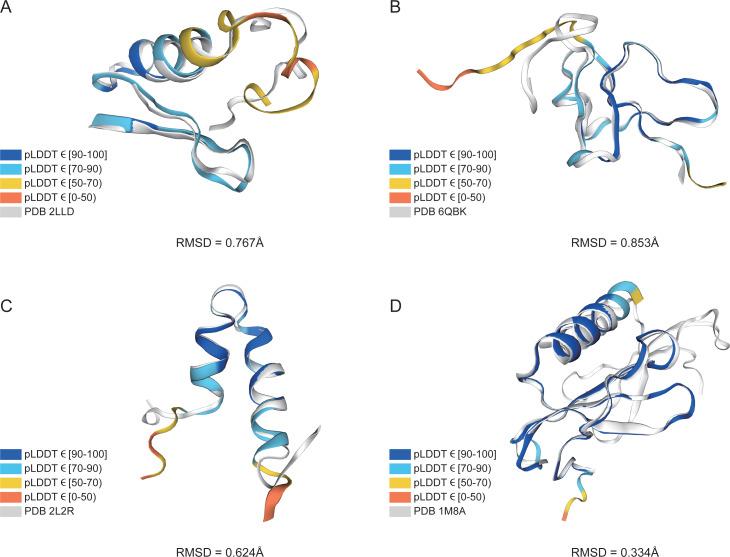
In this study, we have developed a model named as deepAMPNet. This model, which leverages graph neural networks, excels at the swift identification of AMPs. It employs structures of antimicrobial peptides predicted by AlphaFold2, encodes residue-level features through a bi-directional long short-term memory (Bi-LSTM) protein language model, and constructs adjacency matrices anchored on amino acids' contact maps.
RESULTS
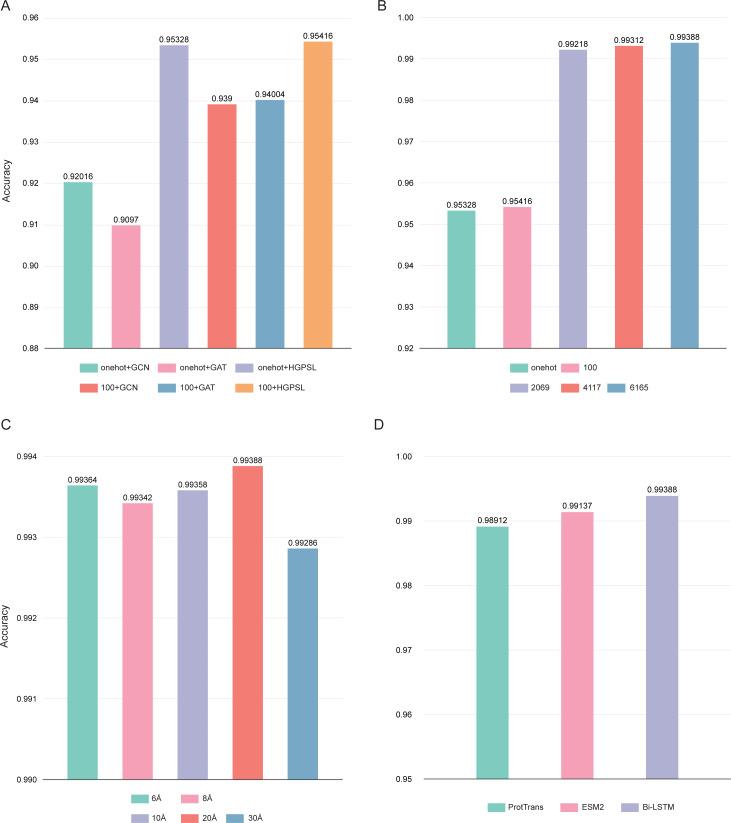
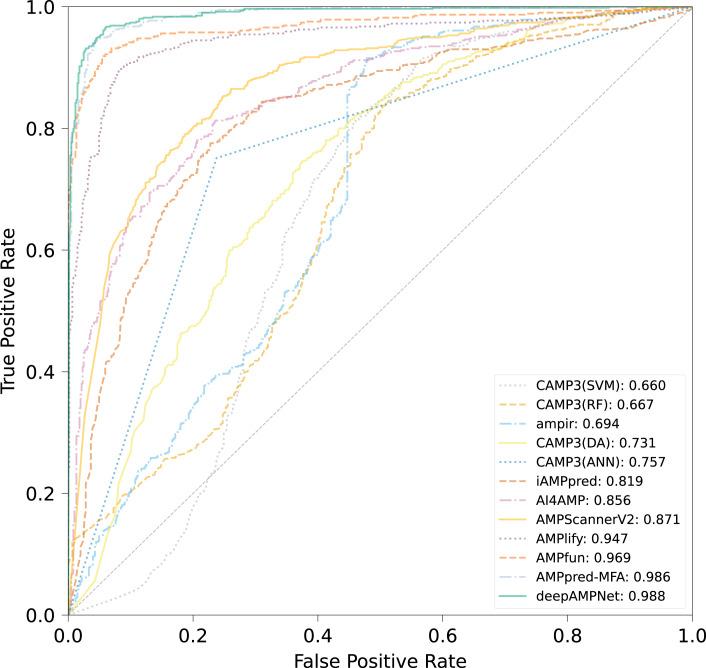
In a comparative study with other state-of-the-art AMP predictors on two external independent test datasets, deepAMPNet outperformed in accuracy. Furthermore, in terms of commonly accepted evaluation matrices such as AUC, Mcc, sensitivity, and specificity, deepAMPNet achieved the highest or highly comparable performances against other predictors.
CONCLUSION
deepAMPNet interweaves both structural and sequence information of AMPs, stands as a high-performance identification model that propels the evolution and design in antimicrobial peptide pharmaceuticals. The data and code utilized in this study can be accessed at https://github.com/Iseeu233/deepAMPNet.
背景
全球公共卫生正受到抗菌药物耐药性(AMR)问题日益严重的威胁。抗菌肽(AMPs)作为先天免疫系统的重要组成部分,由于其治疗潜力,成为对抗 AMR 的有效方法。采用计算方法快速识别这些抗菌肽确实开辟了新的视角,从而有可能彻底改变抗菌药物的开发。
方法
本研究开发了一种名为 deepAMPNet 的模型。该模型利用图神经网络,擅长快速识别 AMPs。它采用 AlphaFold2 预测的抗菌肽结构,通过双向长短期记忆(Bi-LSTM)蛋白质语言模型对残基特征进行编码,并基于氨基酸接触图构建邻接矩阵。
结果
在两个外部独立测试数据集上与其他最先进的 AMP 预测器的比较研究中,deepAMPNet 在准确性方面表现优异。此外,在 AUC、Mcc、灵敏度和特异性等常用评估指标方面,deepAMPNet 的性能与其他预测器相比达到了最高或高度可比的水平。
结论
deepAMPNet 融合了 AMPs 的结构和序列信息,是一种高性能的识别模型,推动了抗菌肽药物的发展和设计。本研究中使用的数据和代码可在 https://github.com/Iseeu233/deepAMPNet 上获取。





 Zotero 插件