
用于增强过继性T细胞疗法的光遗传学的当前态势。
The current landscape of optogenetics for the enhancement of adoptive T-cell therapy.
作者信息
Smith George R, Lee Max P, Jennings Emma K, James John R
机构信息
University of Warwick, Warwick Medical School, Coventry, UK.
Present Address: University of Cambridge, Babraham Institute, Department of Immunology, Cambridge, UK.
出版信息
Discov Immunol. 2024 Dec 23;4(1):kyae019. doi: 10.1093/discim/kyae019. eCollection 2025.
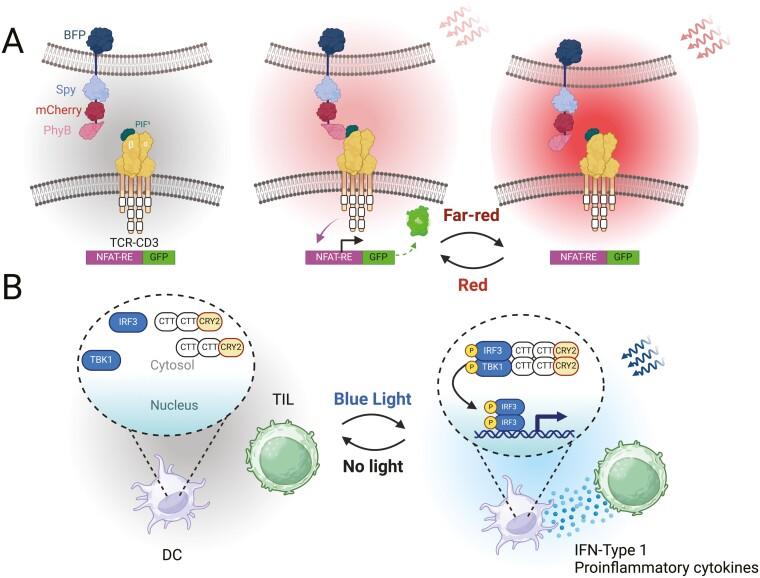
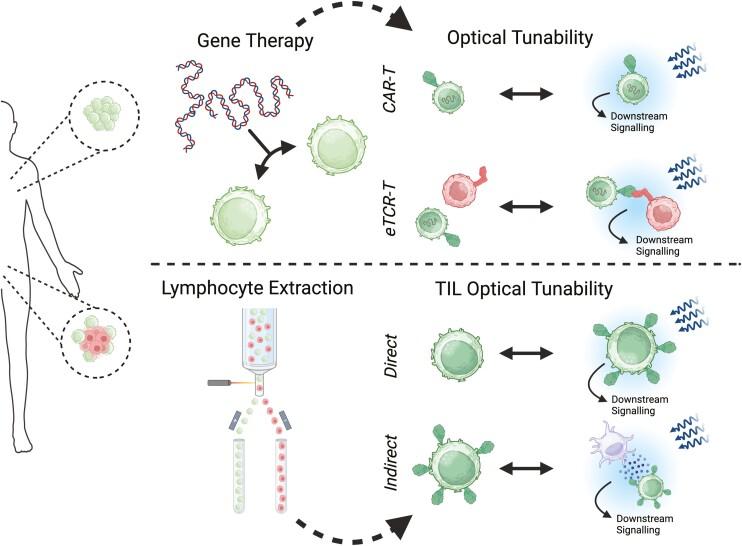
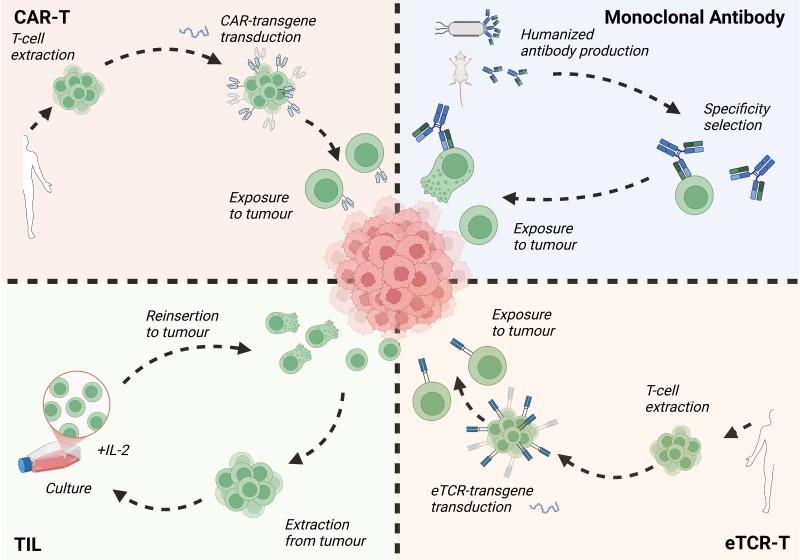
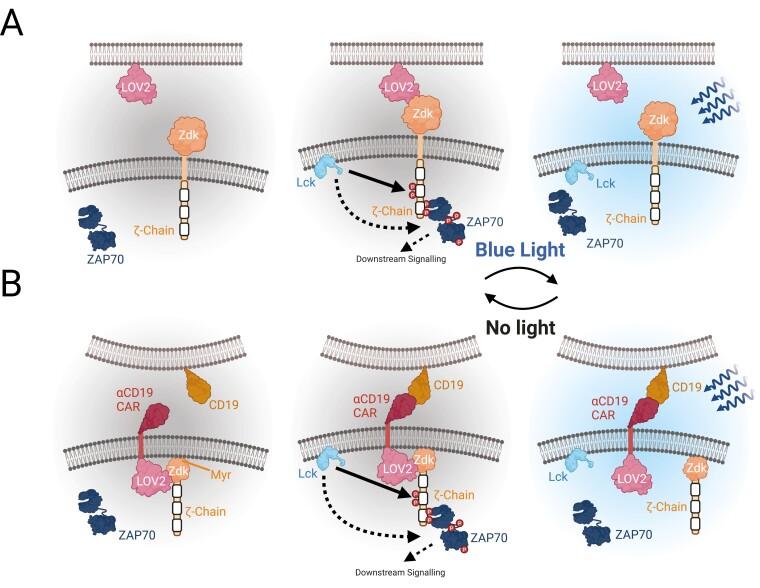
Immunotherapy, the medicinal modulation of a host's immune response to better combat a pathogen or disease, has transformed cancer treatments in recent decades. T-cells, an important component of the adaptive immune system, are further paramount for therapy success. Recent immunotherapeutic modalities have therefore more frequently targeted T-cells for cancer treatments and other pathologies and are termed adoptive T-cell (ATC) therapies. ATC therapies characterize various types of immunotherapies but predominantly fall into three established techniques: tumour-infiltrating lymphocyte, chimeric antigen receptor T-cell, and engineered T-cell receptor therapies. Despite promising clinical results, all ATC therapy types fall short in providing long-term sustained tumour clearance while being particularly ineffective against solid tumours, with substantial developments aiming to understand and prevent the typical drawbacks of ATC therapy. Optogenetics is a relatively recent development, incorporating light-sensitive protein domains into cells or tissues of interest to optically tune specific biological processes. Optogenetic manipulation of immunological functions is rapidly becoming an investigative tool in immunology, with light-sensitive systems now being used to optimize many cellular therapeutic modalities and ATC therapies. This review focuses on how optogenetic approaches are currently utilized to improve ATC therapy in clinical settings by deepening our understanding of the molecular rationale behind therapy success. Moreover, this review further critiques current immuno-optogenetic systems and speculates on the expansion of recent developments, enhancing current ATC-based therapeutic modalities to pave the way for clinical progress.
免疫疗法,即通过药物调节宿主的免疫反应以更好地对抗病原体或疾病,在近几十年里改变了癌症治疗方式。T细胞是适应性免疫系统的重要组成部分,对治疗成功至关重要。因此,近年来的免疫治疗方法更频繁地将T细胞作为癌症治疗和其他病症的靶点,这些疗法被称为过继性T细胞(ATC)疗法。ATC疗法涵盖了多种类型的免疫疗法,但主要分为三种成熟技术:肿瘤浸润淋巴细胞疗法、嵌合抗原受体T细胞疗法和工程化T细胞受体疗法。尽管取得了令人鼓舞的临床结果,但所有类型的ATC疗法在实现长期持续清除肿瘤方面都存在不足,尤其是对实体瘤效果不佳,目前有大量研究致力于了解和预防ATC疗法的典型缺陷。光遗传学是一项相对较新的技术,它将光敏蛋白结构域引入到感兴趣的细胞或组织中,以光学方式调节特定的生物学过程。光遗传学对免疫功能的操控正迅速成为免疫学中的一种研究工具,目前光敏系统已被用于优化多种细胞治疗方法和ATC疗法。本综述重点介绍了目前如何通过深化我们对治疗成功背后分子原理的理解,利用光遗传学方法改善临床环境中的ATC疗法。此外,本综述还对当前的免疫光遗传学系统进行了批判,并对近期发展的扩展进行了推测,以增强当前基于ATC的治疗方法,为临床进展铺平道路。

 Zotero 插件