
光学控制 CD8 T 细胞代谢和效应功能。
Optical Control of CD8 T Cell Metabolism and Effector Functions.
机构信息
Department of Pathology, University of Rochester Medical Center, Rochester, NY, United States.
Department of Microbiology and Immunology, David H. Smith Center for Vaccine Biology and Immunology, University of Rochester Medical Center, Rochester, NY, United States.
出版信息
Front Immunol. 2021 Jun 3;12:666231. doi: 10.3389/fimmu.2021.666231. eCollection 2021.
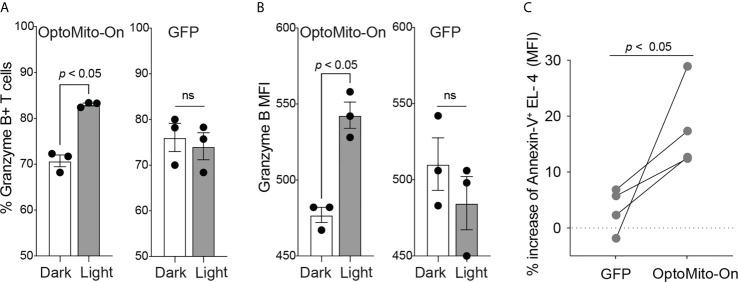
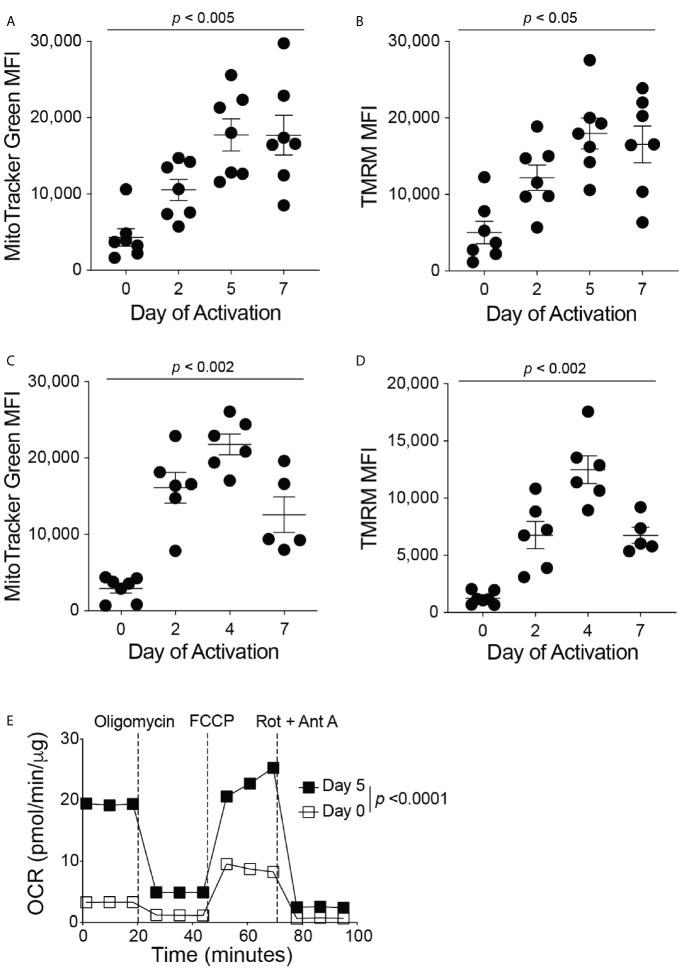
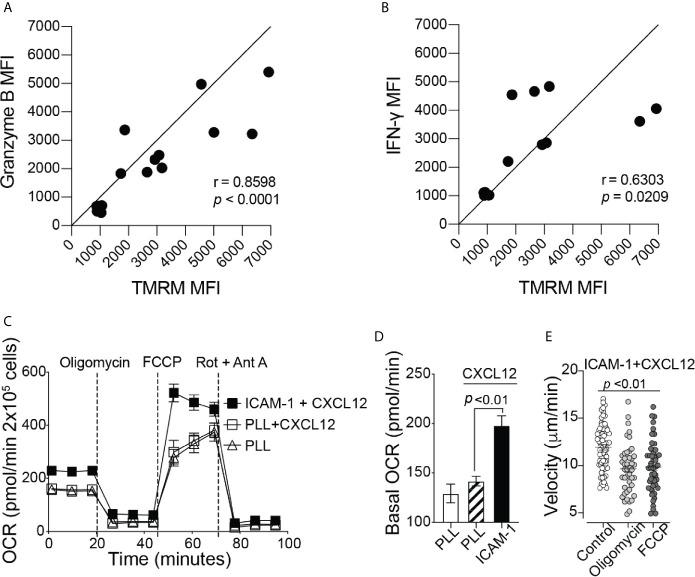
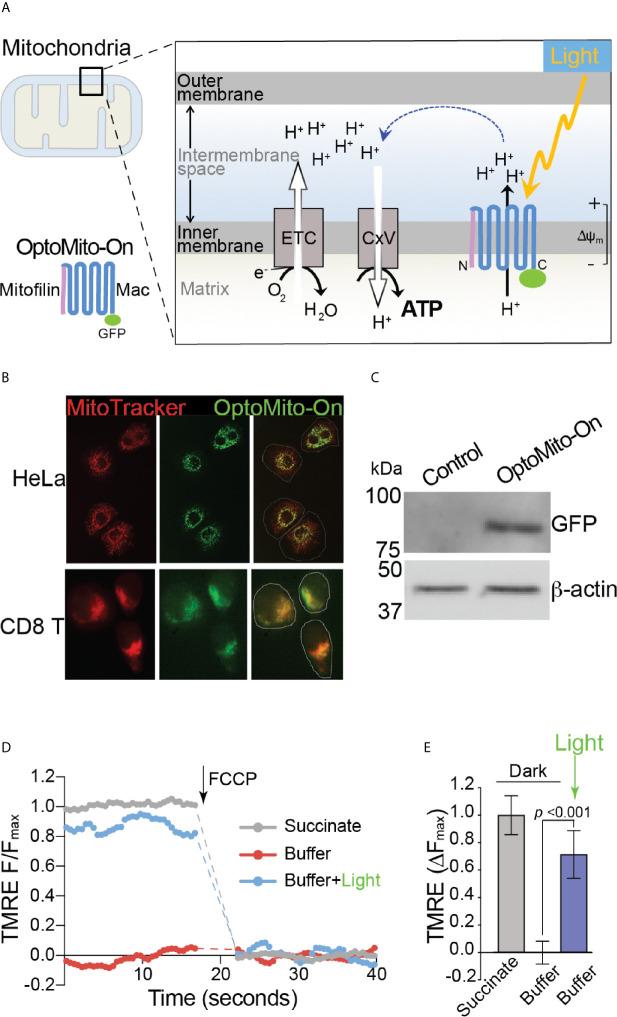
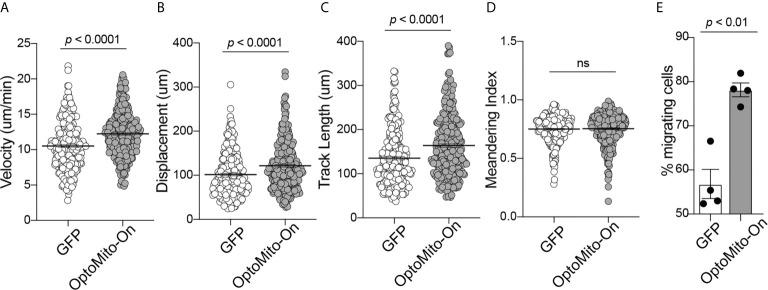
Although cancer immunotherapy is effective against hematological malignancies, it is less effective against solid tumors due in part to significant metabolic challenges present in the tumor microenvironment (TME), where infiltrated CD8 T cells face fierce competition with cancer cells for limited nutrients. Strong metabolic suppression in the TME is often associated with impaired T cell recruitment to the tumor site and hyporesponsive effector function T cell exhaustion. Increasing evidence suggests that mitochondria play a key role in CD8 T cell activation, effector function, and persistence in tumors. In this study, we showed that there was an increase in overall mitochondrial function, including mitochondrial mass and membrane potential, during both mouse and human CD8 T cell activation. CD8 T cell mitochondrial membrane potential was closely correlated with granzyme B and IFN-γ production, demonstrating the significance of mitochondria in effector T cell function. Additionally, activated CD8 T cells that migrate on ICAM-1 and CXCL12 consumed significantly more oxygen than stationary CD8 T cells. Inhibition of mitochondrial respiration decreased the velocity of CD8 T cell migration, indicating the importance of mitochondrial metabolism in CD8 T cell migration. Remote optical stimulation of CD8 T cells that express our newly developed "OptoMito-On" successfully enhanced mitochondrial ATP production and improved overall CD8 T cell migration and effector function. Our study provides new insight into the effect of the mitochondrial membrane potential on CD8 T cell effector function and demonstrates the development of a novel optogenetic technique to remotely control T cell metabolism and effector function at the target tumor site with outstanding specificity and temporospatial resolution.
尽管癌症免疫疗法对血液恶性肿瘤有效,但对实体瘤的效果较差,部分原因是肿瘤微环境(TME)中存在显著的代谢挑战,浸润的 CD8 T 细胞与癌细胞争夺有限的营养物质时面临激烈竞争。TME 中的强烈代谢抑制通常与 T 细胞向肿瘤部位募集受损和反应迟钝的效应功能 T 细胞耗竭有关。越来越多的证据表明,线粒体在 CD8 T 细胞的激活、效应功能和在肿瘤中的持久性中发挥关键作用。在这项研究中,我们表明在小鼠和人类 CD8 T 细胞激活过程中,整体线粒体功能(包括线粒体质量和膜电位)增加。CD8 T 细胞线粒体膜电位与颗粒酶 B 和 IFN-γ 的产生密切相关,表明线粒体在效应 T 细胞功能中的重要性。此外,在 ICAM-1 和 CXCL12 上迁移的激活 CD8 T 细胞比静止的 CD8 T 细胞消耗更多的氧气。线粒体呼吸的抑制降低了 CD8 T 细胞迁移的速度,表明线粒体代谢在 CD8 T 细胞迁移中的重要性。对表达我们新开发的“OptoMito-On”的 CD8 T 细胞进行远程光学刺激成功地增强了线粒体 ATP 的产生,并改善了整体 CD8 T 细胞的迁移和效应功能。我们的研究提供了关于线粒体膜电位对 CD8 T 细胞效应功能影响的新见解,并展示了一种新的光遗传学技术的发展,该技术可在目标肿瘤部位以出色的特异性和时空分辨率远程控制 T 细胞代谢和效应功能。


 Zotero 插件