
摄食途径缺陷型突变体的代谢适应性与营养物质清除:见解
Metabolic adaptability and nutrient scavenging in : insights from ingestion pathway-deficient mutants.
作者信息
Rimple Patrick A, Olafsson Einar B, Markus Benedikt M, Wang Fengrong, Augusto Leonardo, Lourido Sebastian, Carruthers Vern B
机构信息
Department of Microbiology and Immunology, University of Michigan Medical School, Ann Arbor, Michigan, USA.
Whitehead Institute for Biomedical Research, Cambridge, Massachusetts, USA.
出版信息
mSphere. 2025 Apr 29;10(4):e0101124. doi: 10.1128/msphere.01011-24. Epub 2025 Apr 2.
UNLABELLED
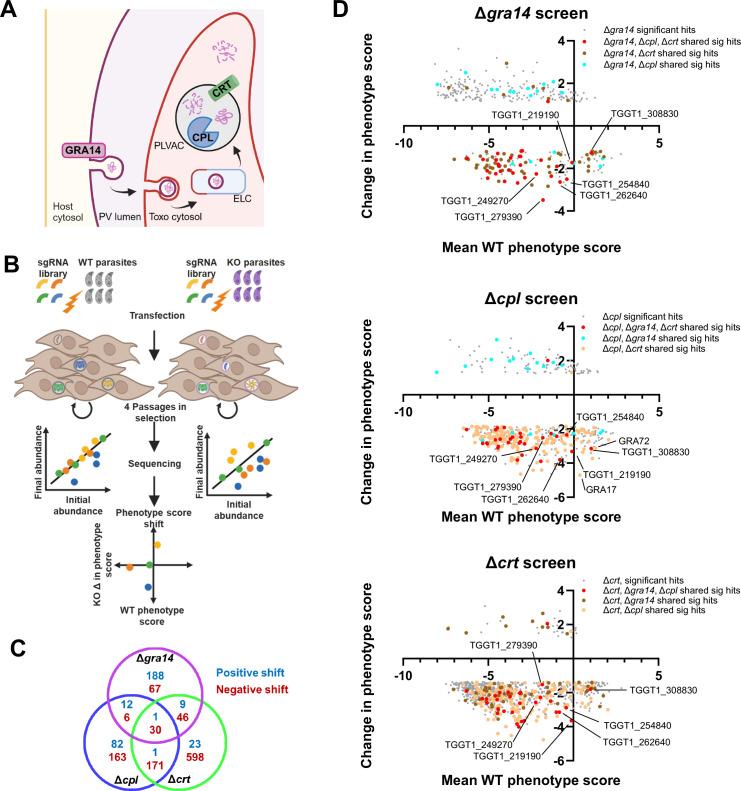
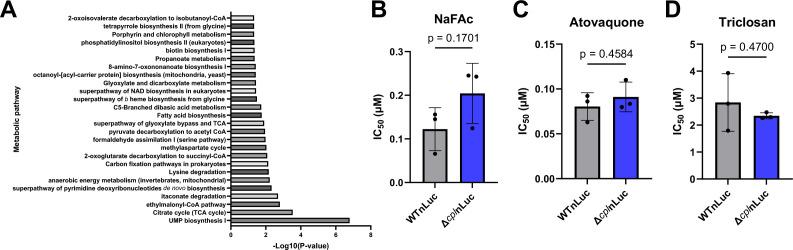
The obligate intracellular parasite replicates within a specialized compartment called the parasitophorous vacuole (PV). Recent work showed that despite living within a PV, endocytoses proteins from the cytosol of infected host cells via a so-called ingestion pathway. The ingestion pathway is initiated by dense granule protein GRA14, which binds host endosomal sorting complex required for transport (ESCRT) machinery to bud vesicles into the lumen of the PV. The protein-containing vesicles are internalized by the parasite and trafficked to the plant vacuole-like compartment (PLVAC), where cathepsin protease L (CPL) degrades the cargo, and the chloroquine resistance transporter (CRT) exports the resulting peptides and amino acids to the parasite cytosol. However, although the ingestion pathway was proposed to be a conduit for nutrients, there is limited evidence for this hypothesis. We reasoned that if uses the ingestion pathway to acquire nutrients, then parasites lacking GRA14, CPL, or CRT should rely more on biosynthetic pathways or alternative scavenging pathways. To explore this, we conducted a genome-wide clustered regularly interspaced short palindromic repeats (CRISPR) screen in wild-type (WT) parasites and Δ, Δ, and Δ mutants to identify genes that become more fitness conferring in ingestion-deficient parasites. Our screen revealed a significant overlap of genes that potentially become more fitness conferring in the ingestion mutants compared to WT. Pathway analysis indicated that Δ and Δ mutants relied more on pyrimidine biosynthesis, fatty acid biosynthesis, tricarboxylic acid (TCA) cycle, and lysine degradation. Bulk metabolomic analysis showed reduced levels of glycolytic intermediates and amino acids in the ingestion mutants compared to WT, highlighting the pathway's potential role in host resource scavenging. Interestingly, Δ and Δ showed an exacerbated growth defect when cultured in amino acid-depleted media, suggesting that disrupting proteolysis or the export of proteolytic products from the PLVAC affects parasite survival during nutrient scarcity.
IMPORTANCE
is an obligate intracellular pathogen that infects virtually any nucleated cell in most warm-blooded animals. Infections are asymptomatic in most cases, but people with weakened immunity can experience severe disease. For the parasite to replicate within the host, it must efficiently acquire essential nutrients, especially as it is unable to make several key metabolites. Understanding the mechanisms by which scavenges nutrients from the host is crucial for identifying potential therapeutic targets. Our study suggests that the ingestion pathway contributes to sustaining parasite metabolites and parasite replication under amino acid-limiting conditions. This work advances our understanding of the metabolic adaptability of .
未标记
这种专性细胞内寄生虫在一种称为寄生泡(PV)的特殊区室中进行复制。最近的研究表明,尽管它生活在寄生泡内,但它会通过一种所谓的摄取途径从被感染宿主细胞的胞质溶胶中内吞蛋白质。摄取途径由致密颗粒蛋白GRA14启动,GRA14与宿主内体运输所需分选复合物(ESCRT)机制结合,使囊泡出芽进入寄生泡腔。含有蛋白质的囊泡被寄生虫内化并运输到植物液泡样区室(PLVAC),在那里组织蛋白酶L(CPL)降解货物,而氯喹抗性转运蛋白(CRT)将产生的肽和氨基酸输出到寄生虫胞质溶胶中。然而,尽管摄取途径被认为是营养物质的一条通道,但这一假设的证据有限。我们推断,如果寄生虫利用摄取途径获取营养,那么缺乏GRA14、CPL或CRT的寄生虫应该更多地依赖生物合成途径或替代清除途径。为了探究这一点,我们在野生型(WT)寄生虫以及ΔGRA14、ΔCPL和ΔCRT突变体中进行了全基因组成簇规律间隔短回文重复序列(CRISPR)筛选,以鉴定在摄取缺陷型寄生虫中能提高适应性的基因。我们的筛选揭示,与WT相比,在摄取突变体中可能提高适应性的基因有显著重叠。通路分析表明,ΔGRA14和ΔCPL突变体更多地依赖嘧啶生物合成、脂肪酸生物合成、三羧酸(TCA)循环和赖氨酸降解。大量代谢组学分析显示,与WT相比,摄取突变体中糖酵解中间产物和氨基酸水平降低,突出了该途径在宿主资源清除中的潜在作用。有趣的是,ΔGRA14和ΔCPL在氨基酸耗尽的培养基中培养时表现出更严重的生长缺陷,这表明破坏蛋白水解或从PLVAC输出蛋白水解产物会影响寄生虫在营养缺乏时的存活。
重要性
疟原虫是一种专性细胞内病原体,几乎可感染大多数温血动物的任何有核细胞。在大多数情况下感染是无症状的,但免疫力较弱的人可能会患重病。为了在宿主体内进行复制,这种寄生虫必须有效地获取必需营养,尤其是因为它无法合成几种关键代谢物。了解疟原虫从宿主清除营养的机制对于确定潜在治疗靶点至关重要。我们的研究表明,摄取途径有助于在氨基酸限制条件下维持寄生虫代谢物和寄生虫复制。这项工作推进了我们对疟原虫代谢适应性的理解。


 Zotero 插件