
NOSTRA模型:在可能发生医院内传播的情况下对感染源进行连贯估计。
The NOSTRA model: Coherent estimation of infection sources in the case of possible nosocomial transmission.
作者信息
Pascall David J, Jackson Christopher, Evans Stephanie, Gouliouris Theodore, Illingworth Christopher J R, Piatek Stefan G, Robotham Julie V, Stirrup Oliver, Warne Ben, Breuer Judith, De Angelis Daniela
机构信息
MRC Biostatistics Unit, University of Cambridge, Cambridge, United Kingdom.
HCAI, Fungal, AMR, AMU & Sepsis Division, UK Health Security Agency, London, United Kingdom.
出版信息
PLoS Comput Biol. 2025 Apr 21;21(4):e1012949. doi: 10.1371/journal.pcbi.1012949. eCollection 2025 Apr.
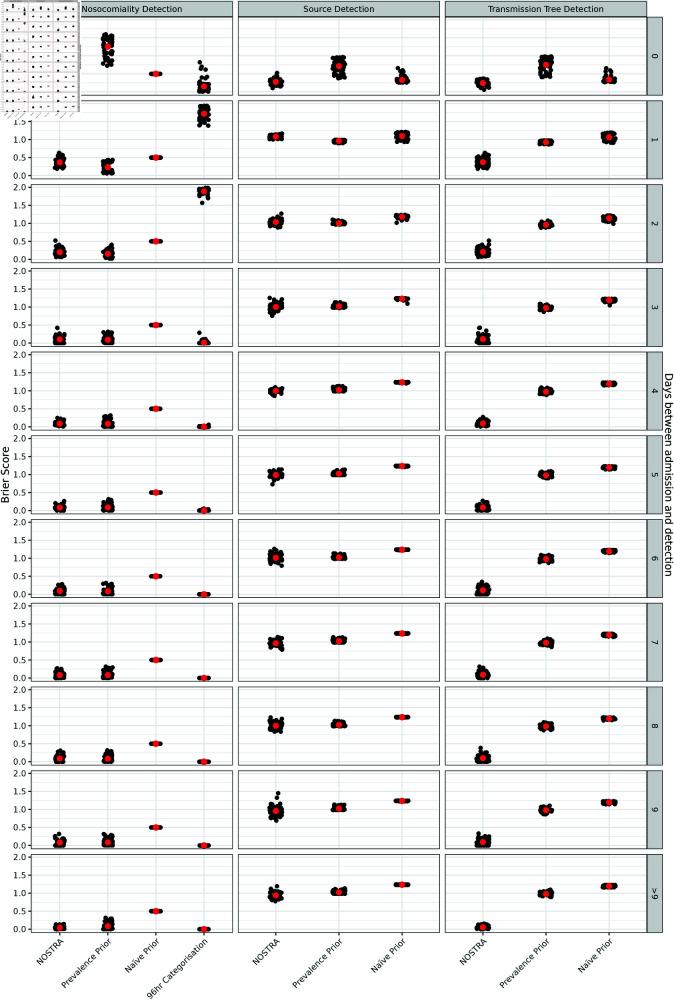
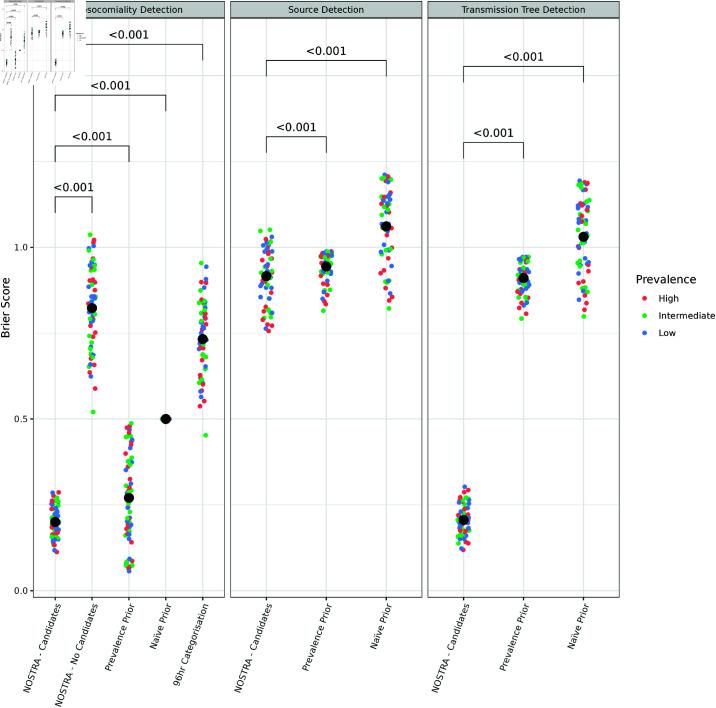
Nosocomial, or hospital-acquired, infections are a key determinant of patient health in healthcare facilities, leading to longer stays and increased mortality. In addition to the direct effects on infected patients, the burden imposed by nosocomial infections impacts both staff and other patients by increasing the load on the healthcare system. The appropriate infection control response may differ depending on whether the infection was acquired in the hospital or the community. For example, nosocomial outbreaks may require ward closures to reduce the risk of onward transmission, whilst this may not be an appropriate response to repeated importations of infections from outside the facility. Unfortunately, it is often unclear whether an infection detected in a healthcare facility is nosocomial, as the time of infection is unobserved. Given this, there is a strong case for the development of models that can integrate multiple datasets available in hospitals to assess whether an infection detected in a hospital is nosocomial. When assessing nosocomiality, it is beneficial to take into account both whether the timing of infection is consistent with hospital acquisition and whether there are any likely candidates within the hospital who could have been the source of the infection. In this work, we developed a Bayesian model which jointly estimates whether a given infection detected in hospital is nosocomial and whether it came from a set of individuals identified as candidates by hospital staff. The model coherently integrates pathogen genetic information, the timings of epidemiological events, such as symptom onset, and location data on the infected patient and candidate infectors. We illustrated this model on a real hospital dataset showing both its output and how the impact of the different data sources on the assessed probabilities are contingent on what other data has been included in the model, and validated the calibration of the predictions against simulated data.
医院感染,即医院获得性感染,是医疗机构中患者健康的关键决定因素,会导致住院时间延长和死亡率增加。除了对感染患者的直接影响外,医院感染带来的负担还会增加医疗系统的负荷,从而影响医护人员和其他患者。根据感染是在医院内还是社区中获得的,适当的感染控制措施可能会有所不同。例如,医院感染暴发可能需要关闭病房以降低进一步传播的风险,而对于设施外部反复输入的感染,这可能不是合适的应对措施。不幸的是,由于感染时间难以观察到,在医疗机构中检测到的感染是否为医院感染往往并不明确。鉴于此,开发能够整合医院中可用的多个数据集以评估在医院中检测到的感染是否为医院感染的模型具有充分的理由。在评估医院感染情况时,考虑感染时间是否与医院获得情况一致以及医院内是否有任何可能的感染源是有益的。在这项工作中,我们开发了一个贝叶斯模型,该模型联合估计在医院中检测到的特定感染是否为医院感染以及它是否来自医院工作人员确定为感染源的一组个体。该模型连贯地整合了病原体基因信息、流行病学事件的时间(如症状出现时间)以及感染患者和潜在感染源的位置数据。我们在一个真实的医院数据集上展示了这个模型,展示了它的输出以及不同数据源对评估概率的影响如何取决于模型中包含的其他数据,并针对模拟数据验证了预测的校准。


 Zotero 插件