
A2B-COVID:一种快速评估潜在 SARS-CoV-2 传播事件的工具。
A2B-COVID: A Tool for Rapidly Evaluating Potential SARS-CoV-2 Transmission Events.
机构信息
MRC-University of Glasgow Centre for Virus Research, Glasgow, United Kingdom.
MRC Biostatistics Unit, University of Cambridge, Cambridge, United Kingdom.
出版信息
Mol Biol Evol. 2022 Mar 2;39(3). doi: 10.1093/molbev/msac025.
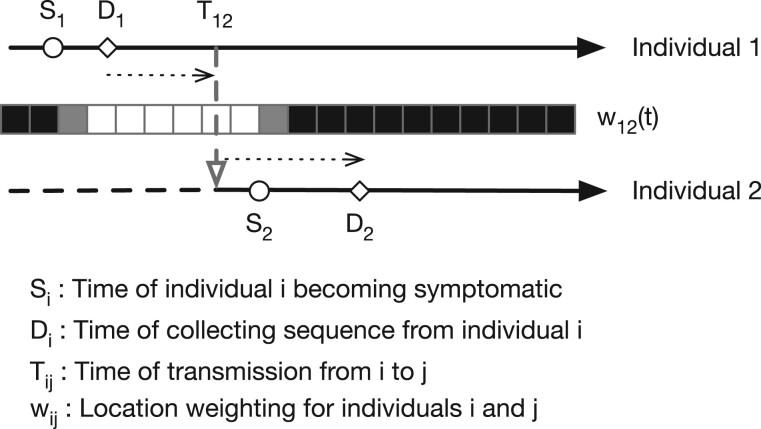
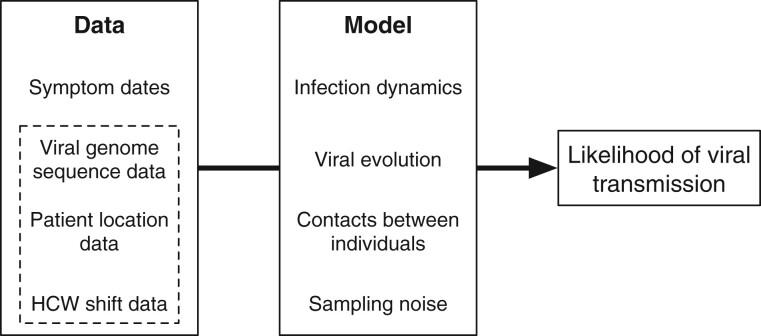
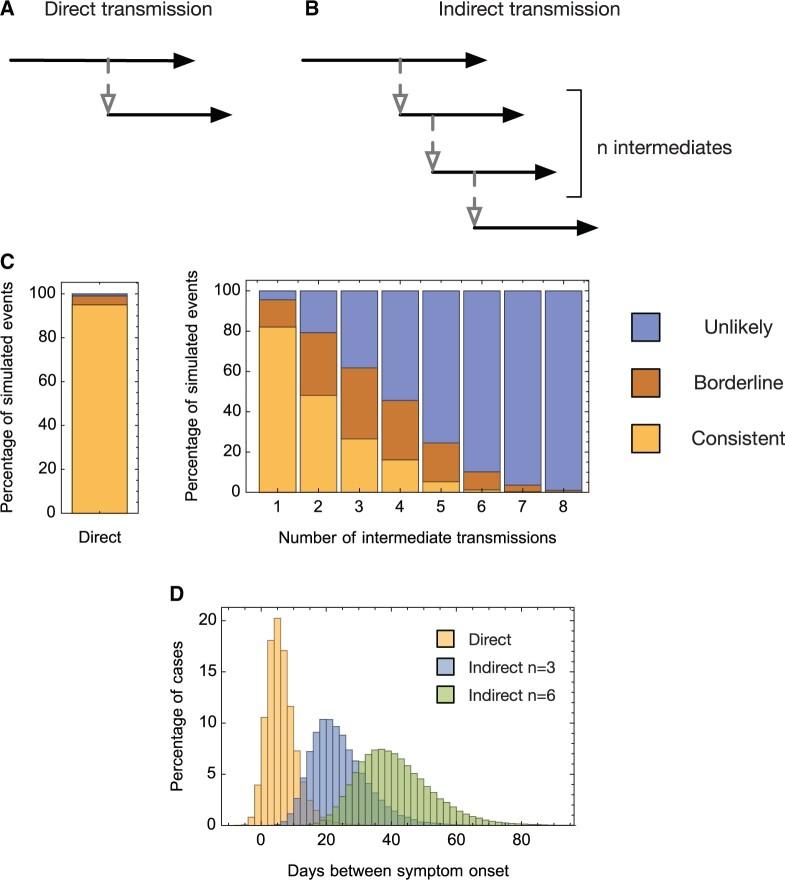
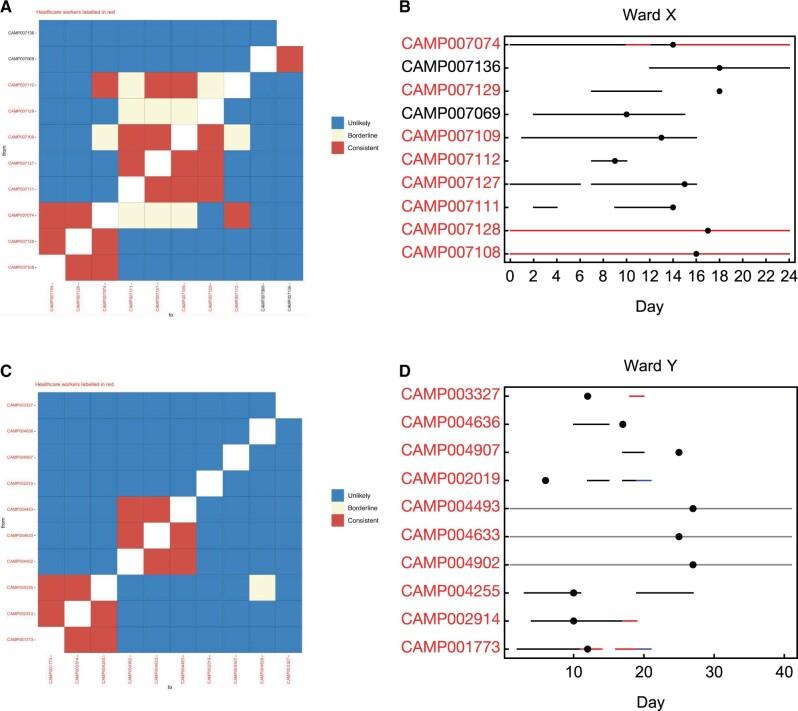
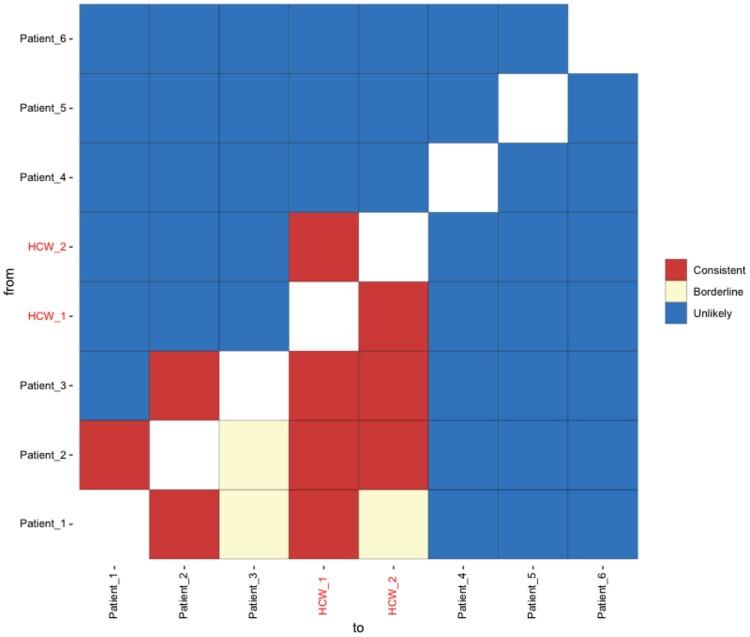
Identifying linked cases of infection is a critical component of the public health response to viral infectious diseases. In a clinical context, there is a need to make rapid assessments of whether cases of infection have arrived independently onto a ward, or are potentially linked via direct transmission. Viral genome sequence data are of great value in making these assessments, but are often not the only form of data available. Here, we describe A2B-COVID, a method for the rapid identification of potentially linked cases of COVID-19 infection designed for clinical settings. Our method combines knowledge about infection dynamics, data describing the movements of individuals, and evolutionary analysis of genome sequences to assess whether data collected from cases of infection are consistent or inconsistent with linkage via direct transmission. A retrospective analysis of data from two wards at Cambridge University Hospitals NHS Foundation Trust during the first wave of the pandemic showed qualitatively different patterns of linkage between cases on designated COVID-19 and non-COVID-19 wards. The subsequent real-time application of our method to data from the second epidemic wave highlights its value for monitoring cases of infection in a clinical context.
确定感染的关联病例是病毒传染病公共卫生应对的关键组成部分。在临床环境中,需要快速评估感染病例是独立到达病房的,还是通过直接传播潜在相关联的。病毒基因组序列数据在进行这些评估方面具有重要价值,但通常不是唯一可用的数据形式。在这里,我们描述了 A2B-COVID,这是一种用于临床环境中快速识别 COVID-19 感染潜在关联病例的方法。我们的方法结合了感染动力学知识、描述个体移动的数据以及基因组序列的进化分析,以评估从感染病例中收集的数据是否与通过直接传播的关联一致或不一致。对剑桥大学医院 NHS 基金会信托基金会在大流行第一波期间两个病房的数据进行的回顾性分析显示,指定的 COVID-19 病房和非 COVID-19 病房之间的关联病例呈现出定性不同的模式。随后我们的方法实时应用于第二波疫情的数据,突出了其在临床环境中监测感染病例的价值。
 Zotero 插件