
1990年至2021年各年龄组归因于代谢风险的心血管疾病的全球、区域和国家负担:基于2021年全球疾病负担研究数据的分析
Global, regional, and national burden of cardiovascular diseases attributable to metabolic risks across all age groups from 1990 to 2021: an analysis of the 2021 global burden of disease study data.
作者信息
Zhu Xing-Yu, Shi Miao-Qian, Jiang Zhi-Meng, Tian Jian-Wei, Su Fei-Fei
机构信息
Graduate School of Hebei North University, Zhangjiakou, Hebei Province, 075031, China.
Department of Cardiology, The Sixth Medical Center, Chinese PLA General Hospital, Beijing, 100700, China.
出版信息
BMC Public Health. 2025 May 8;25(1):1704. doi: 10.1186/s12889-025-22702-7.
OBJECTIVE
The objective is to evaluate the temporal trends in the burden of cardiovascular diseases attributable to metabolic risk factors from 1990 to 2021 and to project the burden over the subsequent 30 years.
METHODS
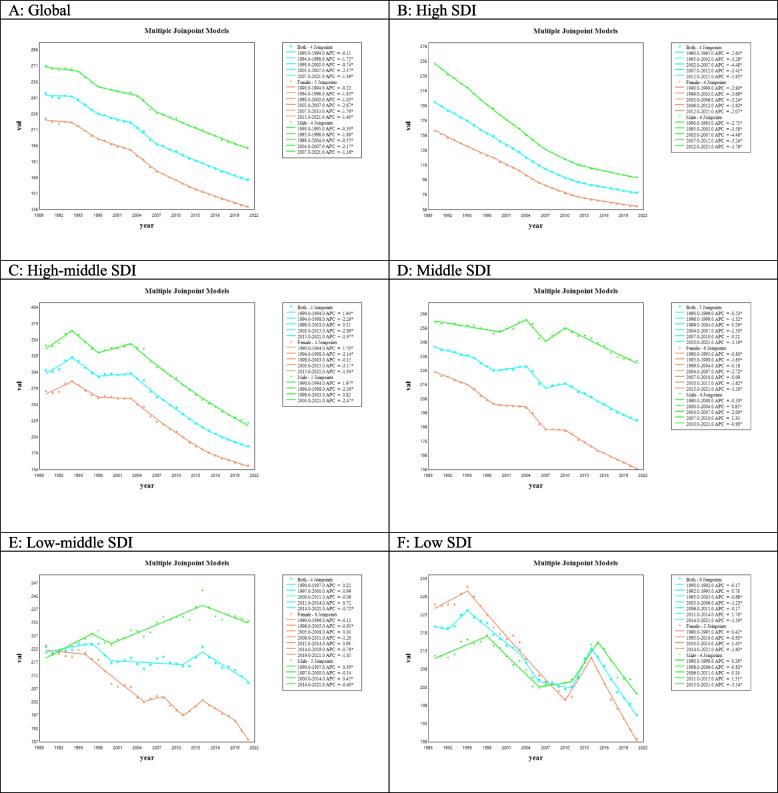
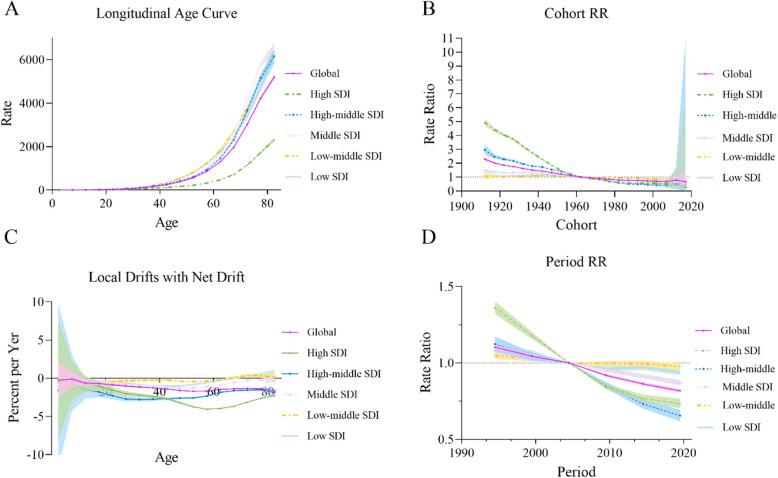
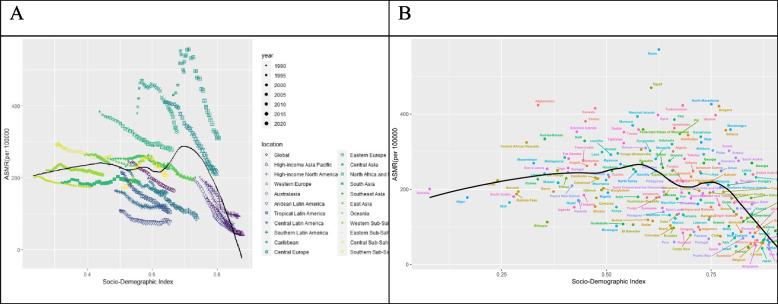
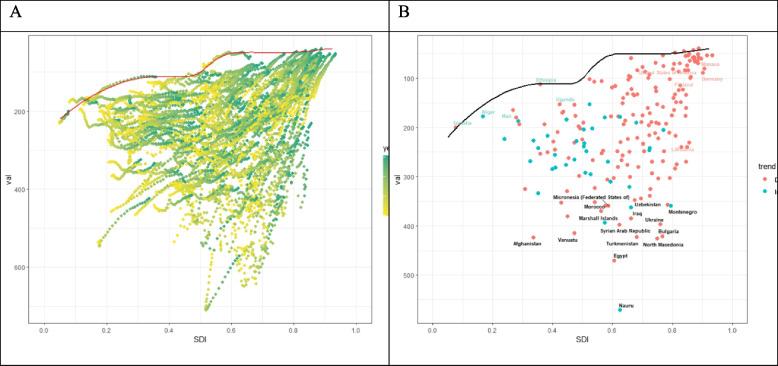
A joinpoint regression model was employed to estimate the annual percentage change in cardiovascular disease mortality attributable to metabolic risk factors, utilizing data from the Global Burden of Disease (GBD) 2021. An age-period-cohort analysis was conducted to evaluate the effects of age, period, and cohort. A frontier analysis was employed to investigate the correlation between the prevalence of cardiovascular disease attributable to metabolic risk factors and socio-demographic trends. An autoregressive integrated moving average (ARIMA) model was subsequently constructed to forecast future cardiovascular disease burden.
RESULTS
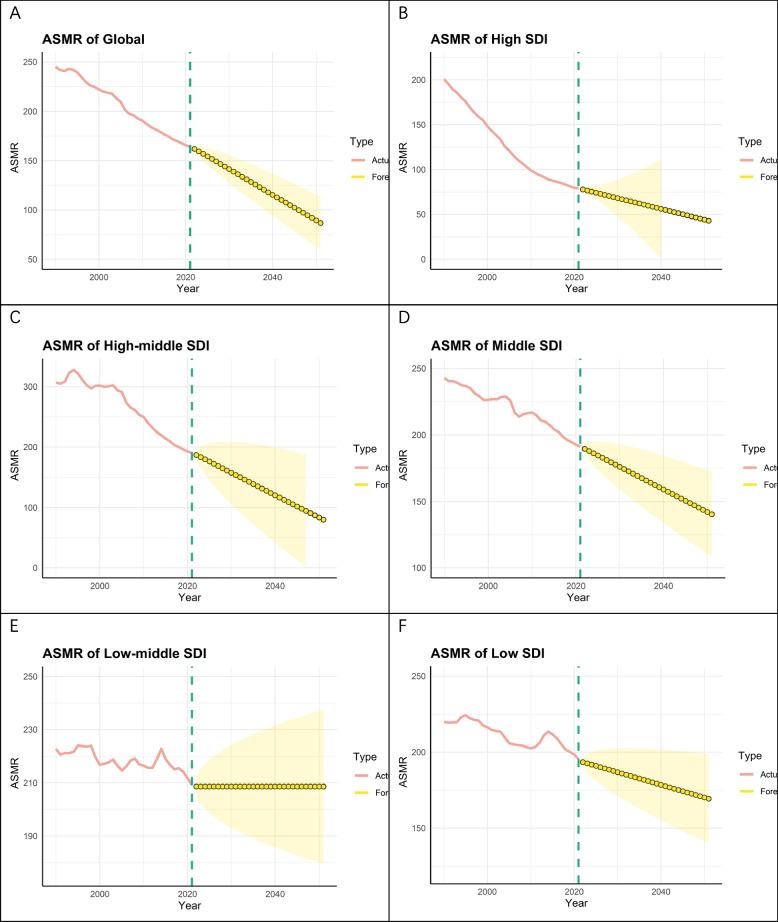
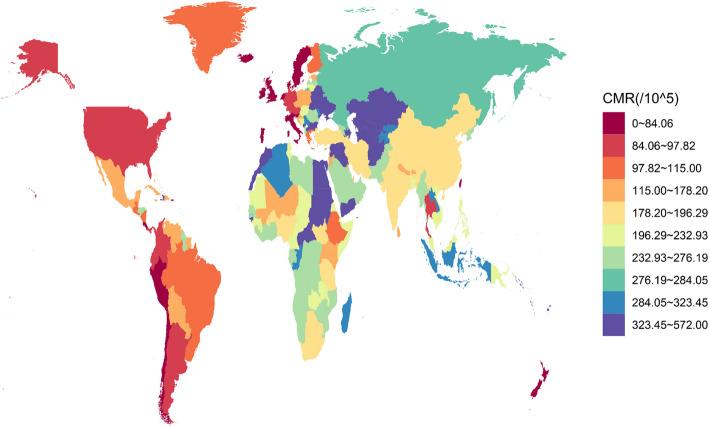
Between 1990 and 2021, the global age-standardized mortality rate (ASMR) of cardiovascular diseases attributable to metabolic factors exhibited a consistent decline (Average Annual Percent Change (AAPC) = -1.28, 95% CI [-1.42, -1.14], P < 0.01). However, the absolute number of deaths increased from 8.326 million to 13.595 million. The most substantial reduction in ASMR was observed in the High Socio-Demographic Index (SDI) region (AAPC = -2.98, 95% CI [-3.10, -2.86], P < 0.01), whereas the reductions were relatively smaller in the Low-middle SDI and Low SDI regions. The ARIMA model predicts a decline in global cardiovascular disease mortality over the next three decades, with the most pronounced decrease anticipated in the high-middle SDI region and smaller declines expected in the middle SDI and low SDI regions.
CONCLUSION
Notwithstanding a global decline in age-standardized mortality and disability-adjusted life year (DALY) rates, the burden of cardiovascular diseases attributable to metabolic factors remains significant worldwide. Targeted interventions must be implemented without delay, particularly for males and populations in low and middle SDI regions, to mitigate the impact of metabolic factors on public health.
目的
评估1990年至2021年期间归因于代谢风险因素的心血管疾病负担的时间趋势,并预测未来30年的负担情况。
方法
采用连接点回归模型,利用全球疾病负担(GBD)2021的数据,估计归因于代谢风险因素的心血管疾病死亡率的年度百分比变化。进行年龄-时期-队列分析,以评估年龄、时期和队列的影响。采用前沿分析,研究归因于代谢风险因素的心血管疾病患病率与社会人口趋势之间的相关性。随后构建自回归积分移动平均(ARIMA)模型,以预测未来心血管疾病负担。
结果
1990年至2021年期间,归因于代谢因素的心血管疾病的全球年龄标准化死亡率(ASMR)持续下降(年均百分比变化(AAPC)=-1.28,95%置信区间[-1.42,-1.14],P<0.01)。然而,死亡绝对数从832.6万增加到1359.5万。社会人口指数(SDI)高的地区ASMR下降最为显著(AAPC=-2.98,95%置信区间[-3.10,-2.86],P<0.01),而SDI中低和低的地区下降幅度相对较小。ARIMA模型预测,未来三十年全球心血管疾病死亡率将下降,中高SDI地区预计下降最为明显,中SDI和低SDI地区下降幅度较小。
结论
尽管全球年龄标准化死亡率和伤残调整生命年(DALY)率有所下降,但归因于代谢因素的心血管疾病负担在全球范围内仍然很大。必须立即实施有针对性的干预措施,特别是针对男性以及SDI中低和低地区的人群,以减轻代谢因素对公众健康的影响。

 Zotero 插件