
K13螺旋桨结构域中的三个天冬酰胺插入导致恶性疟原虫对多种抗疟药物产生耐药性。
Three Asparagine insertions in the K13-propeller led to Plasmodiumfalciparum becoming resistant to multiple antimalarial drugs.
作者信息
Xiang Zheng, Duan Mengxi, Wang Siqi, Zhao Hui, Zhao Wei, Li Xiaosong, Li Xinxin, Zeng Weilin, Wu Yanrui, Yang Fuxue, Liu Xinyu, Tang Cong, Cui Liwang, Yang Zhaoqing
机构信息
Yunnan Provincial Key Laboratory of Public Health and Biosafety & Department of Pathogen Biology and Immunology, Faculty of Basic Medical Science, Kunming Medical University, Kunming, 650500, China.
Department of Internal Medicine, University of South Florida, Tampa, FL, USA.
出版信息
Int J Parasitol Drugs Drug Resist. 2025 Apr 25;28:100590. doi: 10.1016/j.ijpddr.2025.100590.
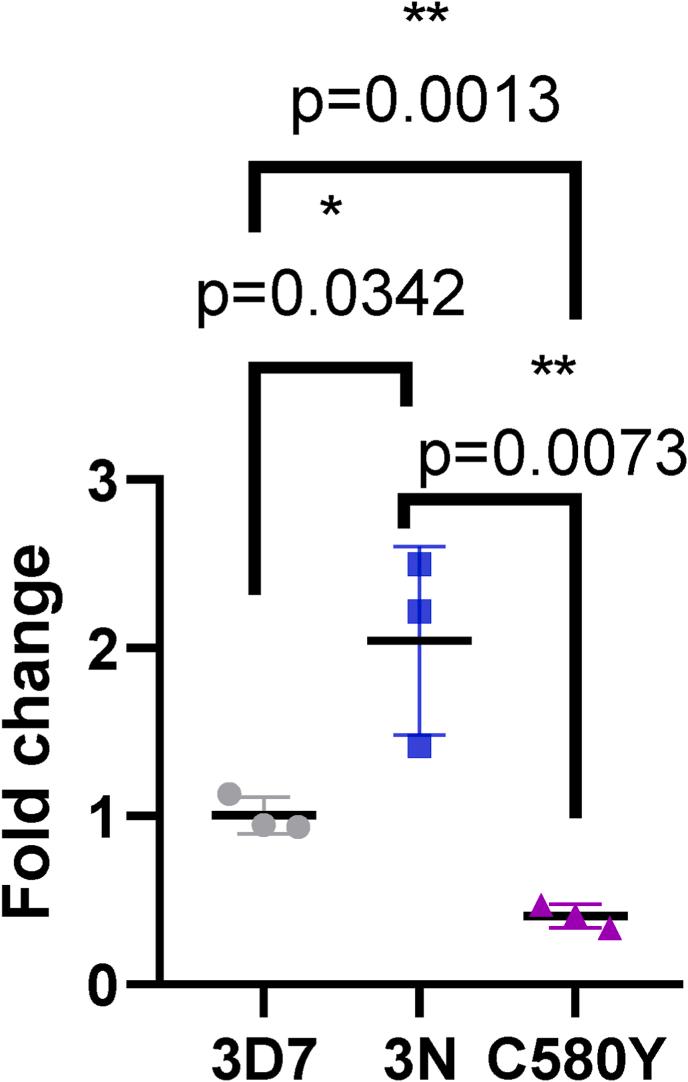
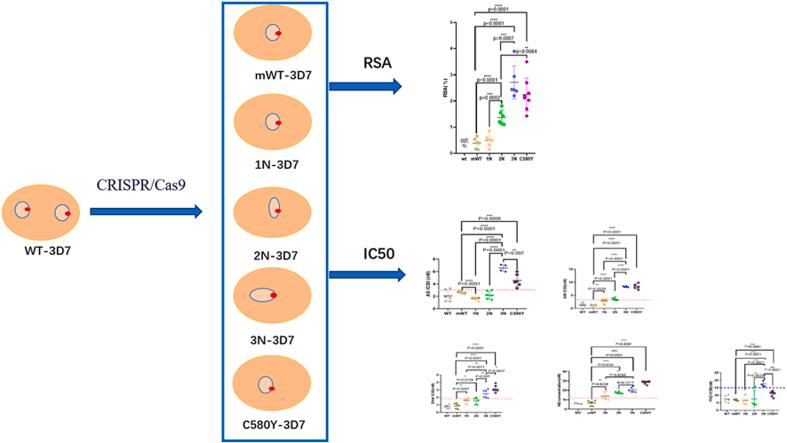
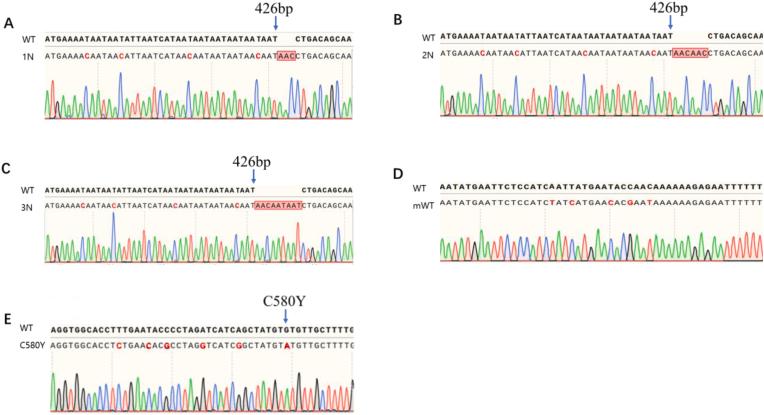
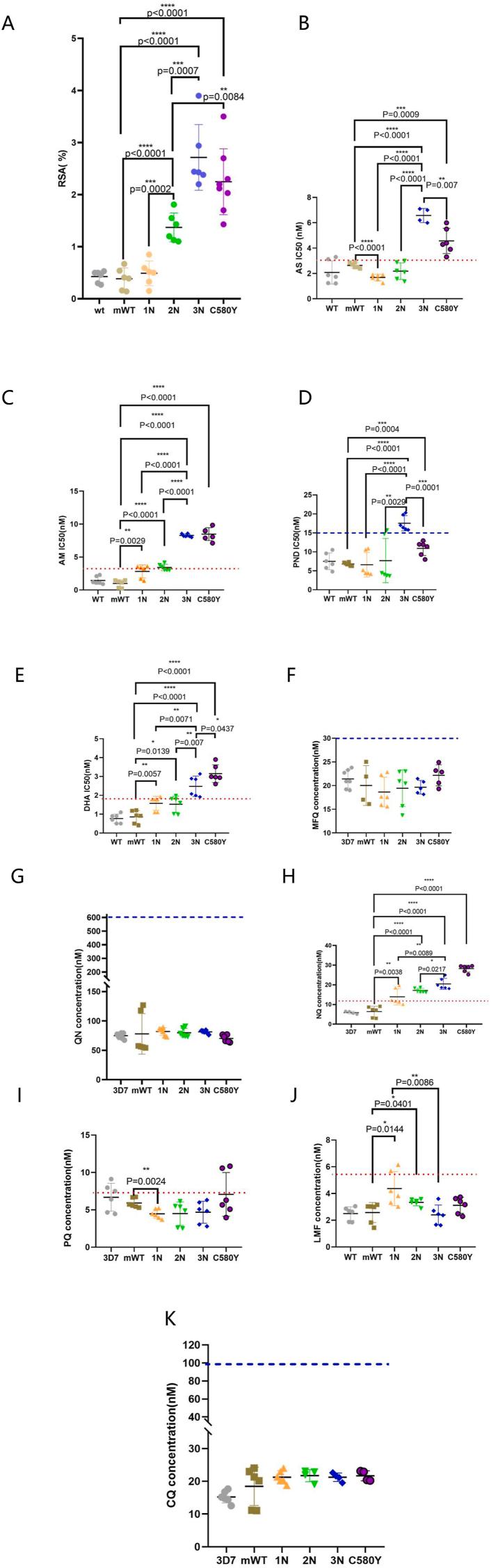
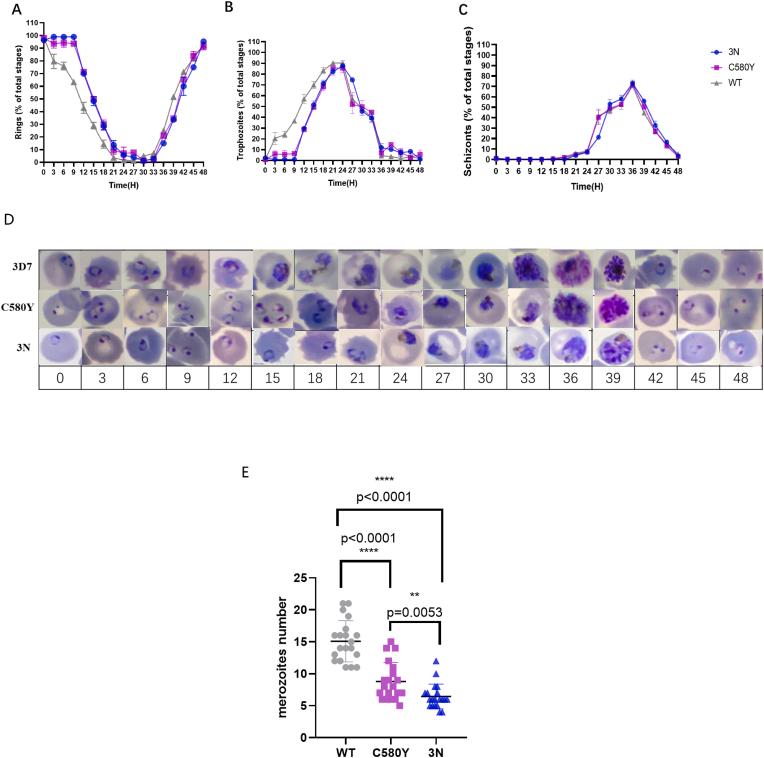
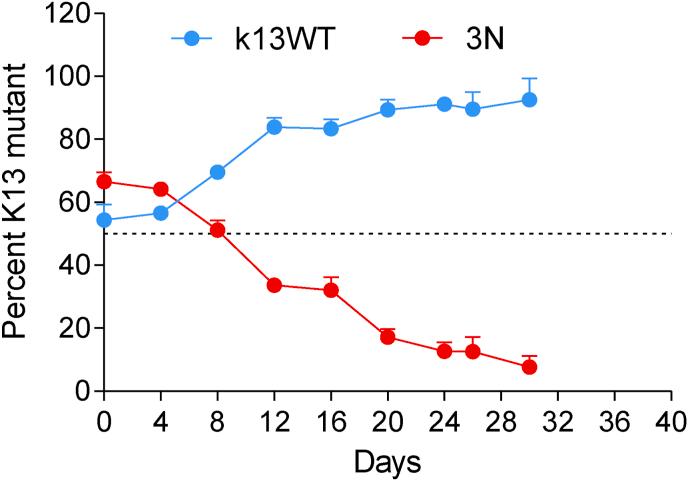
Drug resistance in Plasmodium falciparum represents a significant challenge in malaria treatment. Identifying the molecular markers associated with P. falciparum resistance will effectively detect resistance and enhance treatment efficiency. In this study, we utilized the advanced CRISPR/Cas9 technology to precisely insert one, two, or three asparagine residues into the Kelch 13(K13) gene of the 3D7 strain, positioned after the 142nd amino acid residue, resulting in 1N-3D7, 2N-3D7, and 3N-3D7. Using ring-stage survival assays (RSA), drug sensitivity evaluations, and in vitro developmental assessments, our findings revealed a trend: 1) the insertion of asparagine residues into the parasite genome increased RSA, with more asparagine insertions leading to higher RSA. 2) According to the IC50 values, 1N-3D7 and 2N-3D7 exhibited similar sensitivity profiles across all ten tested drugs, with both demonstrating resistance to Naphthoquine, indicating that the insertions of one or two asparagines played an equivalent role in conferring resistance. However, the insertion of three asparagine residues resulted in significantly higher IC50 values compared to the first two forms when tested with Artesunate, Artemether, Dihydroartemisinin, Pyronaridine Phosphate, and Naphthoquine, showing resistance to all five drugs. Furthermore, 3N-3D7 exhibited a prolonged ring phase and a shortened trophozoite phase within red blood cells; the schizont phase appeared synchronous with the others, yet its mature schizonts contained fewer merozoites. Additionally, 3N-3D7 exhibited a fitness defect, with the proportion decreasing gradually during co-culture with 3D7, its fitness cost calculated as 14.88 ± 2.87. All these results support the opinion that the insertion of three asparagines was a molecular marker of resistance to artemisinin derivatives, Pyronaridine Phosphate, and Naphthoquine in P. falciparum.
恶性疟原虫的耐药性是疟疾治疗中的一项重大挑战。识别与恶性疟原虫耐药性相关的分子标志物将有效地检测耐药性并提高治疗效率。在本研究中,我们利用先进的CRISPR/Cas9技术,在3D7株的Kelch 13(K13)基因第142个氨基酸残基之后精确插入一个、两个或三个天冬酰胺残基,从而产生1N-3D7、2N-3D7和3N-3D7。通过环状体存活试验(RSA)、药物敏感性评估和体外发育评估,我们的研究结果揭示了一种趋势:1)在寄生虫基因组中插入天冬酰胺残基会增加RSA,插入的天冬酰胺越多,RSA越高。2) 根据半数抑制浓度(IC50)值,1N-3D7和2N-3D7在所有十种测试药物中表现出相似的敏感性特征,二者均对萘酚喹表现出耐药性,这表明插入一个或两个天冬酰胺在赋予耐药性方面发挥了同等作用。然而,在用青蒿琥酯、蒿甲醚、双氢青蒿素、磷酸咯萘啶和萘酚喹进行测试时,插入三个天冬酰胺残基导致的IC50值明显高于前两种形式,对所有五种药物均表现出耐药性。此外,3N-3D7在红细胞内表现出环状体期延长和滋养体期缩短;裂殖体期与其他阶段同步出现,但其成熟裂殖体含有的裂殖子较少。此外,3N-3D7表现出适应性缺陷,在与3D7共培养期间其比例逐渐下降,其适应性代价计算为14.88±2.87。所有这些结果支持了这样一种观点,即插入三个天冬酰胺是恶性疟原虫对青蒿素衍生物、磷酸咯萘啶和萘酚喹耐药的分子标志物。
 Zotero 插件