
STHD:对全转录组空间数据中的单个斑点进行高清概率细胞分型。
STHD: probabilistic cell typing of single spots in whole transcriptome spatial data with high definition.
作者信息
Sun Chuhanwen, Zhang Yi
机构信息
Department of Neurosurgery, Duke University, Durham, NC, USA.
Department of Biostatistics and Bioinformatics, Duke University, Durham, NC, USA.
出版信息
Genome Biol. 2025 Jul 18;26(1):213. doi: 10.1186/s13059-025-03608-4.
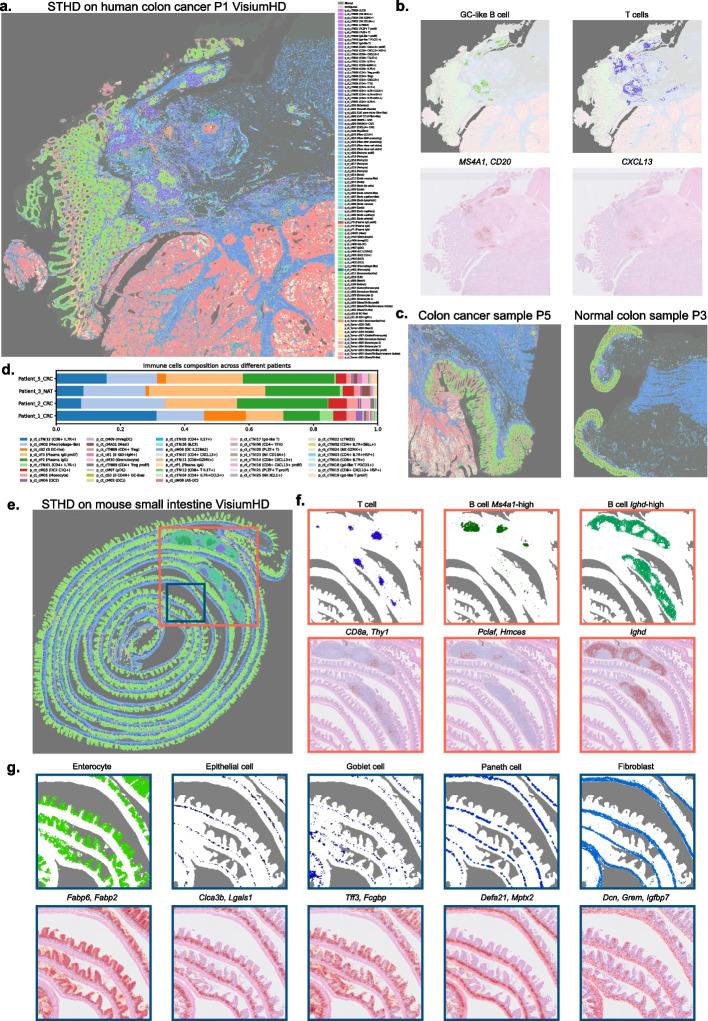
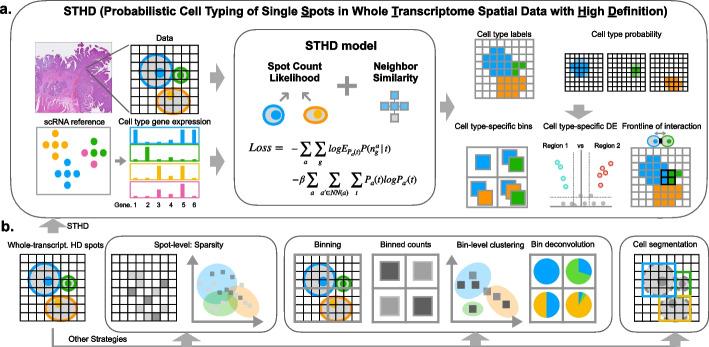
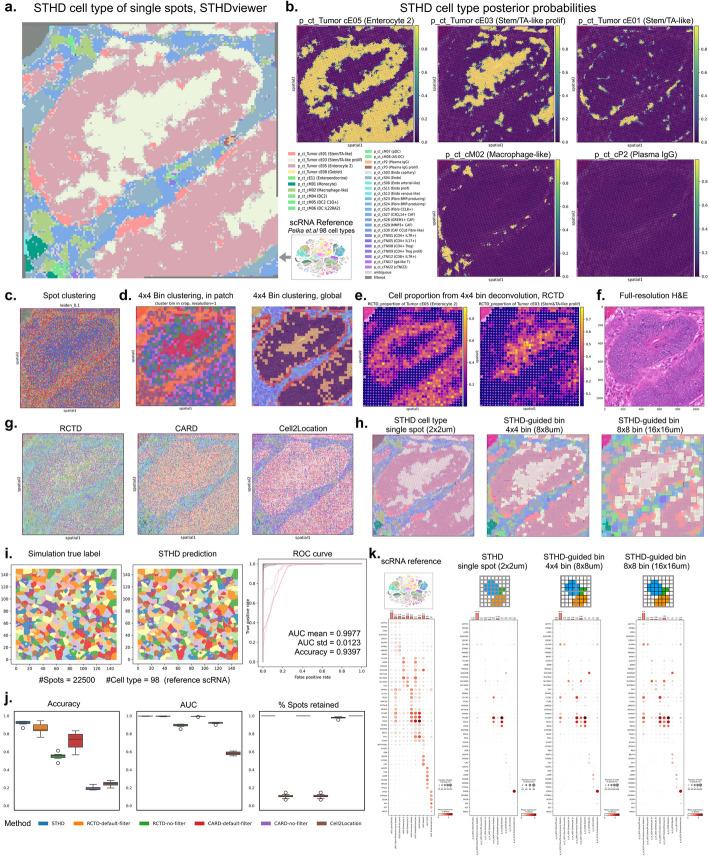
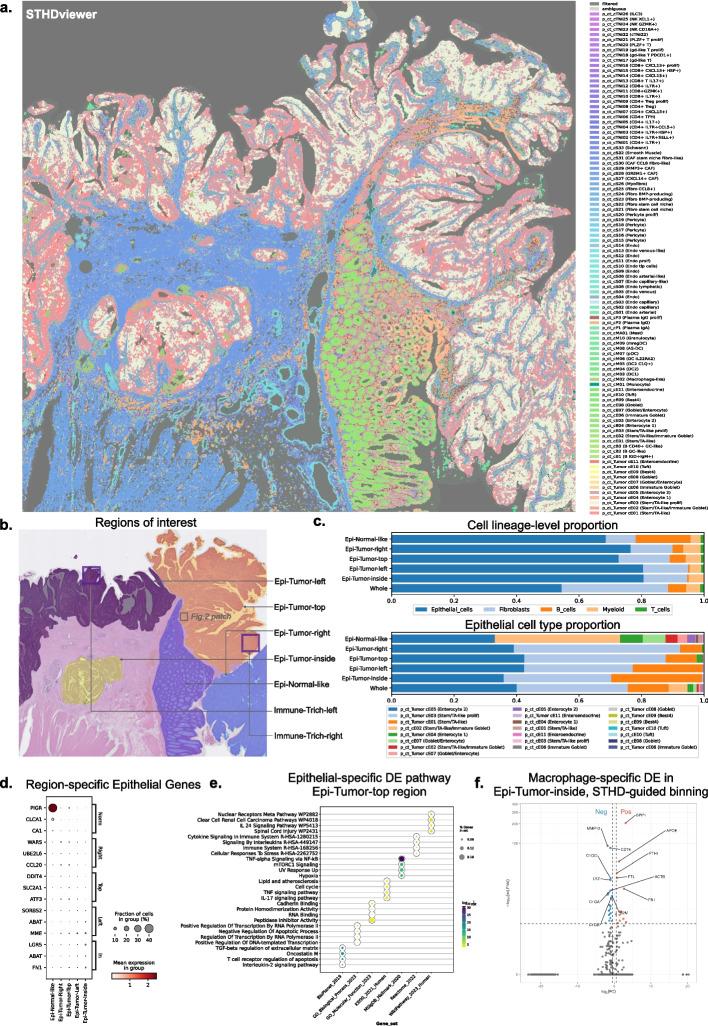
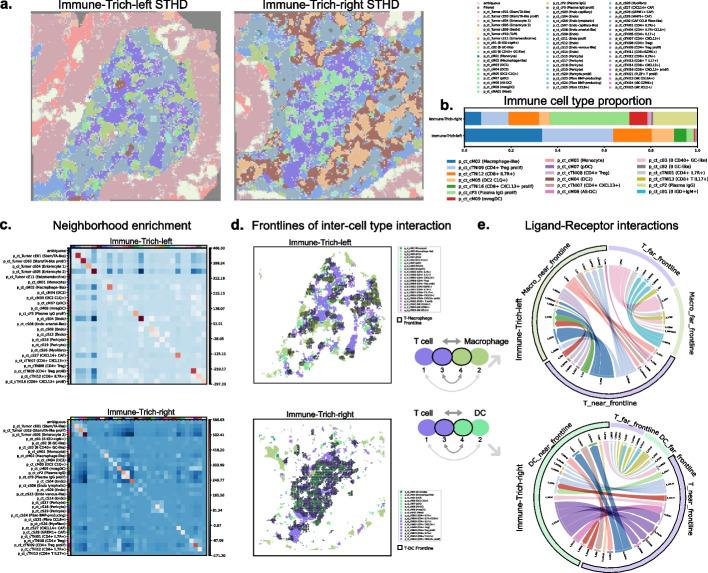
Recent advances in spatial transcriptomics technologies have enabled gene expression profiling across the transcriptome in spots with subcellular resolution, but high sparsity and dimensionality present significant computational challenges. We present STHD for probabilistic cell typing of single spots in whole-transcriptome spatial transcriptomics with high definition. With a machine learning model combining count statistics with neighbor regularization, STHD accurately predicts cell type identities of subcellular spots, revealing both global tissue architecture and local multicellular neighborhoods. We demonstrate STHD in spatial analyses of cell type-specific gene expression and immune interaction hubs in tumor microenvironment, and its generalizability across samples, tissues, and diseases.
空间转录组学技术的最新进展使得能够在具有亚细胞分辨率的斑点中对整个转录组进行基因表达谱分析,但高稀疏性和高维性带来了重大的计算挑战。我们提出了STHD,用于在全转录组空间转录组学中对单个斑点进行高分辨率的概率细胞分型。通过将计数统计与邻域正则化相结合的机器学习模型,STHD能够准确预测亚细胞斑点的细胞类型身份,揭示整体组织结构和局部多细胞邻域。我们在肿瘤微环境中细胞类型特异性基因表达和免疫相互作用中心的空间分析中展示了STHD,以及它在不同样本、组织和疾病中的通用性。
 Zotero 插件