
肠道微生物群失调作为帕金森病和阿尔茨海默病发病机制的潜在驱动因素。
Gut dysbiosis as a potential driver of Parkinson's and Alzheimer's disease pathogenesis.
作者信息
Pfaffinger Jacob M, Hays Kallie E, Seeley Jason, Ramesh Babu Priyadharshine, Ryznar Rebecca
机构信息
Rocky Vista University College of Osteopathic Medicine, Englewood, CO, United States.
Department of Biomedical Sciences, Rocky Vista University College of Osteopathic Medicine, Englewood, CO, United States.
出版信息
Front Neurosci. 2025 Aug 13;19:1600148. doi: 10.3389/fnins.2025.1600148. eCollection 2025.
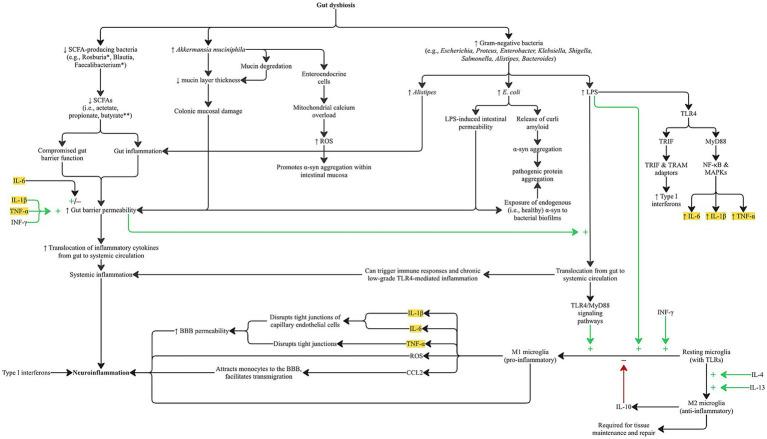
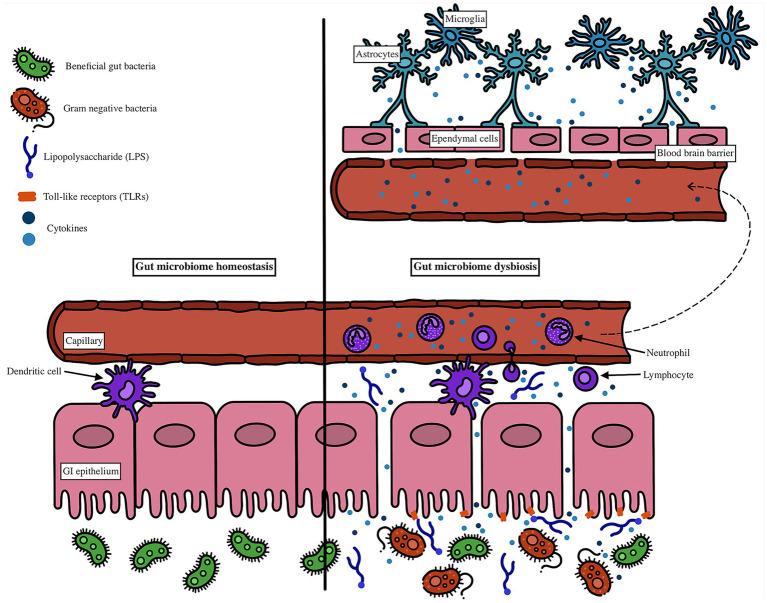
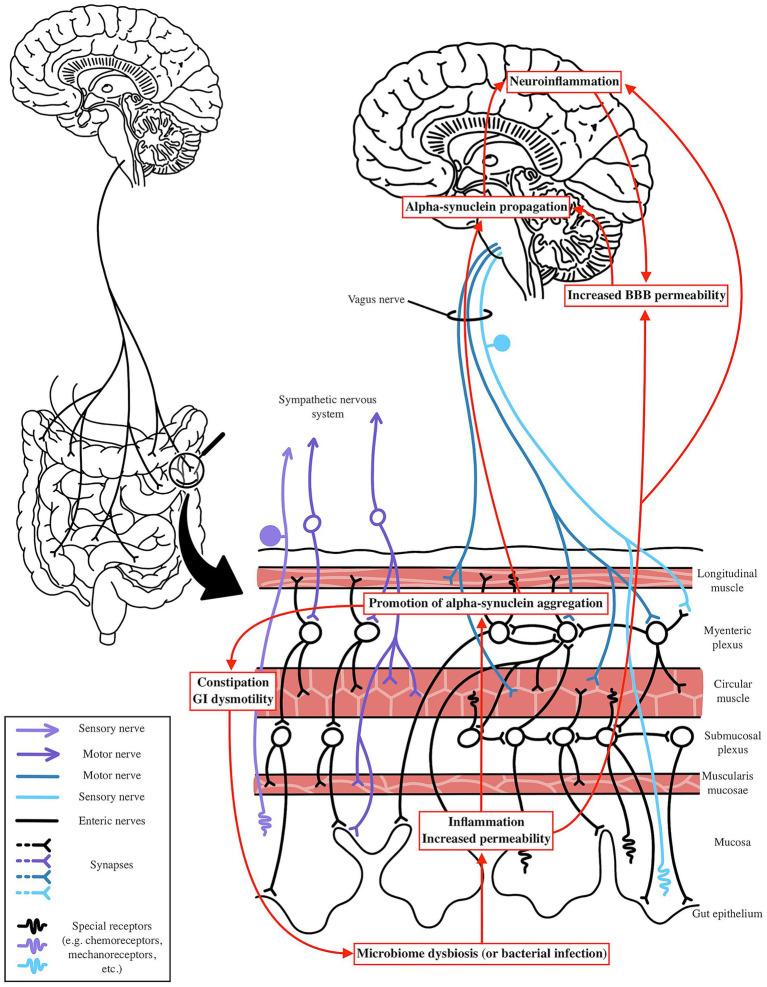
The prevalence of neurodegenerative diseases such as Parkinson's disease (PD) and Alzheimer's disease (AD) in the U.S. is expected to increase as the population ages. Despite significant advancements in neurodegenerative research, the initiating events remain unclear, and no treatments currently exist to stop or reverse disease pathogenesis. Emerging studies highlight the importance of the gut microbiome and gut-brain-axis in the pathogenesis of many human diseases. This narrative review aims to integrate current research investigating how gut microbial dysbiosis may influence the development and progression of AD and PD. First, we provide an overview of the pathological features and disease mechanisms characteristic of AD and PD. Next, we summarize existing research on the microbiome-gut-brain axis and how alterations in gut microbiota composition may influence these neurological diseases. We then focus on specific bacterial taxa identified in fecal samples from AD and PD patients, highlighting differences from healthy controls and emphasizing taxa known to produce immunologically relevant metabolites and antigens. Specifically, we examine reductions in short-chain fatty acid (SCFA)-producing bacteria and increases in lipopolysaccharide (LPS)-expressing bacteria that may drive neuroinflammation and contribute to protein misfolding. Finally, this review presents hypothesized mechanisms by which microbial products such as SCFAs and LPS may interact with host physiology to modulate disease pathogenesis. These include pathways involving systemic inflammation, blood-brain barrier permeability, and neural propagation via the vagus nerve or olfactory bulb. Further research is necessary to determine the causes and effects of bacterial level shifts, but understanding the mechanistic roles of these bacterial products in AD or PD pathogenesis could allow for personalized targeted therapies to either slow or potentially reverse the disease process.
随着美国人口老龄化,帕金森病(PD)和阿尔茨海默病(AD)等神经退行性疾病的患病率预计将会上升。尽管神经退行性疾病研究取得了重大进展,但其起始事件仍不清楚,目前尚无治疗方法能够阻止或逆转疾病的发病机制。新兴研究突显了肠道微生物群和肠-脑轴在许多人类疾病发病机制中的重要性。本叙述性综述旨在整合当前关于肠道微生物失调如何影响AD和PD发生发展的研究。首先,我们概述AD和PD的病理特征及疾病机制。接下来,我们总结关于微生物群-肠-脑轴的现有研究,以及肠道微生物群组成的改变如何影响这些神经疾病。然后,我们重点关注AD和PD患者粪便样本中鉴定出的特定细菌类群,强调与健康对照的差异,并着重指出已知能产生免疫相关代谢物和抗原的类群。具体而言,我们研究了产生短链脂肪酸(SCFA)的细菌减少以及表达脂多糖(LPS)的细菌增加的情况,这些变化可能会引发神经炎症并导致蛋白质错误折叠。最后,本综述提出了一些假设机制,通过这些机制,诸如SCFA和LPS等微生物产物可能与宿主生理相互作用以调节疾病发病机制。这些机制包括涉及全身炎症、血脑屏障通透性以及通过迷走神经或嗅球进行神经传导的途径。有必要进一步研究以确定细菌水平变化的原因和影响,但了解这些细菌产物在AD或PD发病机制中的作用机制,可能会实现个性化靶向治疗,从而减缓或潜在地逆转疾病进程。

 Zotero 插件