
利用生物学洞察力加速结核病药物发现。
Harnessing Biological Insight to Accelerate Tuberculosis Drug Discovery.
机构信息
SAMRC/NHLS/UCT Molecular Mycobacteriology Research Unit and DST/NRF Centre of Excellence for Biomedical TB Research, Department of Pathology and Institute of Infectious Disease and Molecular Medicine , University of Cape Town , Observatory, Cape Town 7925 , South Africa.
Department of Integrative Biomedical Sciences , University of Cape Town , Observatory, Cape Town 7925 , South Africa.
出版信息
Acc Chem Res. 2019 Aug 20;52(8):2340-2348. doi: 10.1021/acs.accounts.9b00275. Epub 2019 Jul 30.
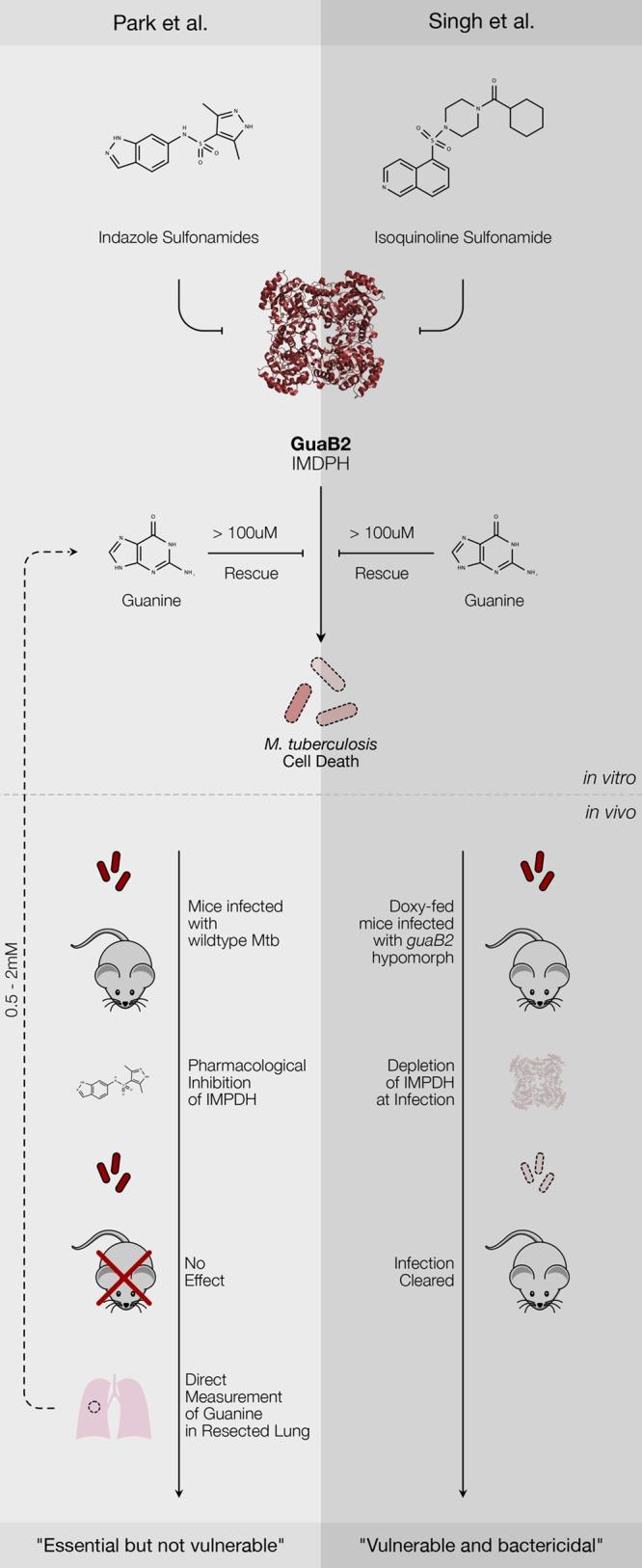
Tuberculosis (TB) is the leading cause of mortality globally resulting from an infectious disease, killing almost 1.6 million people annually and accounting for approximately 30% of deaths attributed to antimicrobial resistance (AMR). This despite the widespread administration of a neonatal vaccine, and the availability of an effective combination drug therapy against the causative agent, (Mtb). Instead, TB prevalence worldwide is characterized by high-burden regions in which co-epidemics, such as HIV, and social and economic factors, undermine efforts to control TB. These elements additionally ensure conditions that favor the emergence of drug-resistant Mtb strains, which further threaten prospects for future TB control. To address this challenge, significant resources have been invested in developing a TB drug pipeline, an initiative given impetus by the recent regulatory approval of two new anti-TB drugs. However, both drugs have been reserved for drug-resistant disease, and the seeming inevitability of new resistance plus the recognized need to shorten the duration of chemotherapy demands continual replenishment of the pipeline with high-quality "hits" with novel mechanisms of action. This represents a massive challenge, which has been undermined by key gaps in our understanding of Mtb physiology and metabolism, especially during host infection. Whereas drug discovery for other bacterial infections can rely on predictive in vitro assays and animal models, for Mtb, inherent metabolic flexibility and uncertainties about the nutrients available to infecting bacilli in different host (micro)environments instead requires educated predictions or demonstrations of efficacy in animal models of arguable relevance to human disease. Even microbiological methods for enumeration of viable mycobacterial cells are fraught with complication. Our research has focused on elucidating those aspects of mycobacterial metabolism that contribute to the robustness of the bacillus to host immunological defenses and applied antibiotics and that, possibly, drive the emergence of drug resistance. This work has identified a handful of metabolic pathways that appear vulnerable to antibiotic targeting. Those highlighted, here, include the inter-related functions of pantothenate and coenzyme A biosynthesis and recycling and nucleotide metabolism-the last of which reinforces our view that DNA metabolism constitutes an under-explored area for new TB drug development. Although nonessential functions have traditionally been deprioritized for antibiotic development, a common theme emerging from this work is that these very functions might represent attractive targets because of the potential to cripple mechanisms critical to bacillary survival under stress (for example, the Rel-dependent stringent response) or to adaptability under unfavorable, potentially lethal, conditions including antibiotic therapy (for example, DnaE2-dependent SOS mutagenesis). The bar, however, is high: demonstrating convincingly the likely efficacy of this strategy will require innovative models of human TB disease. In the concluding section, we focus on the need for improved techniques to elucidate mycobacterial metabolism during infection and its impact on disease outcomes. Here, we argue that developments in other fields suggest the potential to break through this barrier by harnessing chemical-biology approaches in tandem with the most advanced technologies. As researchers based in a high-burden country, we are impelled to continue participating in this important endeavor.
结核病 (TB) 是全球导致死亡的主要原因,是一种传染病,每年导致近 160 万人死亡,占抗菌药物耐药性 (AMR) 导致的死亡人数的约 30%。尽管已经广泛使用新生儿疫苗,并且有针对病原体的有效联合药物治疗,但在高负担地区,结核病的流行情况仍很严重,艾滋病毒等共流行以及社会和经济因素破坏了控制结核病的努力。这些因素还确保了有利于出现耐药结核分枝杆菌菌株的条件,进一步威胁着未来结核病控制的前景。为了解决这一挑战,已经投入了大量资源来开发结核病药物研发管道,这一倡议得到了最近监管机构批准两种新的抗结核药物的推动。然而,这两种药物都保留给耐药疾病使用,而且新的耐药性似乎不可避免,再加上缩短化疗时间的必要性,需要不断用具有新作用机制的高质量“命中物”来补充药物研发管道。这是一项巨大的挑战,由于我们对结核分枝杆菌生理学和代谢的理解存在关键差距,特别是在宿主感染期间,这一挑战受到了影响。虽然针对其他细菌感染的药物发现可以依赖于预测性的体外检测和动物模型,但对于结核分枝杆菌,内在的代谢灵活性以及感染细菌在不同宿主 (微观) 环境中可用的营养素的不确定性,需要在对人类疾病有一定相关性的动物模型中进行有根据的预测或证明疗效。甚至用于计数存活分枝杆菌细胞的微生物学方法也充满了复杂性。我们的研究集中于阐明分枝杆菌代谢的那些方面,这些方面有助于杆菌对宿主免疫防御和应用抗生素的稳健性,并且可能驱动耐药性的出现。这项工作确定了一些似乎容易受到抗生素靶向的代谢途径。这里强调的包括泛酸和辅酶 A 生物合成和回收以及核苷酸代谢的相互关联的功能,最后一个功能强化了我们的观点,即 DNA 代谢是新的结核病药物开发中一个尚未充分探索的领域。尽管传统上非必需功能在抗生素开发中被降级,但这项工作中出现的一个共同主题是,这些功能本身可能是有吸引力的靶点,因为它们可能会削弱压力下生存的细菌的关键机制 (例如,Rel 依赖性严格响应) 或适应不利的、潜在致命的条件的能力,包括抗生素治疗 (例如,DnaE2 依赖性 SOS 诱变)。然而,门槛很高:令人信服地证明这种策略的可能疗效将需要创新性的人类结核病疾病模型。在结论部分,我们专注于阐明感染期间分枝杆菌代谢及其对疾病结果的影响并提高相关技术的必要性。在这里,我们认为,其他领域的发展表明,通过结合化学生物学方法和最先进的技术,有可能突破这一障碍。作为一个高负担国家的研究人员,我们被驱使继续参与这一重要的努力。


 Zotero 插件