
木质鸡胸肉病变肉鸡胸大肌中转化生长因子-β信号的增强和纤维化。
Enhanced transforming growth factor-beta signaling and fibrosis in the pectoralis major muscle of broiler chickens affected by wooden breast myopathy.
机构信息
College of Animal Science and Technology, Key Laboratory of Animal Origin Food Production and Safety Guarantee of Jiangsu Province, Jiangsu Collaborative Innovation Center of Meat Production and Processing, Quality and Safety Control, Joint International Research Laboratory of Animal Health and Food Safety, National Experimental Teaching Demonstration Center of Animal Science, Nanjing Agricultural University, Nanjing 210095, P.R. China.
College of Food Science and Technology, Nanjing Agricultural University, Nanjing, 210095, China.
出版信息
Poult Sci. 2021 Mar;100(3):100804. doi: 10.1016/j.psj.2020.10.058. Epub 2020 Nov 4.
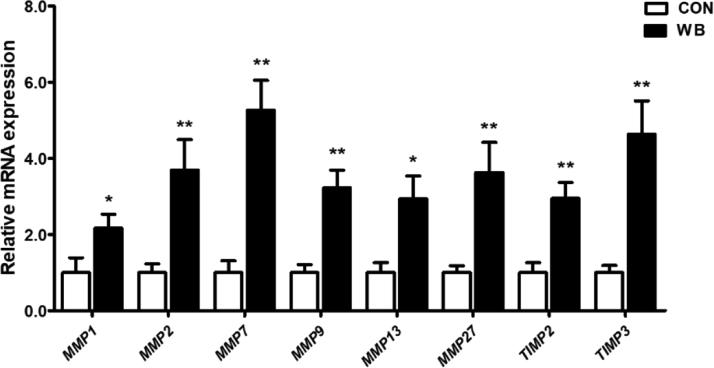
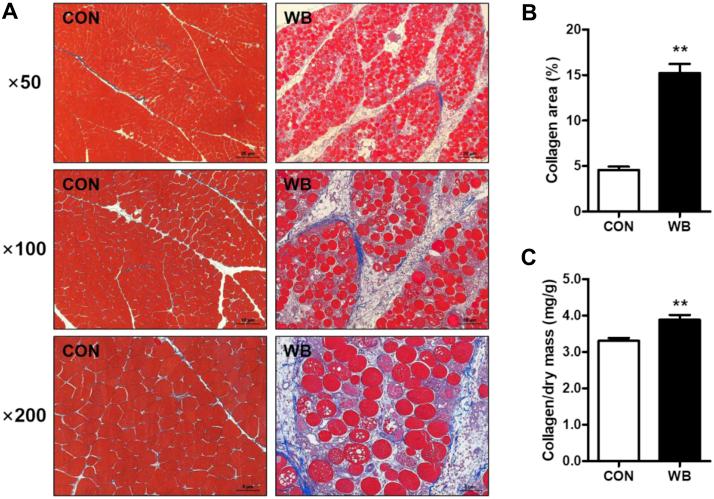
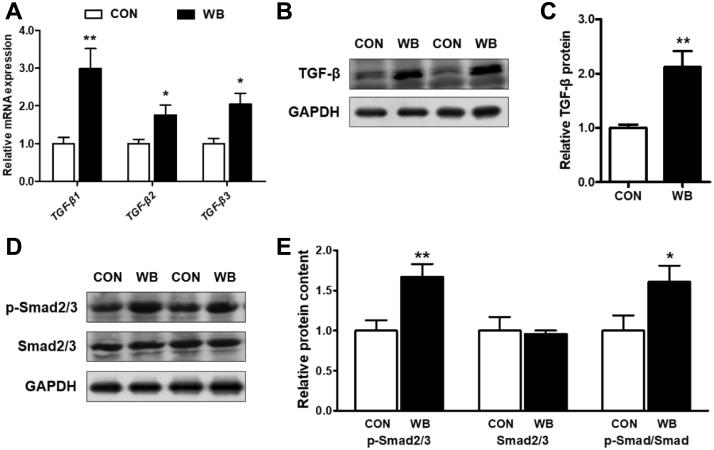
Fibrosis has also been recorded as a prominent pathological feature within wooden breast (WB) myopathy of broiler chickens. This study was conducted to evaluate the accumulation of fibril collagen, deposition of the extracellular matrix (ECM) components, and the underlying mechanism mediating the pathogenic fibrotic process in the pectoralis major (PM) muscle of WB-affected birds. Broiler chickens were categorized into the control and WB groups based on the evaluation of myopathic lesions. Results indicated that the total content and area of collagen in cross-sections of the PM muscle, as well as the augmented expression of collagen-I and fibronectin in the ECM, were greatly increased in birds with WB. Wooden breast myopathy upregulated expressions of transforming growth factor-beta (TGF-β) and the phosphorylation of Smad 2 and 3, thereby activating TGF-β-mediated Smad signaling pathway, which further enhanced the transcription of profibrotic mediators. In addition, regulators involved in collagen biosynthesis and cross-linking including prolyl 4-hydroxylase, lysyl oxidase, lysyl hydroxylase, and decorin were increased in the WB muscle. Finally, the expressions of both matrix metalloproteinases (MMP) and tissue inhibitor of metalloproteinases (TIMP) were increased in the WB muscle, which might be related with reduced ECM remodeling. Overall, WB myopathy induces severe fibrosis by enhancing ECM deposition and collagen cross-linking in the PM muscle of broiler chickens, possibly via the activation of TGF-β signaling and the dysregulation of the MMP and TIMP system.
纤维化也被记录为肉鸡木质胸(WB)肌病的一个突出的病理特征。本研究旨在评估纤维胶原的积累、细胞外基质(ECM)成分的沉积以及介导 PM 肌肉中致病纤维化过程的潜在机制。根据肌病病变的评估,将肉鸡分为对照组和 WB 组。结果表明,PM 肌肉横截面上胶原的总含量和面积,以及 ECM 中胶原-I 和纤维连接蛋白的表达增加,在 WB 鸟类中显著增加。木质胸肌病上调转化生长因子-β(TGF-β)和 Smad 2 和 3 的磷酸化表达,从而激活 TGF-β 介导的 Smad 信号通路,进一步增强促纤维化介质的转录。此外,参与胶原生物合成和交联的调节剂,包括脯氨酰 4-羟化酶、赖氨酰氧化酶、赖氨酰羟化酶和饰胶蛋白,在 WB 肌肉中增加。最后,基质金属蛋白酶(MMP)和金属蛋白酶组织抑制剂(TIMP)的表达在 WB 肌肉中增加,这可能与 ECM 重塑减少有关。总之,WB 肌病通过增强 ECM 在肉鸡 PM 肌肉中的沉积和胶原交联,诱导严重的纤维化,可能通过 TGF-β 信号的激活和 MMP 和 TIMP 系统的失调。



 Zotero 插件