
Toll样受体2(TLR2)可识别严重急性呼吸综合征冠状病毒2(SARS-CoV-2)的包膜蛋白以产生炎性细胞因子。
TLR2 senses the SARS-CoV-2 envelope protein to produce inflammatory cytokines.
作者信息
Zheng Min, Karki Rajendra, Williams Evan Peter, Yang Dong, Fitzpatrick Elizabeth, Vogel Peter, Jonsson Colleen Beth, Kanneganti Thirumala-Devi
机构信息
Department of Immunology, St Jude Children's Research Hospital, Memphis, TN, USA.
Department of Microbiology, Immunology, & Biochemistry, University of Tennessee Health Science Center, Memphis, TN, USA.
出版信息
Nat Immunol. 2021 Jul;22(7):829-838. doi: 10.1038/s41590-021-00937-x. Epub 2021 May 7.
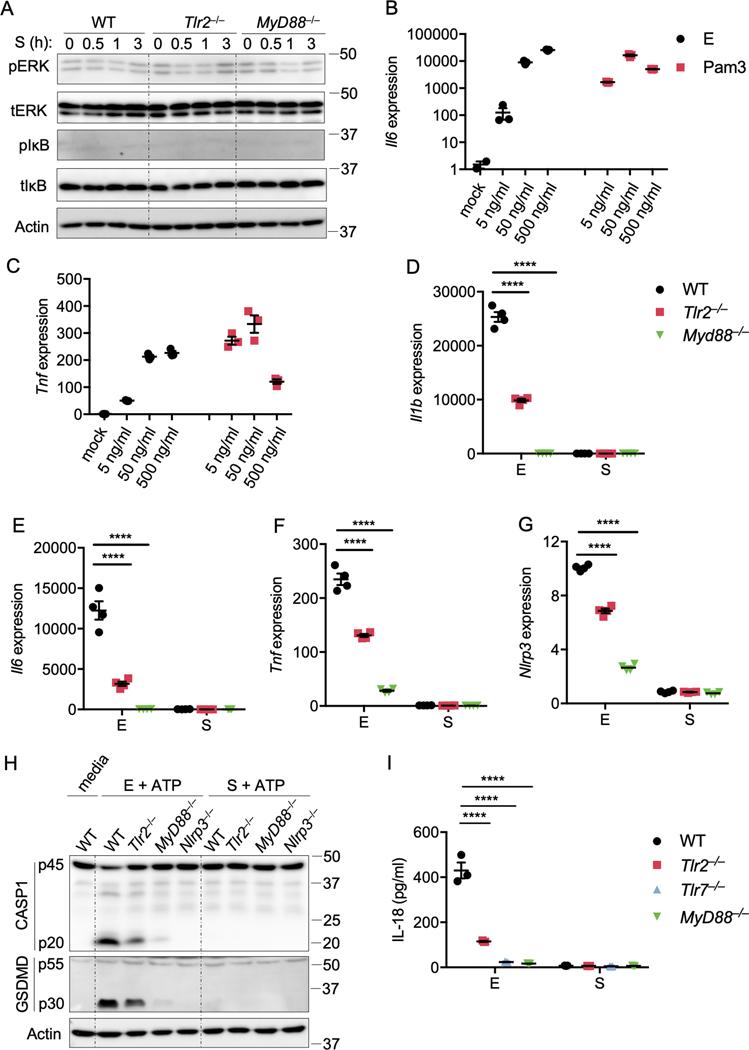
The innate immune response is critical for recognizing and controlling infections through the release of cytokines and chemokines. However, severe pathology during some infections, including SARS-CoV-2, is driven by hyperactive cytokine release, or a cytokine storm. The innate sensors that activate production of proinflammatory cytokines and chemokines during COVID-19 remain poorly characterized. In the present study, we show that both TLR2 and MYD88 expression were associated with COVID-19 disease severity. Mechanistically, TLR2 and Myd88 were required for β-coronavirus-induced inflammatory responses, and TLR2-dependent signaling induced the production of proinflammatory cytokines during coronavirus infection independent of viral entry. TLR2 sensed the SARS-CoV-2 envelope protein as its ligand. In addition, blocking TLR2 signaling in vivo provided protection against the pathogenesis of SARS-CoV-2 infection. Overall, our study provides a critical understanding of the molecular mechanism of β-coronavirus sensing and inflammatory cytokine production, which opens new avenues for therapeutic strategies to counteract the ongoing COVID-19 pandemic.
固有免疫反应对于通过释放细胞因子和趋化因子来识别和控制感染至关重要。然而,包括SARS-CoV-2在内的一些感染过程中的严重病理状况是由细胞因子过度释放或细胞因子风暴所驱动的。在COVID-19期间激活促炎细胞因子和趋化因子产生的固有传感器仍未得到充分表征。在本研究中,我们表明TLR2和MYD88的表达均与COVID-19疾病严重程度相关。从机制上讲,TLR2和Myd88是β冠状病毒诱导的炎症反应所必需的,并且TLR2依赖性信号传导在冠状病毒感染期间独立于病毒进入而诱导促炎细胞因子的产生。TLR2将SARS-CoV-2包膜蛋白识别为其配体。此外,在体内阻断TLR2信号传导可提供针对SARS-CoV-2感染发病机制的保护。总体而言,我们的研究提供了对β冠状病毒感知和炎性细胞因子产生分子机制的关键理解,这为对抗正在进行的COVID-19大流行的治疗策略开辟了新途径。




 Zotero 插件