
通过生物信息学分析鉴定乙型肝炎病毒相关肝细胞癌中的关键基因和致癌途径。
Identification of key genes and carcinogenic pathways in hepatitis B virus-associated hepatocellular carcinoma through bioinformatics analysis.
作者信息
Kim Sang-Hoon, Hwang Shin, Song Gi-Won, Jung Dong-Hwan, Moon Deok-Bog, Yang Jae Do, Yu Hee Chul
机构信息
Division of Liver Transplantation and Hepatobiliary Surgery, Department of Surgery, Asan Medical Center, University of Ulsan College of Medicine, Seoul, Korea.
Department of Surgery, Jeonbuk National University Hospital, Jeonju, Korea.
出版信息
Ann Hepatobiliary Pancreat Surg. 2022 Feb 28;26(1):58-68. doi: 10.14701/ahbps.21-108.
BACKGROUNDS/AIMS: Mechanisms for the development of hepatocellular carcinoma (HCC) in hepatitis B virus (HBV)-infected patients remain unclear. The aim of the present study was to identify genes and pathways involved in the development of HBV-associated HCC.
METHODS
The GSE121248 gene dataset, which included 70 HCCs and 37 adjacent liver tissues, was downloaded from the Gene Expression Omnibus database. Differentially expressed genes (DEGs) in HCCs and adjacent liver tissues were identified. Gene ontology and Kyoto Encyclopedia of Genes and Genome pathway enrichment analyses were then performed.
RESULTS
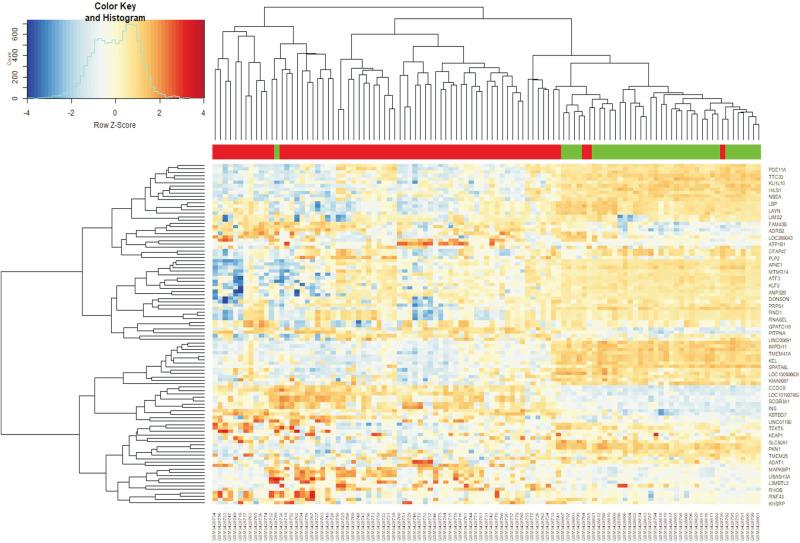
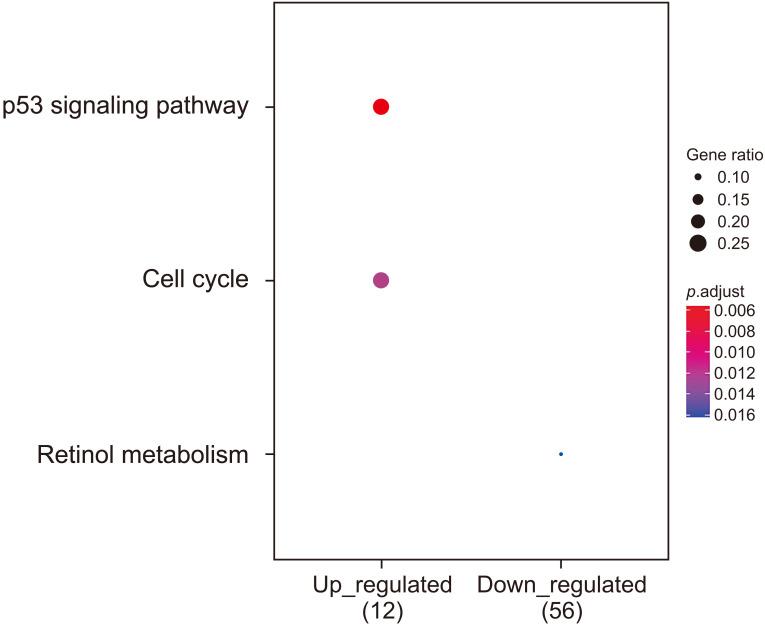
Of 134 DEGs identified, 34 were up-regulated and 100 were down-regulated in HCCs. The 34 up-regulated DEGs were mainly involved in nuclear division, organelle fission, spindle and midbody formation, histone kinase activity, and p53 signaling pathway, whereas the 100 down-regulated DEGs were involved in steroid and hormone metabolism, collagen-coated extracellular matrix, oxidoreductase activity, and activity on paired donors, including incorporation or reduction of molecular oxygen, monooxygenase activity, and retinol metabolism. Analyses of protein-protein interaction networks with a high degree of connectivity identified significant modules containing 14 hub genes, including , and , which were mainly associated with nuclear division, organelle fission, spindle formation, protein serine/threonine kinase activity, p53 signaling pathway, and cell cycle.
CONCLUSIONS
This study identified key genes and carcinogenic pathways that play essential roles in the development of HBV-associated HCC. This may provide important information for the development of diagnostic and therapeutic targets for HCC.
背景/目的:乙型肝炎病毒(HBV)感染患者发生肝细胞癌(HCC)的机制尚不清楚。本研究的目的是鉴定参与HBV相关HCC发生发展的基因和信号通路。
方法
从基因表达综合数据库下载GSE121248基因数据集,其中包括70例HCC和37例癌旁肝组织。鉴定HCC和癌旁肝组织中的差异表达基因(DEG)。然后进行基因本体论和京都基因与基因组百科全书信号通路富集分析。
结果
在鉴定出的134个DEG中,34个在HCC中上调,100个下调。34个上调的DEG主要参与核分裂、细胞器分裂、纺锤体和中间体形成、组蛋白激酶活性及p53信号通路,而100个下调的DEG参与类固醇和激素代谢、胶原包被的细胞外基质、氧化还原酶活性以及对成对供体的活性,包括分子氧的掺入或还原、单加氧酶活性和视黄醇代谢。对具有高度连通性的蛋白质-蛋白质相互作用网络进行分析,确定了包含14个枢纽基因的重要模块,这些基因主要与核分裂、细胞器分裂、纺锤体形成、蛋白质丝氨酸/苏氨酸激酶活性、p53信号通路和细胞周期相关。
结论
本研究鉴定了在HBV相关HCC发生发展中起关键作用的关键基因和致癌信号通路。这可能为HCC诊断和治疗靶点的开发提供重要信息。






 Zotero 插件