
糖肽类抗生素替考拉宁通过抑制组织蛋白酶L的蛋白水解活性来抑制严重急性呼吸综合征冠状病毒2(SARS-CoV-2)的细胞进入。
Glycopeptide Antibiotic Teicoplanin Inhibits Cell Entry of SARS-CoV-2 by Suppressing the Proteolytic Activity of Cathepsin L.
作者信息
Yu Fei, Pan Ting, Huang Feng, Ying Ruosu, Liu Jun, Fan Huimin, Zhang Junsong, Liu Weiwei, Lin Yingtong, Yuan Yaochang, Yang Tao, Li Rong, Zhang Xu, Lv Xi, Chen Qianyu, Liang Anqi, Zou Fan, Liu Bingfeng, Hu Fengyu, Tang Xiaoping, Li Linghua, Deng Kai, He Xin, Zhang Hui, Zhang Yiwen, Ma Xiancai
机构信息
Guangdong Provincial People's Hospital, Guangdong Academy of Medical Science, Guangzhou, China.
Key Laboratory of Tropical Disease Control of Ministry Education, Guangdong Engineering Research Center for Antimicrobial Agent and Immunotechnology, Zhongshan School of Medicine, Institute of Human Virology, Sun Yat-sen University, Guangzhou, China.
出版信息
Front Microbiol. 2022 Apr 28;13:884034. doi: 10.3389/fmicb.2022.884034. eCollection 2022.
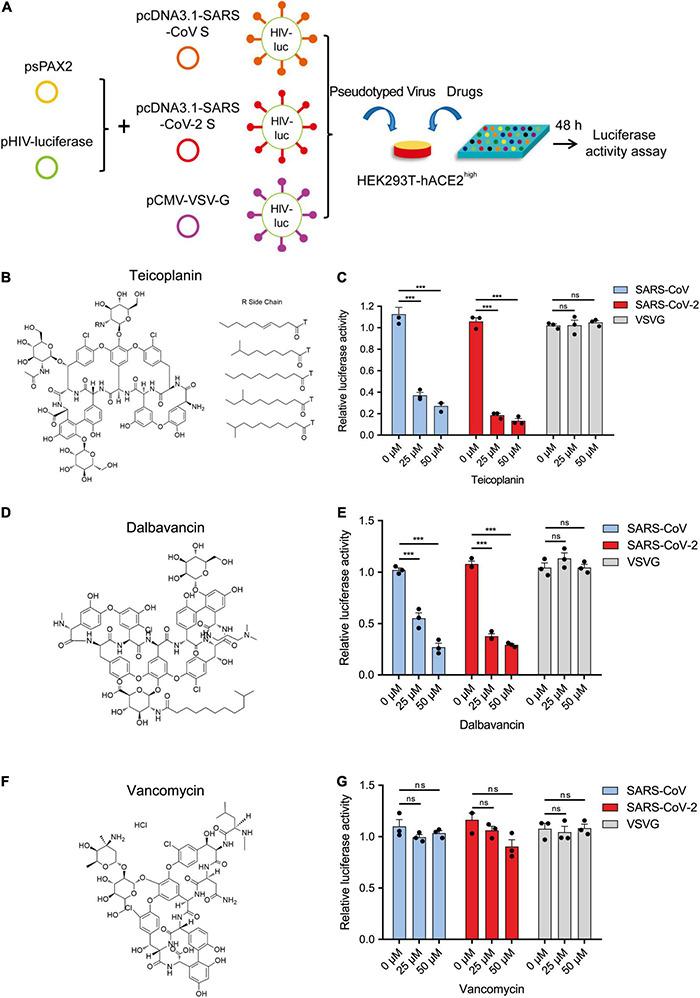
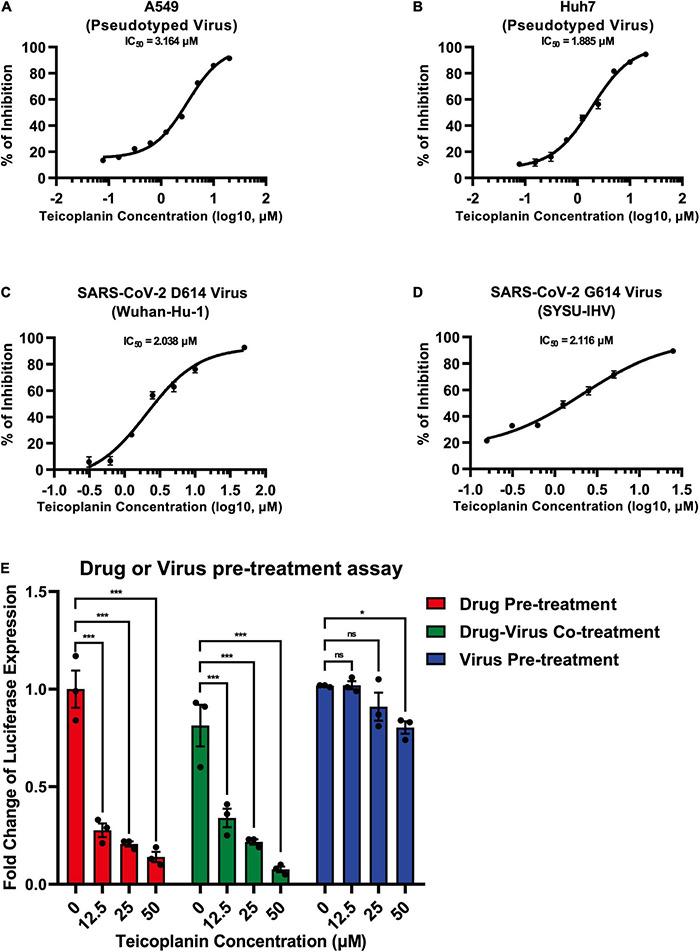
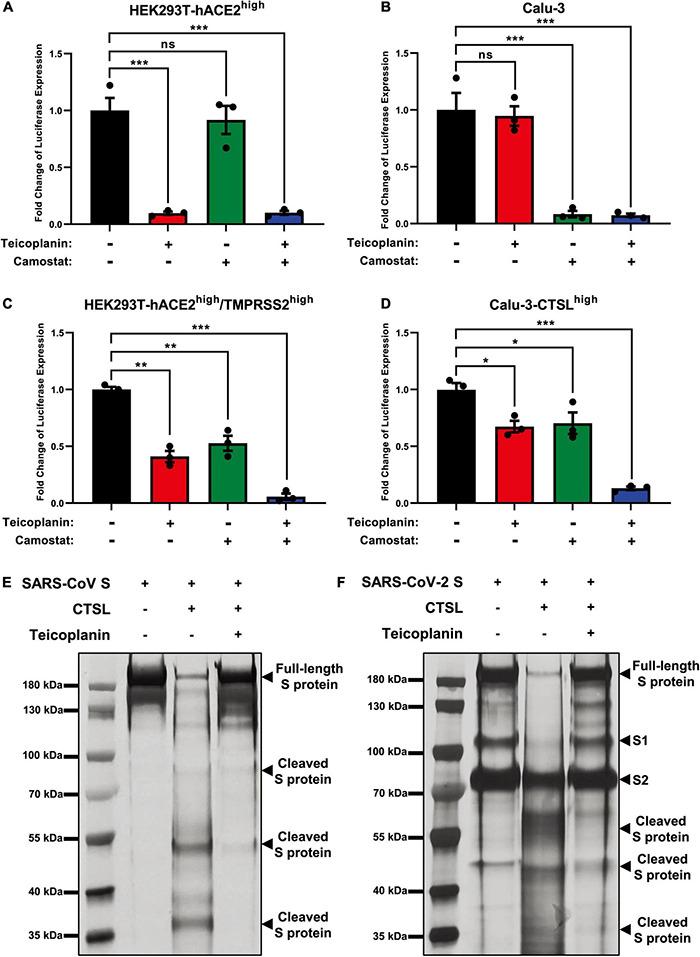
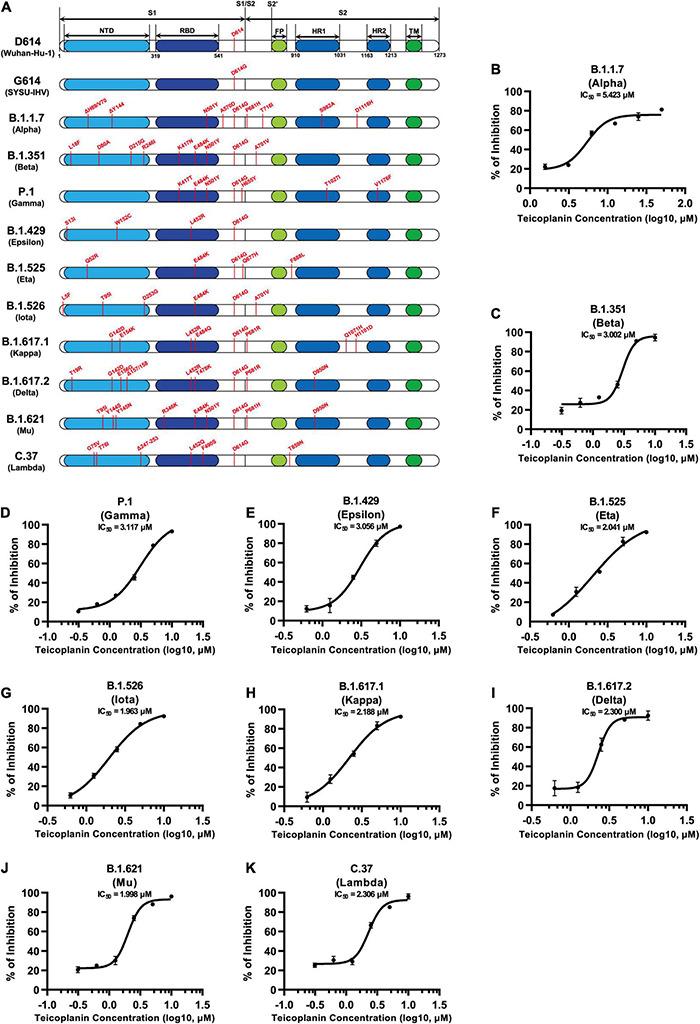
Since the outbreak of the coronavirus disease 2019 (COVID-19) caused by severe acute respiratory syndrome coronavirus 2 (SARS-CoV-2), public health worldwide has been greatly threatened. The development of an effective treatment for this infection is crucial and urgent but is hampered by the incomplete understanding of the viral infection mechanisms and the lack of specific antiviral agents. We previously reported that teicoplanin, a glycopeptide antibiotic that has been commonly used in the clinic to treat bacterial infection, significantly restrained the cell entry of Ebola virus, SARS-CoV, and MERS-CoV by specifically inhibiting the activity of cathepsin L (CTSL). Here, we found that the cleavage sites of CTSL on the spike proteins of SARS-CoV-2 were highly conserved among all the variants. The treatment with teicoplanin suppressed the proteolytic activity of CTSL on spike and prevented the cellular infection of different pseudotyped SARS-CoV-2 viruses. Teicoplanin potently prevented the entry of SARS-CoV-2 into the cellular cytoplasm with an IC of 2.038 μM for the Wuhan-Hu-1 reference strain and an IC of 2.116 μM for the SARS-CoV-2 (D614G) variant. The pre-treatment of teicoplanin also prevented SARS-CoV-2 infection in hACE2 mice. In summary, our data reveal that CTSL is required for both SARS-CoV-2 and SARS-CoV infection and demonstrate the therapeutic potential of teicoplanin for universal anti-CoVs intervention.
自严重急性呼吸综合征冠状病毒2(SARS-CoV-2)引发2019冠状病毒病(COVID-19)疫情以来,全球公共卫生受到极大威胁。开发针对这种感染的有效治疗方法至关重要且紧迫,但由于对病毒感染机制的理解不完整以及缺乏特异性抗病毒药物而受到阻碍。我们之前报道过,替考拉宁是一种临床上常用于治疗细菌感染的糖肽类抗生素,它通过特异性抑制组织蛋白酶L(CTSL)的活性,显著抑制了埃博拉病毒、SARS-CoV和MERS-CoV的细胞进入。在此,我们发现CTSL在SARS-CoV-2刺突蛋白上的切割位点在所有变体中高度保守。替考拉宁处理抑制了CTSL对刺突蛋白的蛋白水解活性,并阻止了不同假型SARS-CoV-2病毒的细胞感染。替考拉宁能有效阻止SARS-CoV-2进入细胞质,对武汉-胡-1参考毒株的半数抑制浓度(IC)为2.038 μM,对SARS-CoV-2(D614G)变体的IC为2.116 μM。替考拉宁预处理还能预防hACE2小鼠感染SARS-CoV-2。总之,我们的数据表明CTSL是SARS-CoV-2和SARS-CoV感染所必需的,并证明了替考拉宁在通用抗冠状病毒干预方面的治疗潜力。


 Zotero 插件