
在纽约市,Alpha 和 Epsilon 变异株再次感染期间对 SARS-CoV-2 宿主内重组的检测。
Detection of SARS-CoV-2 intra-host recombination during superinfection with Alpha and Epsilon variants in New York City.
机构信息
Department of Medicine, University of California San Diego, La Jolla, CA, USA.
New York City Public Health Laboratory, New York City Department of Health and Mental Hygiene, New York, NY, USA.
出版信息
Nat Commun. 2022 Jun 25;13(1):3645. doi: 10.1038/s41467-022-31247-x.
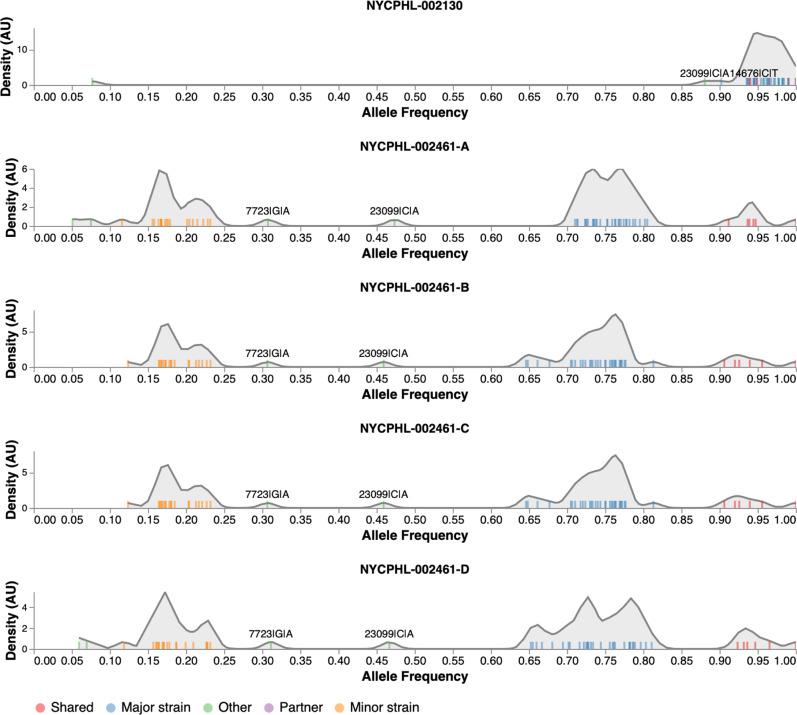
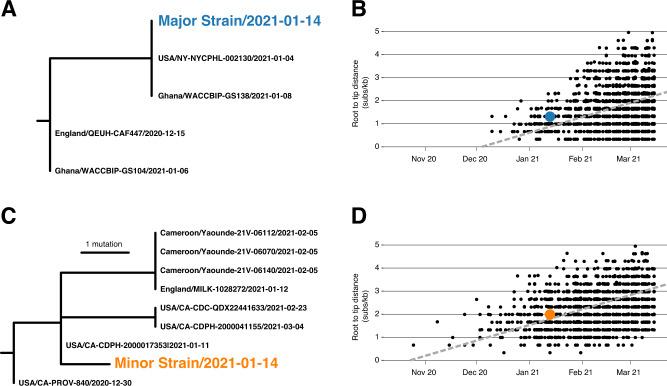
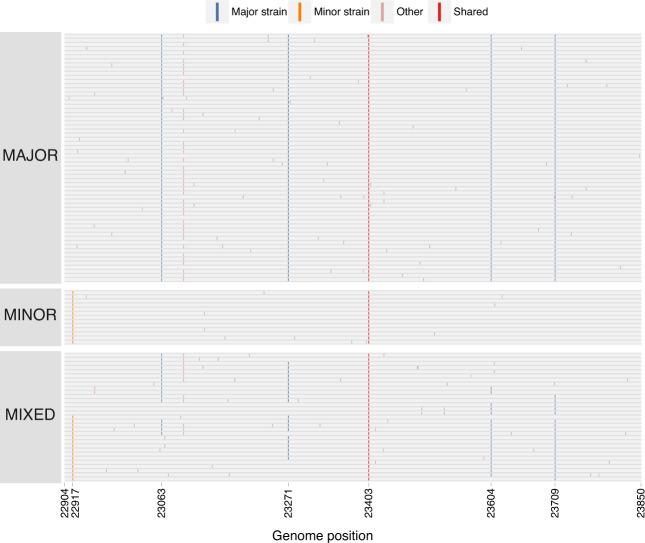
Recombination is an evolutionary process by which many pathogens generate diversity and acquire novel functions. Although a common occurrence during coronavirus replication, detection of recombination is only feasible when genetically distinct viruses contemporaneously infect the same host. Here, we identify an instance of SARS-CoV-2 superinfection, whereby an individual was infected with two distinct viral variants: Alpha (B.1.1.7) and Epsilon (B.1.429). This superinfection was first noted when an Alpha genome sequence failed to exhibit the classic S gene target failure behavior used to track this variant. Full genome sequencing from four independent extracts reveals that Alpha variant alleles comprise around 75% of the genomes, whereas the Epsilon variant alleles comprise around 20% of the sample. Further investigation reveals the presence of numerous recombinant haplotypes spanning the genome, specifically in the spike, nucleocapsid, and ORF 8 coding regions. These findings support the potential for recombination to reshape SARS-CoV-2 genetic diversity.
重组是一种进化过程,许多病原体通过这种过程产生多样性并获得新功能。尽管冠状病毒复制过程中经常发生重组,但只有当具有不同遗传特征的病毒同时感染同一宿主时,才能检测到重组。在这里,我们发现了一例 SARS-CoV-2 超感染的情况,即个体同时感染了两种不同的病毒变异株:阿尔法(B.1.1.7)和伊普西隆(B.1.429)。当阿尔法基因组序列未能表现出用于跟踪该变异株的经典 S 基因靶标失败行为时,首次注意到了这种超感染。对四个独立提取物的全基因组测序表明,阿尔法变异株等位基因约占基因组的 75%,而伊普西隆变异株等位基因约占样本的 20%。进一步的研究表明,存在大量横跨基因组的重组单倍型,特别是在刺突蛋白、核衣壳和 ORF8 编码区域。这些发现支持了重组可能重塑 SARS-CoV-2 遗传多样性的潜力。



 Zotero 插件