
家族性双相情感障碍中神经前体细胞迁移异常。
Abnormalities in the migration of neural precursor cells in familial bipolar disorder.
机构信息
Department of Psychiatry, National Institute of Mental Health and Neurosciences, Bangalore 560029, India.
Centre for Ecological Sciences, Indian Institute of Science, Bangalore 560012, India.
出版信息
Dis Model Mech. 2022 Oct 1;15(10). doi: 10.1242/dmm.049526. Epub 2022 Oct 18.
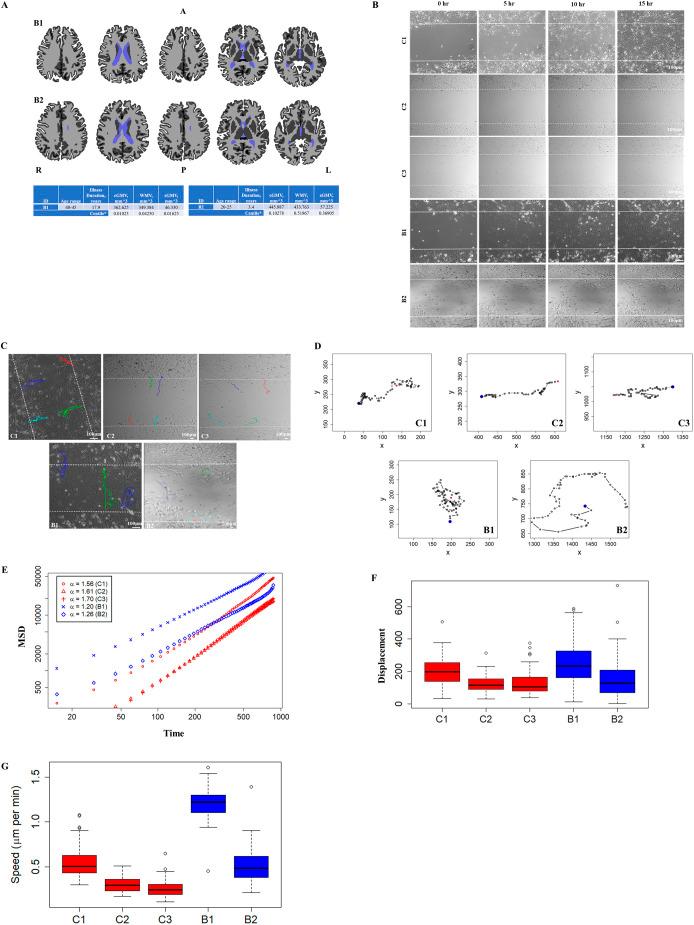
Cellular migration is a ubiquitous feature that brings brain cells into appropriate spatial relationships over time; and it helps in the formation of a functional brain. We studied the migration patterns of induced pluripotent stem cell-derived neural precursor cells (NPCs) from individuals with familial bipolar disorder (BD) in comparison with healthy controls. The BD patients also had morphological brain abnormalities evident on magnetic resonance imaging. Time-lapse analysis of migrating cells was performed, through which we were able to identify several parameters that were abnormal in cellular migration, including the speed and directionality of NPCs. We also performed transcriptomic analysis to probe the mechanisms behind the aberrant cellular phenotype identified. Our analysis showed the downregulation of a network of genes, centering on EGF/ERBB proteins. The present findings indicate that collective, systemic dysregulation may produce the aberrant cellular phenotype, which could contribute to the functional and structural changes in the brain reported for bipolar disorder. This article has an associated First Person interview with the first author of the paper.
细胞迁移是一种普遍存在的特征,它使脑细胞随着时间的推移而建立适当的空间关系;并有助于大脑功能的形成。我们研究了来自家族性双相情感障碍(BD)患者和健康对照者的诱导多能干细胞衍生的神经前体细胞(NPC)的迁移模式。BD 患者的磁共振成像也显示出明显的形态脑异常。通过时差分析对迁移细胞进行了分析,通过该分析我们能够确定细胞迁移中异常的几个参数,包括 NPC 的速度和方向。我们还进行了转录组分析,以探究鉴定出的异常细胞表型背后的机制。我们的分析表明,以 EGF/ERBB 蛋白为中心的基因网络下调。本研究结果表明,集体的、系统性的失调可能产生异常的细胞表型,这可能导致双相情感障碍患者大脑报告的功能和结构变化。本文附有对该论文第一作者的第一人称采访。

 Zotero 插件