
从水生环境中去除微塑料:一篇批判性综述。
Removing microplastics from aquatic environments: A critical review.
作者信息
Pan Yusheng, Gao Shu-Hong, Ge Chang, Gao Qun, Huang Sijing, Kang Yuanyuan, Luo Gaoyang, Zhang Ziqi, Fan Lu, Zhu Yongming, Wang Ai-Jie
机构信息
School of Chemistry and Chemical Engineering, Harbin Institute of Technology, Harbin, 150090, China.
State Key Laboratory of Urban Water Resource and Environment, School of Civil & Environmental Engineering, Harbin Institute of Technology Shenzhen, Shenzhen, 518055, China.
出版信息
Environ Sci Ecotechnol. 2022 Nov 14;13:100222. doi: 10.1016/j.ese.2022.100222. eCollection 2023 Jan.
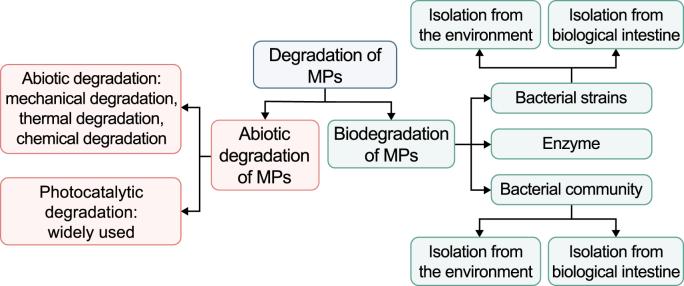
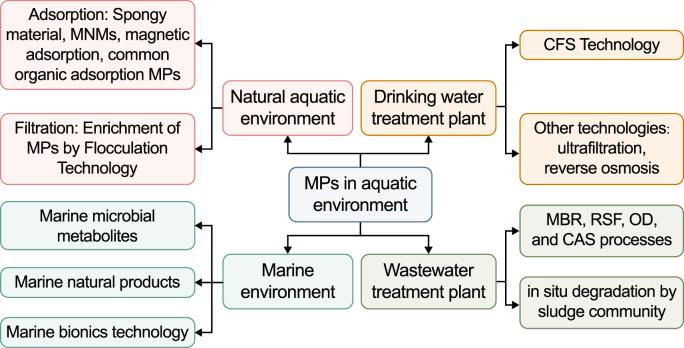
As one of the typical emerging contaminants, microplastics exist widely in the environment because of their small size and recalcitrance, which has caused various ecological problems. This paper summarizes current adsorption and removal technologies of microplastics in typical aquatic environments, including natural freshwater, marine, drinking water treatment plants (DWTPs), and wastewater treatment plants (WWTPs), and includes abiotic and biotic degradation technologies as one of the removal technologies. Recently, numerous studies have shown that enrichment technologies have been widely used to remove microplastics in natural freshwater environments, DWTPs, and WWTPs. Efficient removal of microplastics via WWTPs is critical to reduce the release to the natural environment as a key connection point to prevent the transfer of microplastics from society to natural water systems. Photocatalytic technology has outstanding pre-degradation effects on microplastics, and the isolated microbial strains or enriched communities can degrade up to 50% or more of pre-processed microplastics. Thus, more research focusing on microplastic degradation could be carried out by combining physical and chemical pretreatment with subsequent microbial biodegradation. In addition, the current recovery technologies of microplastics are introduced in this review. This is incredibly challenging because of the small size and dispersibility of microplastics, and the related technologies still need further development. This paper will provide theoretical support and advice for preventing and controlling the ecological risks mediated by microplastics in the aquatic environment and share recommendations for future research on the removal and recovery of microplastics in various aquatic environments, including natural aquatic environments, DWTPs, and WWTPs.
作为典型的新兴污染物之一,微塑料因其尺寸小且难降解而在环境中广泛存在,这已引发了各种生态问题。本文总结了典型水生环境中微塑料的当前吸附和去除技术,包括天然淡水、海洋、饮用水处理厂(DWTPs)和污水处理厂(WWTPs),并将非生物和生物降解技术作为去除技术之一。最近,大量研究表明,富集技术已被广泛用于去除天然淡水环境、DWTPs和WWTPs中的微塑料。通过污水处理厂有效去除微塑料对于减少向自然环境的排放至关重要,因为污水处理厂是防止微塑料从社会转移到天然水系统的关键连接点。光催化技术对微塑料具有出色的预降解效果,分离出的微生物菌株或富集的群落可降解高达50%或更多的预处理微塑料。因此,通过将物理和化学预处理与后续的微生物生物降解相结合,可以开展更多关于微塑料降解的研究。此外,本综述还介绍了当前微塑料的回收技术。由于微塑料尺寸小且具有分散性,这极具挑战性,相关技术仍需进一步发展。本文将为防控水生环境中微塑料介导的生态风险提供理论支持和建议,并分享关于在包括天然水生环境、DWTPs和WWTPs在内的各种水生环境中去除和回收微塑料的未来研究建议。

 Zotero 插件