
确定CD8 + T细胞相关基因ALDH2在头颈部鳞状细胞癌中的治疗和预后作用。
Identifying the Therapeutic and Prognostic Role of the CD8+ T Cell-Related Gene ALDH2 in Head and Neck Squamous Cell Carcinoma.
作者信息
Zhang Hongmei, Li Zhaozheng, Zheng Yan
机构信息
Department of Otorhinolaryngology, Head and Neck Surgery, The Second Affiliated Hospital, Harbin Medical University, Harbin, China.
Department of Nephrology, The Second Affiliated Hospital, Harbin Medical University, Harbin, China.
出版信息
Cancer Inform. 2022 Dec 19;21:11769351221139252. doi: 10.1177/11769351221139252. eCollection 2022.
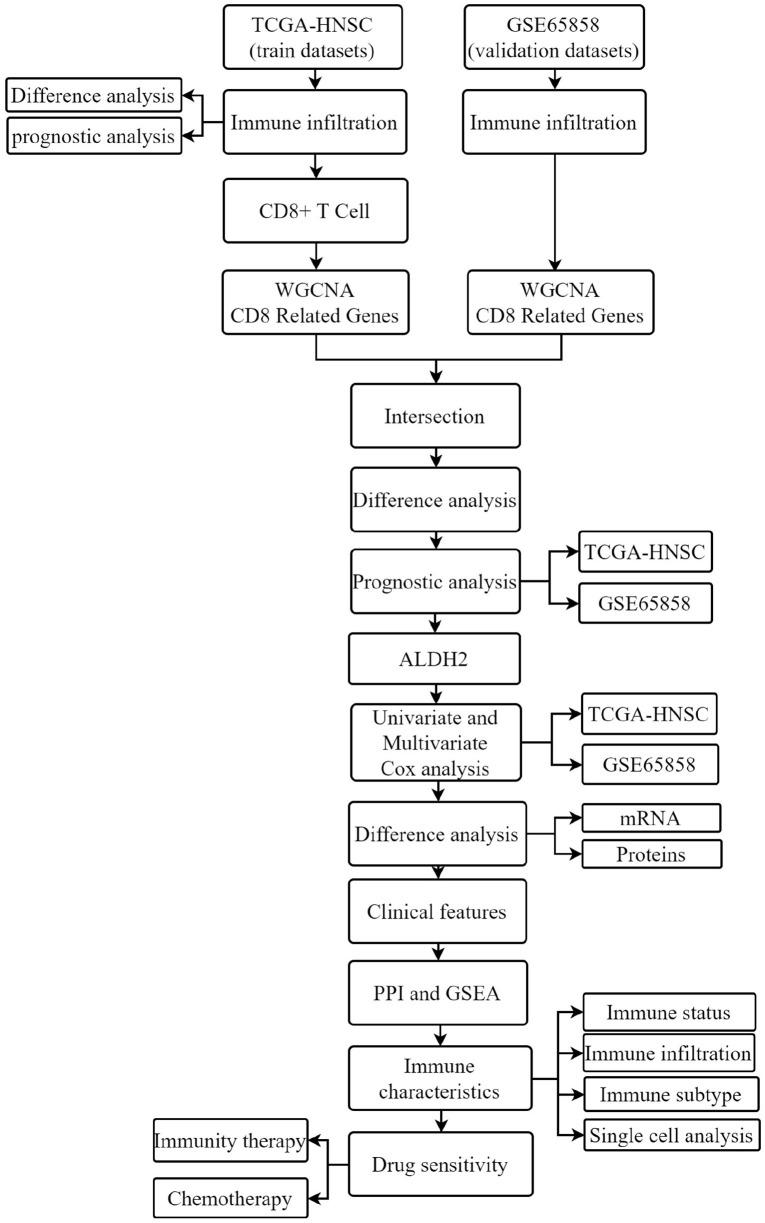
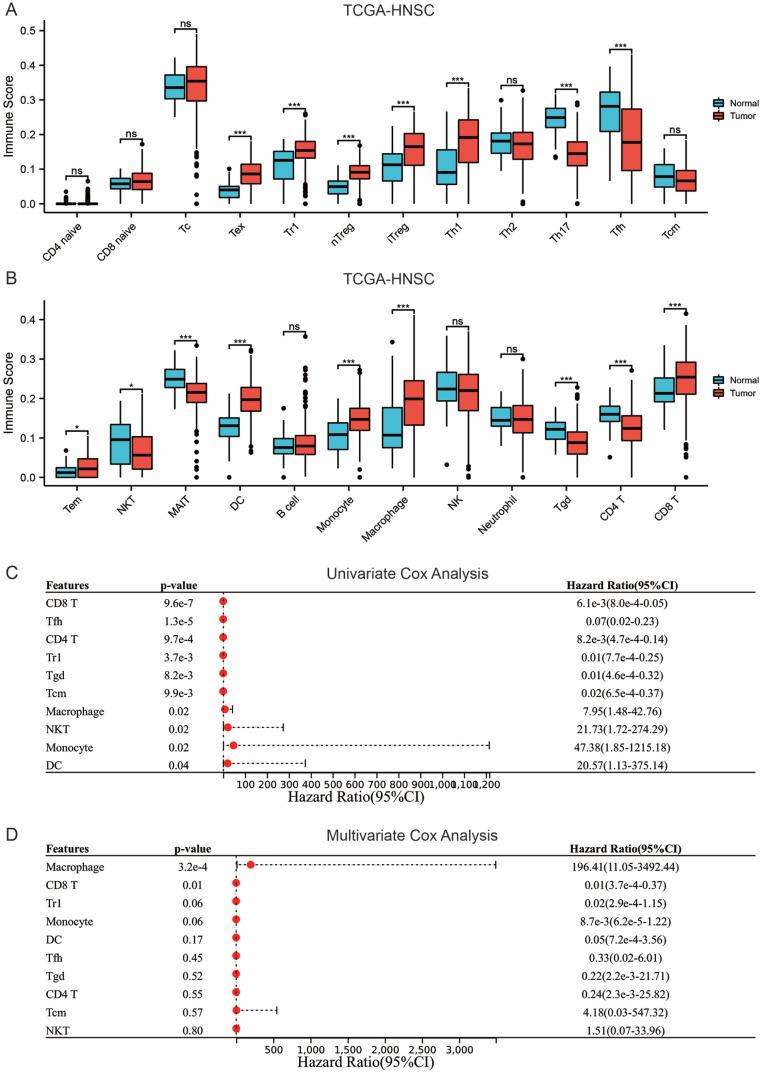
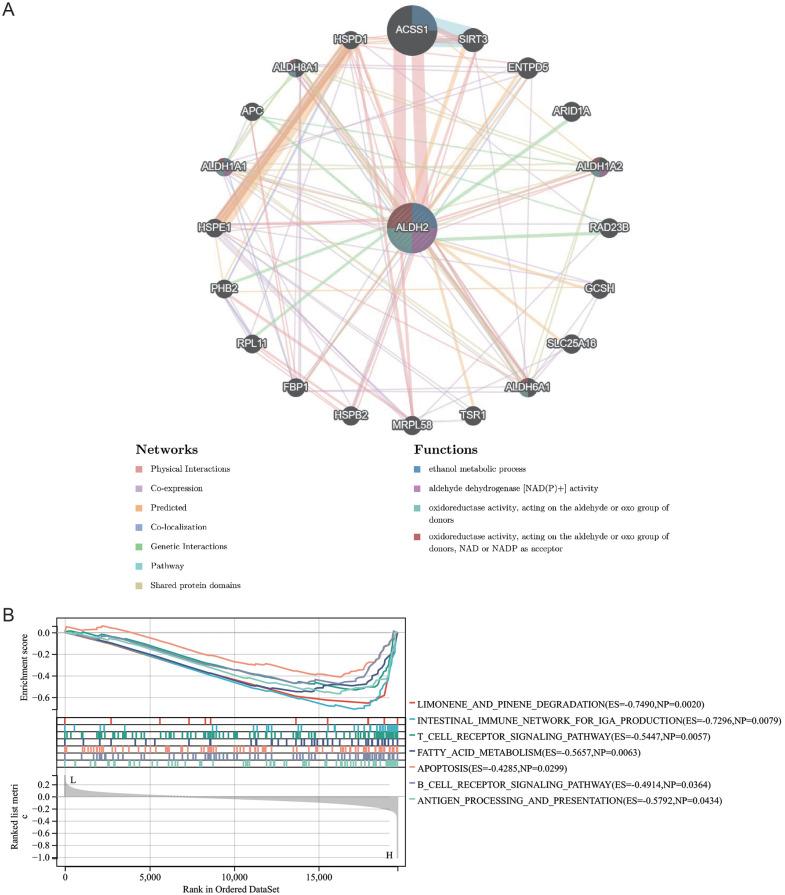
Head and neck squamous cell carcinoma (HNSC) is a widely known malignancy which is usually diagnosed late and has a poor prognosis. This study focuses on finding a new gene linked with CD8+ cell infiltration as a prognostic marker for patients with HNSC. Differential analysis of transcriptomic data was performed between HNSC and control tissues from TCGA and GEO database. The CD8+ cell infiltration score was quantified using single-sample gene set enrichment analysis (ssGSEA). Weighted gene co-expression network analysis (WGCNA) algorithms were used to identify key modules associated with CD8+ cell infiltration. Kaplan-Meier (K-M) survival analysis was used to compare overall survival (OS) between the 2 groups. Univariate and multivariate Cox analyses were used to assess independent prognostic markers. The results showed CD8+ cell infiltration score was an independent favorable prognostic marker in HNSC. Differential analysis and WGCNA identified 93 differential gene related to high CD8+ infiltration. Amog the 93 genes, ALDH2 was an independent favorable prognostic marker in HNSC. ALDH2 expression was found to be much lower in HNSC, and patients with low ALDH2 expression had higher T stage and N stage. The correlation analysis showed that ALDH2 was linked with immune cell infiltration in the tumor microenvironment of HNSC. Patients having increased expression of ALDH2 tend to be sensitive to immune checkpoint inhibitors (ICIs). In addition, we showed the relationship between ALDH2 expression and chemotherapeutic drug sensitivity. In conclusion, this study identified ALDH2 as a prognostic marker, associated with CD8+ cell infiltration in HNSC.
头颈部鳞状细胞癌(HNSC)是一种广为人知的恶性肿瘤,通常在晚期才被诊断出来,预后较差。本研究旨在寻找一个与CD8+细胞浸润相关的新基因,作为HNSC患者的预后标志物。对来自TCGA和GEO数据库的HNSC组织和对照组织进行了转录组数据的差异分析。使用单样本基因集富集分析(ssGSEA)对CD8+细胞浸润评分进行量化。采用加权基因共表达网络分析(WGCNA)算法来识别与CD8+细胞浸润相关的关键模块。采用Kaplan-Meier(K-M)生存分析比较两组的总生存期(OS)。采用单因素和多因素Cox分析来评估独立的预后标志物。结果显示,CD8+细胞浸润评分是HNSC的一个独立的良好预后标志物。差异分析和WGCNA确定了93个与高CD8+浸润相关的差异基因。在这93个基因中,ALDH2是HNSC的一个独立的良好预后标志物。研究发现HNSC中ALDH2的表达要低得多,且ALDH2表达低的患者T分期和N分期更高。相关性分析表明,ALDH2与HNSC肿瘤微环境中的免疫细胞浸润有关。ALDH2表达增加的患者往往对免疫检查点抑制剂(ICI)敏感。此外,我们还展示了ALDH2表达与化疗药物敏感性之间的关系。总之,本研究确定ALDH2为一种预后标志物,与HNSC中的CD8+细胞浸润相关。




 Zotero 插件