
一种信使核糖核酸疫苗引发依赖于干扰素基因刺激蛋白的抗肿瘤免疫反应。
An mRNA vaccine elicits STING-dependent antitumor immune responses.
作者信息
Chen Zhe, Meng Chaoyang, Mai Junhua, Liu Yongbin, Li Hangwen, Shen Haifa
机构信息
Department of Nanomedicine, Houston Methodist Academic Institute, Houston, TX 77030, USA.
Xiangya Hospital of Central South University, Changsha 410000, China.
出版信息
Acta Pharm Sin B. 2023 Mar;13(3):1274-1286. doi: 10.1016/j.apsb.2022.11.013. Epub 2022 Nov 17.
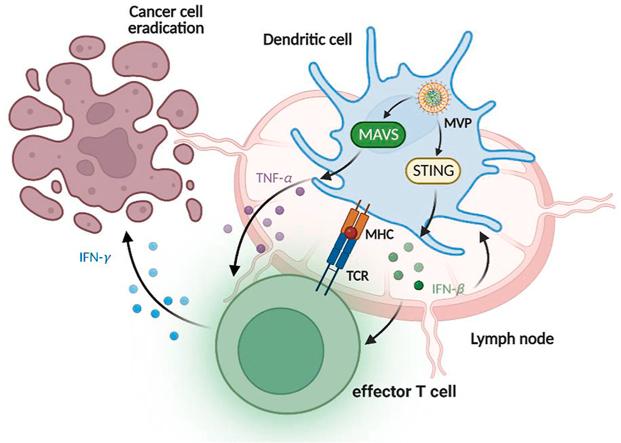
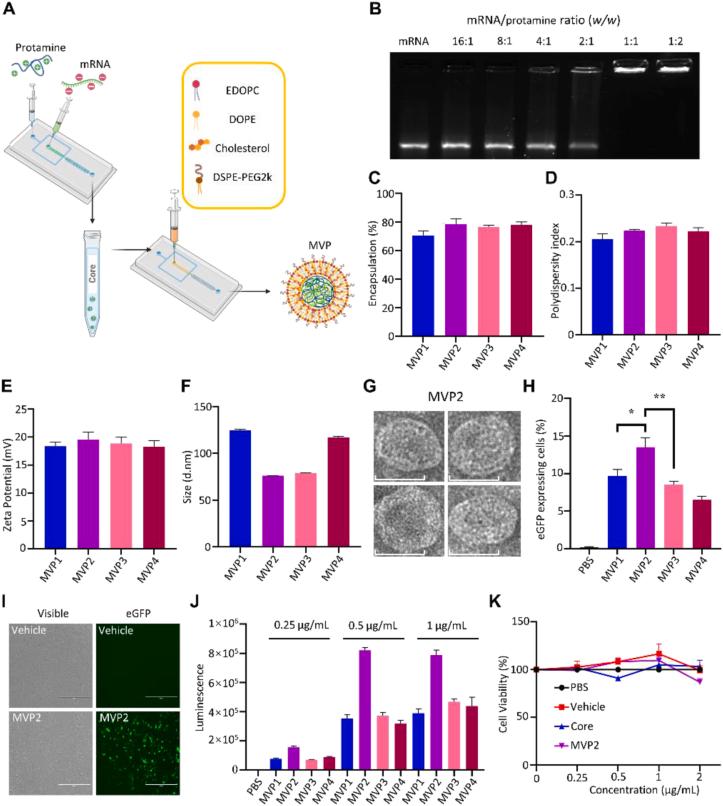
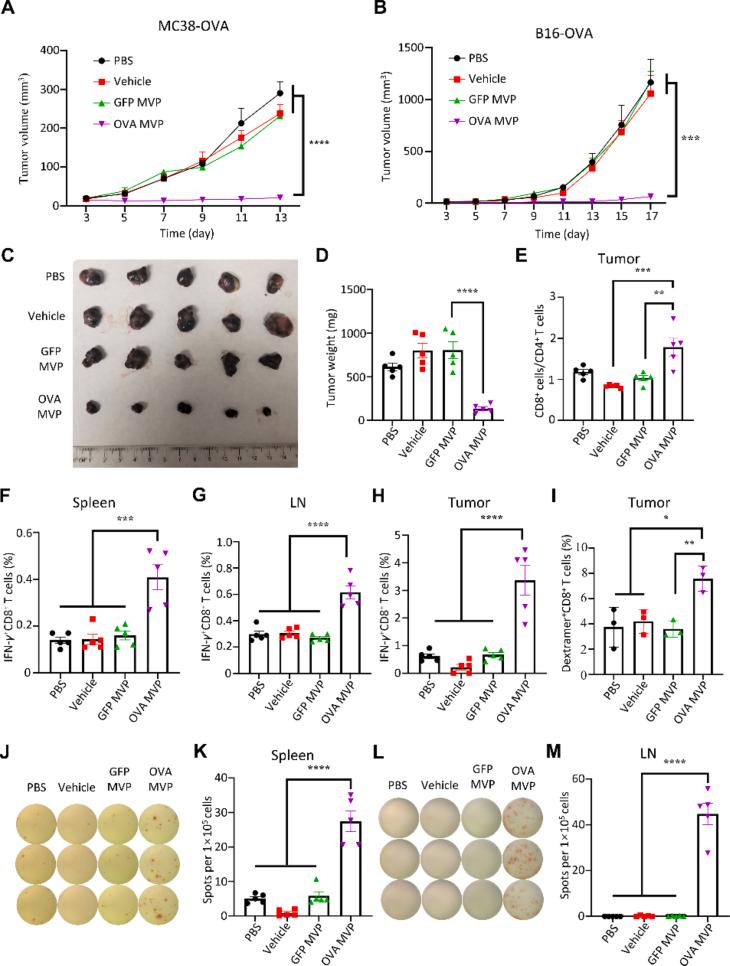
Lipid-formulated RNA vaccines have been widely used for disease prevention and treatment, yet their mechanism of action and individual components contributing to such actions remain to be delineated. Here, we show that a therapeutic cancer vaccine composed of a protamine/mRNA core and a lipid shell is highly potent in promoting cytotoxic CD8 T cell responses and mediating anti-tumor immunity. Mechanistically, both the mRNA core and lipid shell are needed to fully stimulate the expression of type I interferons and inflammatory cytokines in dendritic cells. Stimulation of interferon- expression is exclusively dependent on STING, and antitumor activity from the mRNA vaccine is significantly compromised in mice with a defective gene. Thus, the mRNA vaccine elicits STING-dependent antitumor immunity.
脂质配方的RNA疫苗已被广泛用于疾病预防和治疗,但其作用机制以及促成此类作用的各个成分仍有待阐明。在此,我们表明,一种由鱼精蛋白/mRNA核心和脂质外壳组成的治疗性癌症疫苗在促进细胞毒性CD8 T细胞反应和介导抗肿瘤免疫方面具有高效力。从机制上讲,mRNA核心和脂质外壳都需要充分刺激树突状细胞中I型干扰素和炎性细胞因子的表达。干扰素表达的刺激完全依赖于STING,并且在 基因有缺陷的小鼠中,mRNA疫苗的抗肿瘤活性显著受损。因此,mRNA疫苗引发了依赖于STING的抗肿瘤免疫。




 Zotero 插件