
使用磁共振成像识别新型冠状病毒肺炎患者的脑微结构变化:一项系统综述。
Identifying cerebral microstructural changes in patients with COVID-19 using MRI: A systematic review.
作者信息
Alhazmi Fahad H, Alsharif Walaa M, Alshoabi Sultan Abdulwadoud, Gameraddin Moawia, Aloufi Khalid M, Abdulaal Osama M, Qurashi Abdualziz A
机构信息
Department of Diagnostic Radiology Technology, Faculty of Applied Medical Sciences, Taibah University, Madinah, Saudi Arabia.
出版信息
Brain Circ. 2023 Mar 24;9(1):6-15. doi: 10.4103/bc.bc_77_22. eCollection 2023 Jan-Mar.
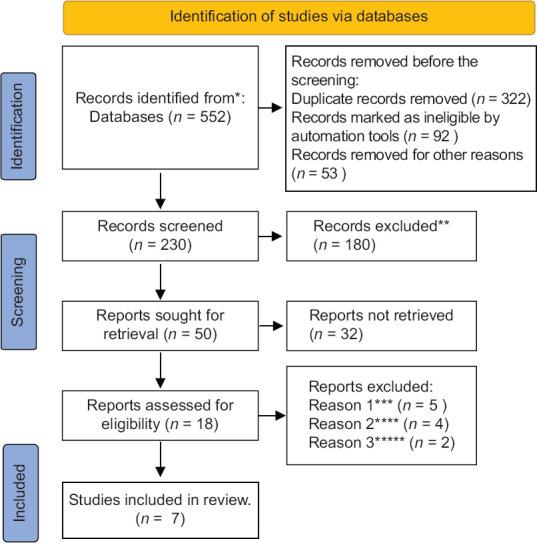
Coronavirus disease 2019 (COVID-19) is an epidemic viral disease caused by a novel severe acute respiratory syndrome coronavirus 2 (SARS-CoV-2). Despite the excessive number of neurological articles that have investigated the effect of COVID-19 on the brain from the neurological point of view, very few studies have investigated the impact of COVID-19 on the cerebral microstructure and function of the brain. The aim of this study was to summarize the results of the existing studies on cerebral microstructural changes in COVID-19 patients, specifically the use of quantitative volumetric analysis, blood oxygen level dependent (BOLD), and diffusion tensor imaging (DTI). We searched PubMed/MEDLINE, ScienceDirect, Semantic Scholar, and Google Scholar from December 2020 to April 2022. A well-constructed search strategy was used to identify the articles for review. Seven research articles have met this study's inclusion and exclusion criteria, which have applied neuroimaging tools such as quantitative volumetric analysis, BOLD, and DTI to investigate cerebral microstructure changes in COVID-19 patients. A significant effect of COVID-19 was found in the brain such as hypoperfusion of cerebral blood flow, increased gray matter (GM) volume, and reduced cortical thickness. The insula and thalamic radiation were the most frequent GM region and white matter tract, respectively, that are involved in SARS-CoV-2. COVID-19 was found to be associated with changes in cerebral microstructures. These abnormalities in brain areas might lead to be associated with behaviors, mental and neurological alterations that need to be considered carefully in future studies.
2019冠状病毒病(COVID-19)是一种由新型严重急性呼吸综合征冠状病毒2(SARS-CoV-2)引起的病毒性流行病。尽管已有大量神经学文章从神经学角度研究了COVID-19对大脑的影响,但很少有研究调查COVID-19对大脑微观结构和功能的影响。本研究的目的是总结现有关于COVID-19患者脑微观结构变化的研究结果,特别是定量体积分析、血氧水平依赖(BOLD)和扩散张量成像(DTI)的应用。我们在2020年12月至2022年4月期间检索了PubMed/MEDLINE、ScienceDirect、Semantic Scholar和谷歌学术。采用精心构建的检索策略来确定纳入综述的文章。七篇研究文章符合本研究的纳入和排除标准,这些文章应用了定量体积分析、BOLD和DTI等神经影像学工具来研究COVID-19患者的脑微观结构变化。发现COVID-19对大脑有显著影响,如脑血流灌注不足、灰质(GM)体积增加和皮质厚度减小。岛叶和丘脑辐射分别是参与SARS-CoV-2的最常见GM区域和白质束。发现COVID-19与脑微观结构变化有关。这些脑区的异常可能导致与行为、精神和神经改变有关,在未来的研究中需要仔细考虑。

 Zotero 插件