
NKG2D/NKG2D配体系统在癌症中的作用与调控
The Role and Regulation of the NKG2D/NKG2D Ligand System in Cancer.
作者信息
Tan Ge, Spillane Katelyn M, Maher John
机构信息
CAR Mechanics Group, Guy's Cancer Centre, School of Cancer and Pharmaceutical Sciences, King's College London, Great Maze Pond, London SE1 9RT, UK.
Department of Physics, King's College, London WC2R 2LS, UK.
出版信息
Biology (Basel). 2023 Aug 2;12(8):1079. doi: 10.3390/biology12081079.
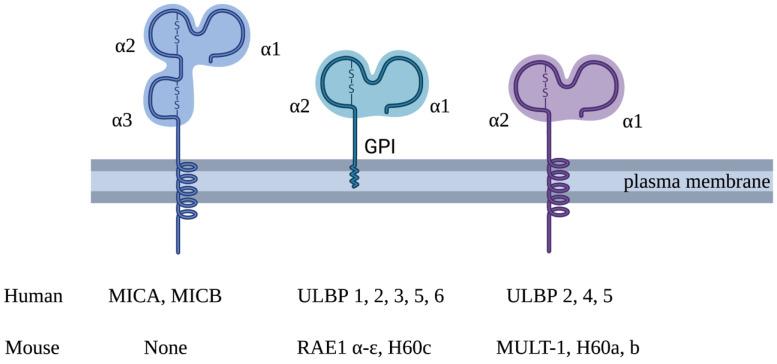
The family of human NKG2D ligands (NKG2DL) consists of eight stress-induced molecules. Over 80% of human cancers express these ligands on the surface of tumour cells and/or associated stromal elements. In mice, NKG2D deficiency increases susceptibility to some types of cancer, implicating this system in immune surveillance for malignancy. However, NKG2DL can also be shed, released via exosomes and trapped intracellularly, leading to immunosuppressive effects. Moreover, NKG2D can enhance chronic inflammatory processes which themselves can increase cancer risk and progression. Indeed, tumours commonly deploy a range of countermeasures that can neutralise or even corrupt this surveillance system, tipping the balance away from immune control towards tumour progression. Consequently, the prognostic impact of NKG2DL expression in human cancer is variable. In this review, we consider the underlying biology and regulation of the NKG2D/NKG2DL system and its expression and role in a range of cancer types. We also consider the opportunities for pharmacological modulation of NKG2DL expression while cautioning that such interventions need to be carefully calibrated according to the biology of the specific cancer type.
人类NKG2D配体(NKG2DL)家族由8种应激诱导分子组成。超过80%的人类癌症在肿瘤细胞表面和/或相关基质成分上表达这些配体。在小鼠中,NKG2D缺陷会增加对某些类型癌症的易感性,这表明该系统参与了对恶性肿瘤的免疫监视。然而,NKG2DL也可以脱落,通过外泌体释放并被困在细胞内,从而产生免疫抑制作用。此外,NKG2D可以增强慢性炎症过程,而慢性炎症本身会增加癌症风险和进展。事实上,肿瘤通常会采取一系列对策来中和甚至破坏这个监视系统,使平衡从免疫控制转向肿瘤进展。因此,NKG2DL表达在人类癌症中的预后影响是可变的。在这篇综述中,我们考虑了NKG2D/NKG2DL系统的潜在生物学特性和调控及其在一系列癌症类型中的表达和作用。我们还考虑了药物调节NKG2DL表达的机会,同时提醒此类干预需要根据特定癌症类型的生物学特性进行仔细校准。

 Zotero 插件