
SARS-CoV-2 是否诱导 IgG4 合成以逃避免疫系统?
Does SARS-CoV-2 Induce IgG4 Synthesis to Evade the Immune System?
机构信息
Autlan Regional Hospital, Health Secretariat, Autlan 48900, Jalisco, Mexico.
Biology Laboratory, Autlan Regional Preparatory School, University of Guadalajara, Autlan 48900, Jalisco, Mexico.
出版信息
Biomolecules. 2023 Sep 1;13(9):1338. doi: 10.3390/biom13091338.
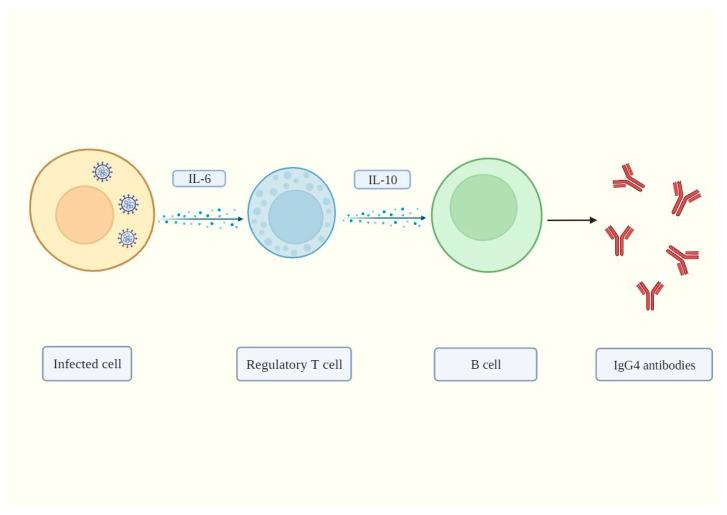
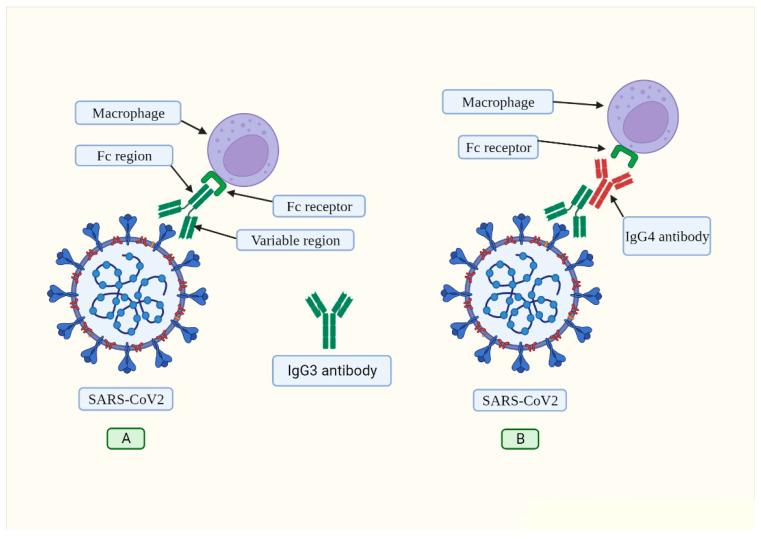
SARS-CoV-2, the virus that causes the COVID-19 disease, has been shown to cause immune suppression in certain individuals. This can manifest as a reduced ability of the host's immune system to effectively control the infection. Studies have reported that patients with COVID-19 can exhibit a decline in white blood cell counts, including natural killer cells and T cells, which are integral components of the immune system's response to viral pathogens. These cells play critical roles in the immune response to viral infections, and their depletion can make it harder for the body to mount an effective defense against the virus. Additionally, the virus can also directly infect immune cells, further compromising their ability to function. Some individuals with severe COVID-19 pneumonia may develop a "cytokine storm", an overactive immune response that may result in tissue damage and organ malfunction. The underlying mechanisms of immune suppression in SARS-CoV-2 are not entirely understood at this time, and research is being conducted to gain a more comprehensive understanding. Research has shown that severe SARS-CoV-2 infection promotes the synthesis of IgG4 antibodies. In this study, we propose the hypothesis that IgG4 antibodies produced by B cells in response to infection by SARS-CoV-2 generate immunological tolerance, which prevents its elimination and leads to persistent and chronic infection. In summary, we believe that this constitutes another immune evasion mechanism that bears striking similarities to that developed by cancer cells to evade immune surveillance.
SARS-CoV-2,引起 COVID-19 疾病的病毒,已被证明会导致某些个体的免疫抑制。这可能表现为宿主免疫系统有效控制感染的能力降低。研究报告称,COVID-19 患者的白细胞计数会下降,包括自然杀伤细胞和 T 细胞,这些都是免疫系统对病毒病原体反应的重要组成部分。这些细胞在病毒感染的免疫反应中起着关键作用,它们的耗竭会使身体更难有效地抵御病毒。此外,病毒还可以直接感染免疫细胞,进一步削弱它们的功能。一些患有严重 COVID-19 肺炎的患者可能会发展出“细胞因子风暴”,即过度活跃的免疫反应,可能导致组织损伤和器官功能障碍。SARS-CoV-2 中免疫抑制的潜在机制目前尚未完全理解,正在进行研究以获得更全面的了解。研究表明,严重的 SARS-CoV-2 感染会促进 IgG4 抗体的合成。在这项研究中,我们提出了一个假设,即 SARS-CoV-2 感染诱导 B 细胞产生的 IgG4 抗体产生免疫耐受,从而阻止其清除并导致持续和慢性感染。总之,我们认为这构成了另一种免疫逃避机制,与癌细胞逃避免疫监视的机制惊人地相似。

 Zotero 插件